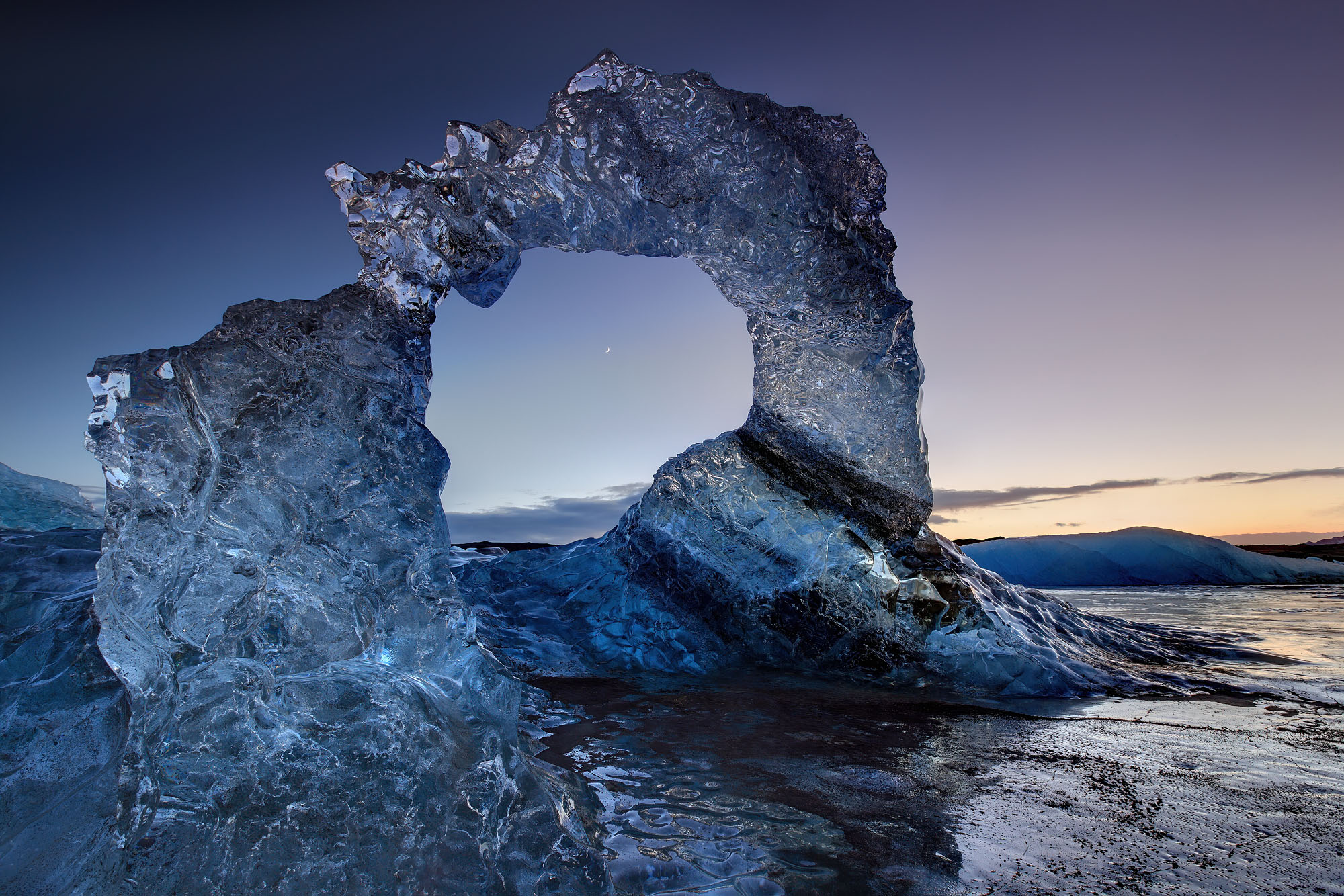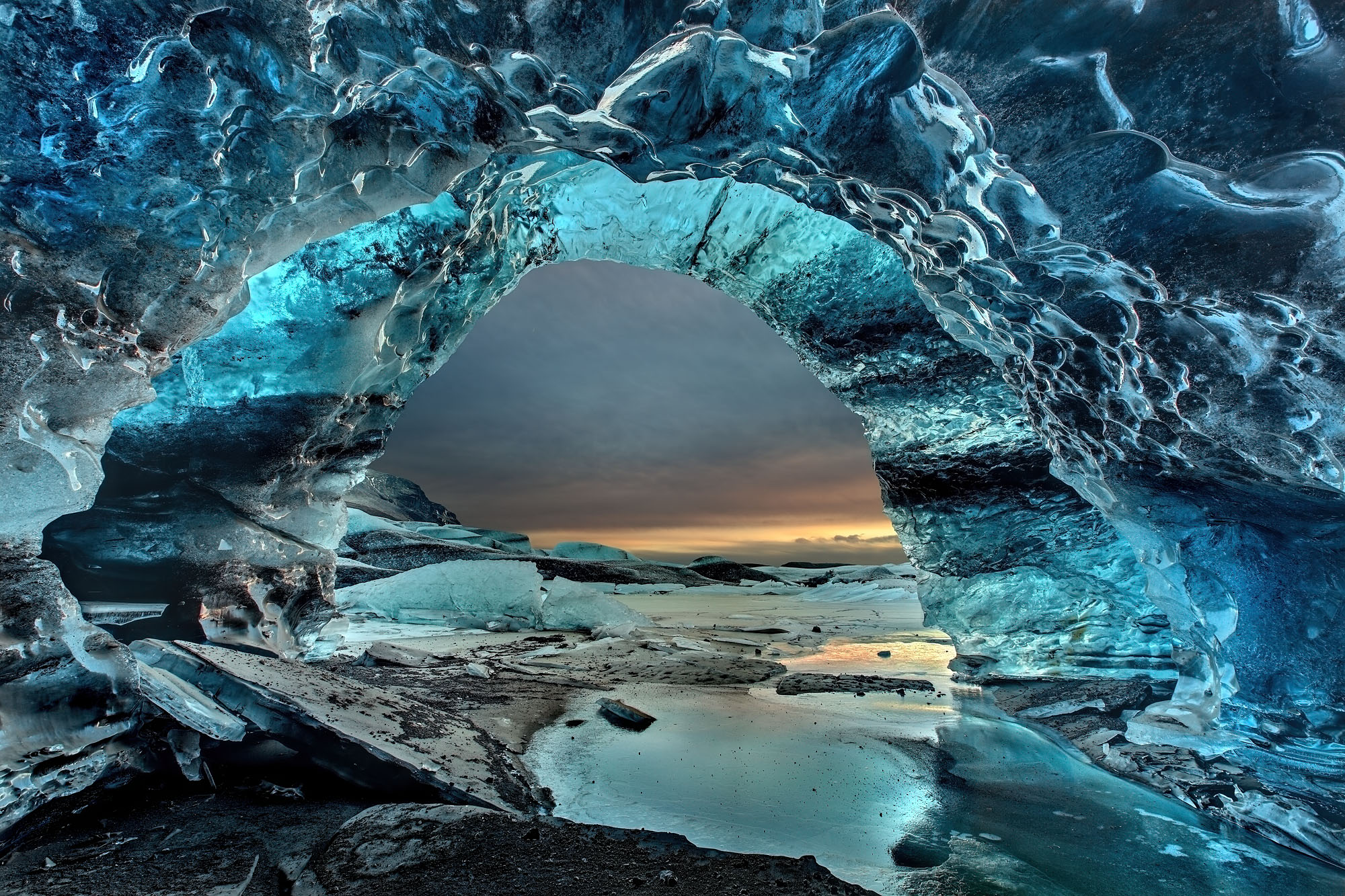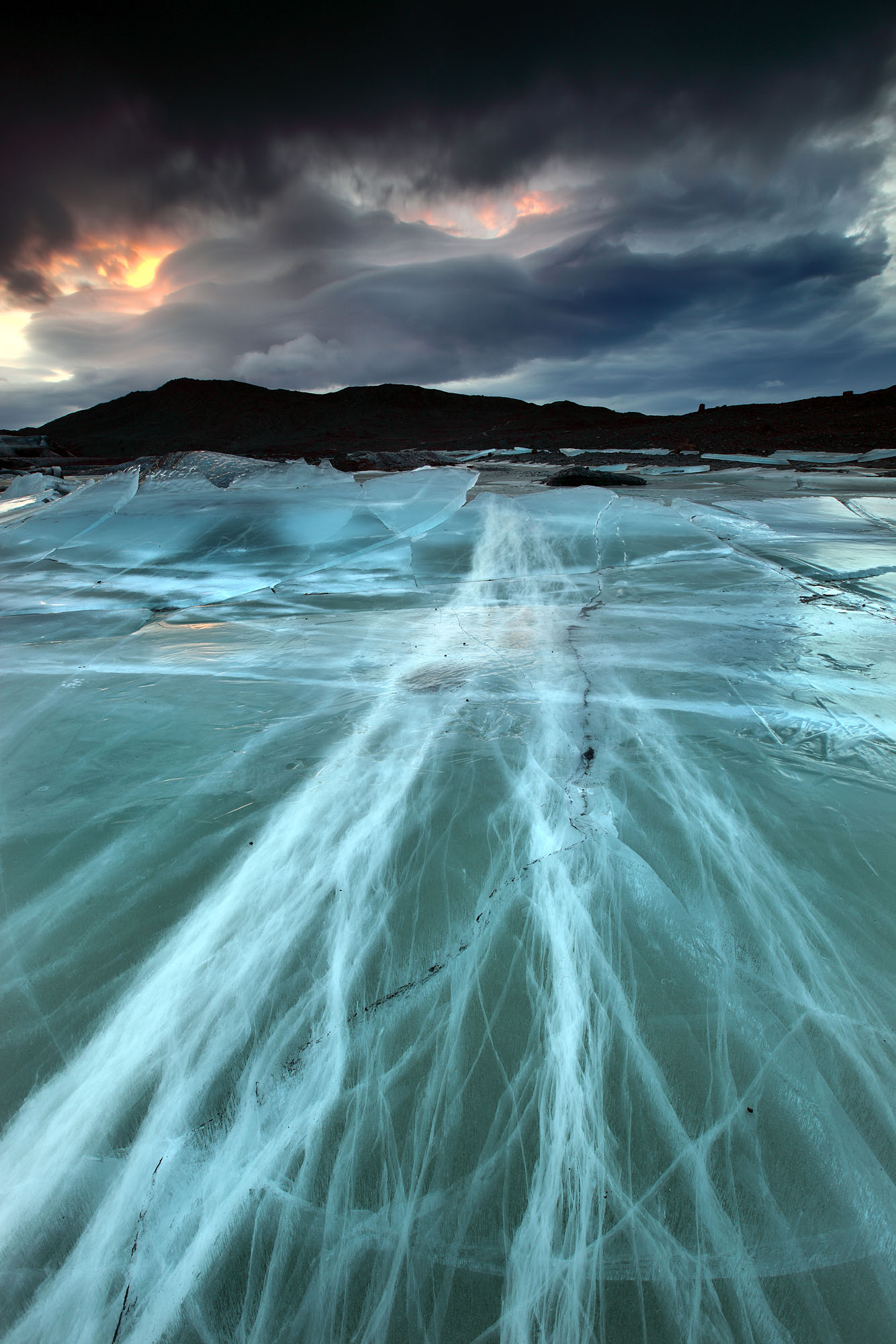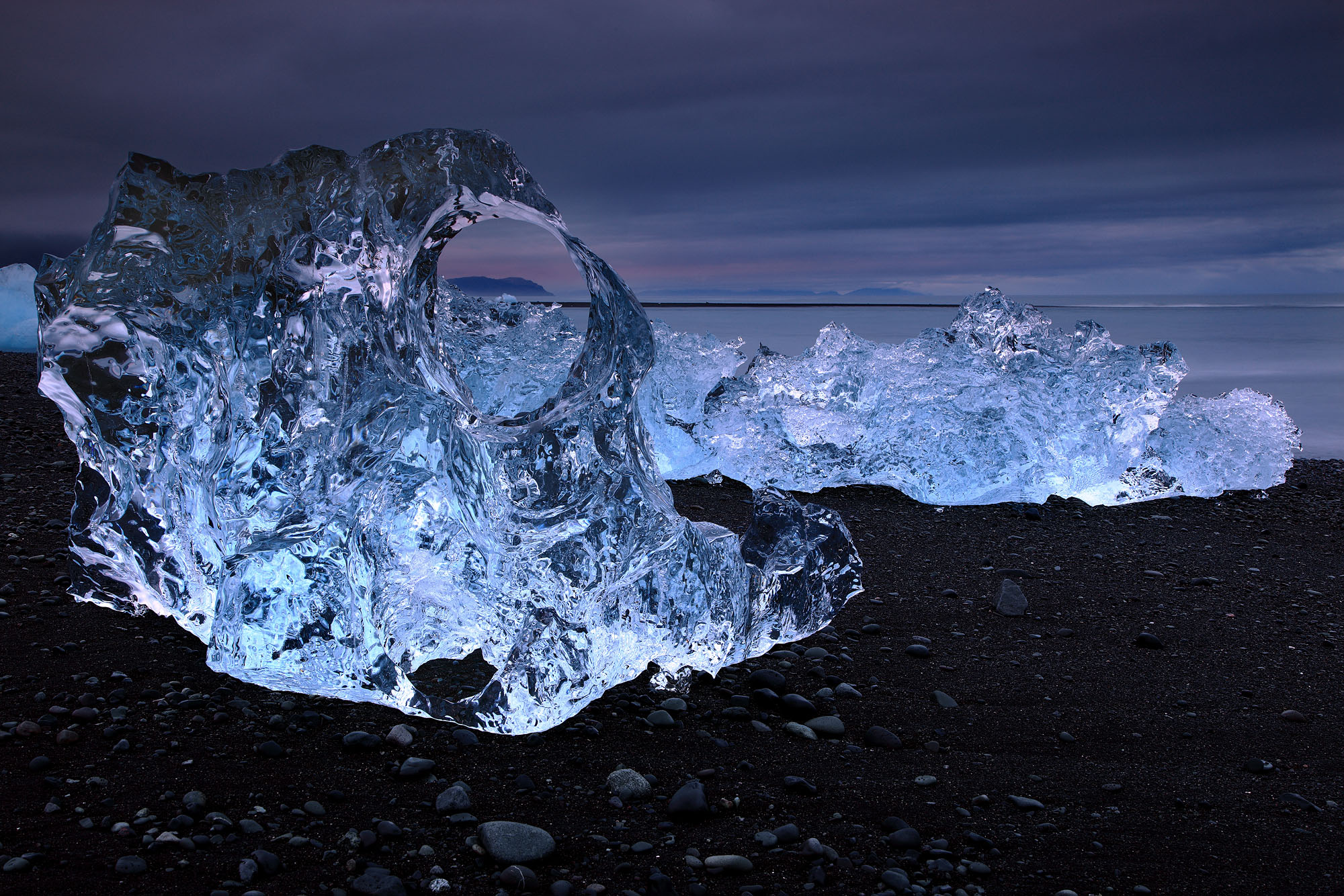
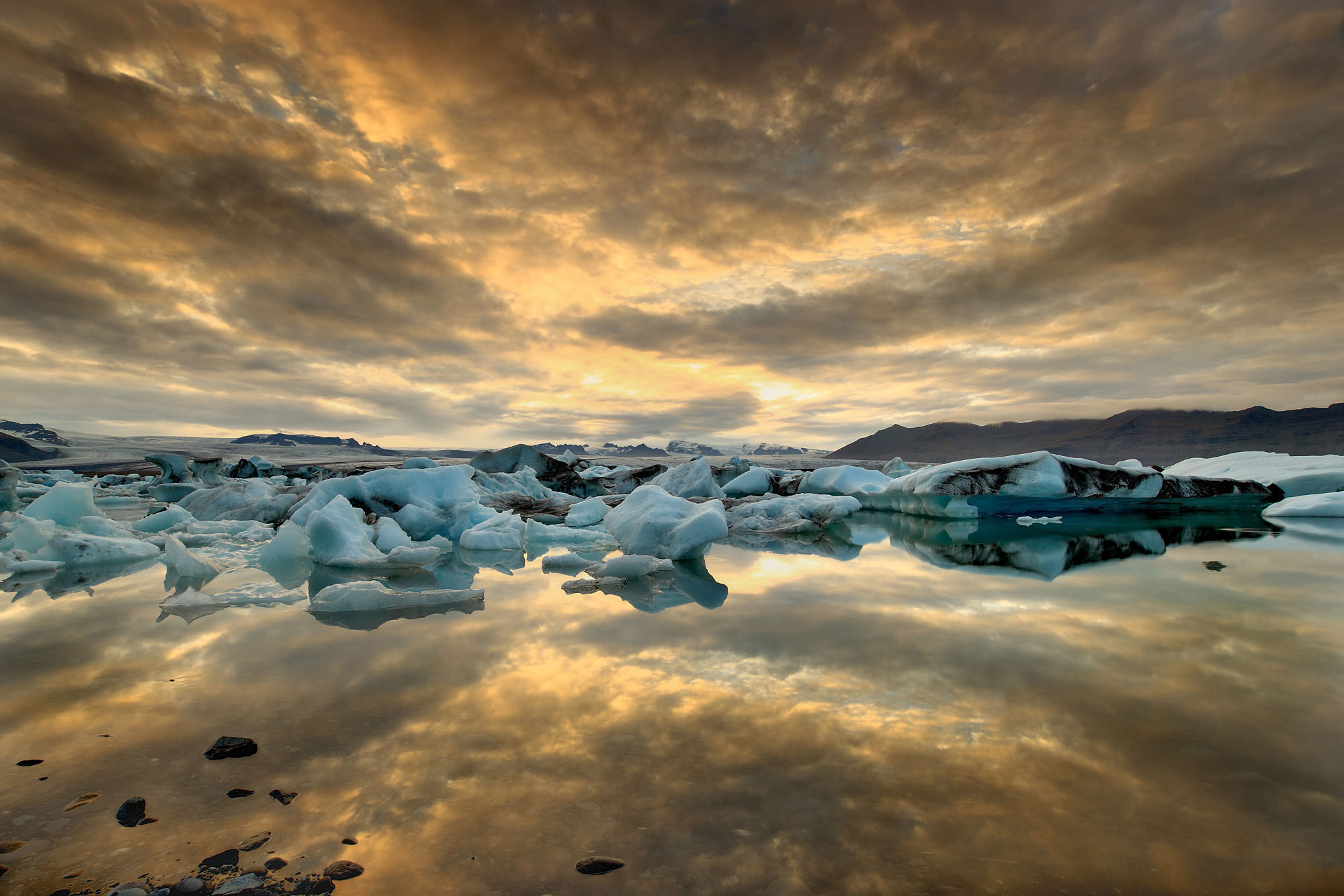
Iceland’s glacier lagoon, Jökulsárlón, is filled with icebergs in midsummer. The late-evening sun strikingly illuminates layers of Altocumulus and Altostratus clouds, their forms mirrored in a crystal-clear reflection on the proglacial lake. In the far distance, the Vatnajökull ice cap marks the source of the Breiðamerkurjökull glacier lobe, which calves icebergs into the tidal lagoon of Jökulsárlón.
About 11 percent of Iceland is covered by ice caps and glaciers. These include 14 ice caps, five of them extensive ice domes, as well as 256 alpine and cirque glaciers. Vatnajökull, whose name means “water glacier,” lies in southeastern Iceland and is the country’s largest ice cap. It reaches an elevation of 1,725 meters (5,659 feet), and its ice is up to 900 meters (2,950 feet) thick. The ice divide follows the ridge of the volcanic bedrock beneath the ice cap. Several jagged peaks protrude through the ice sheet as so-called nunataks, from which the direction of ice flow is determined as gravity draws the ice downhill.
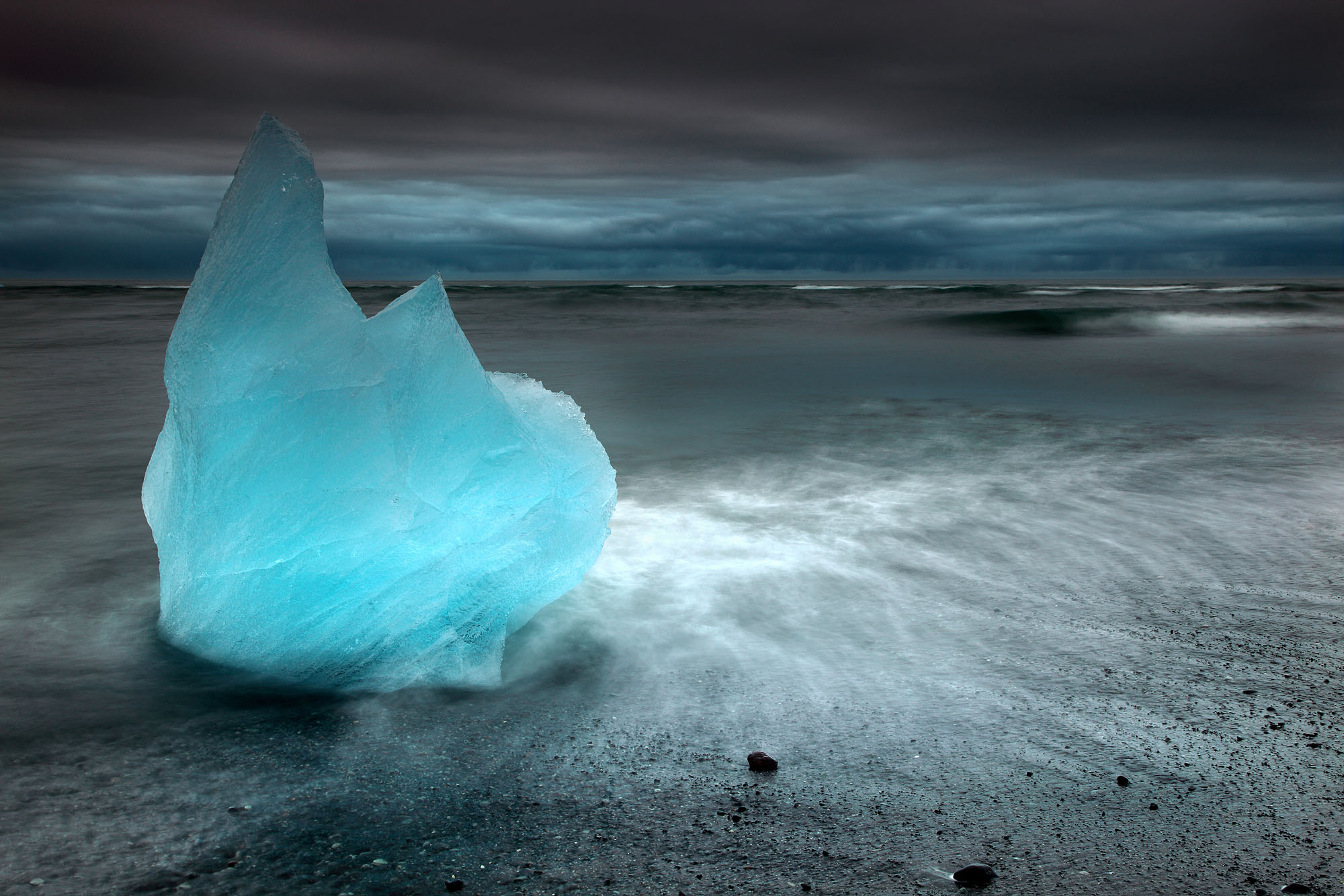
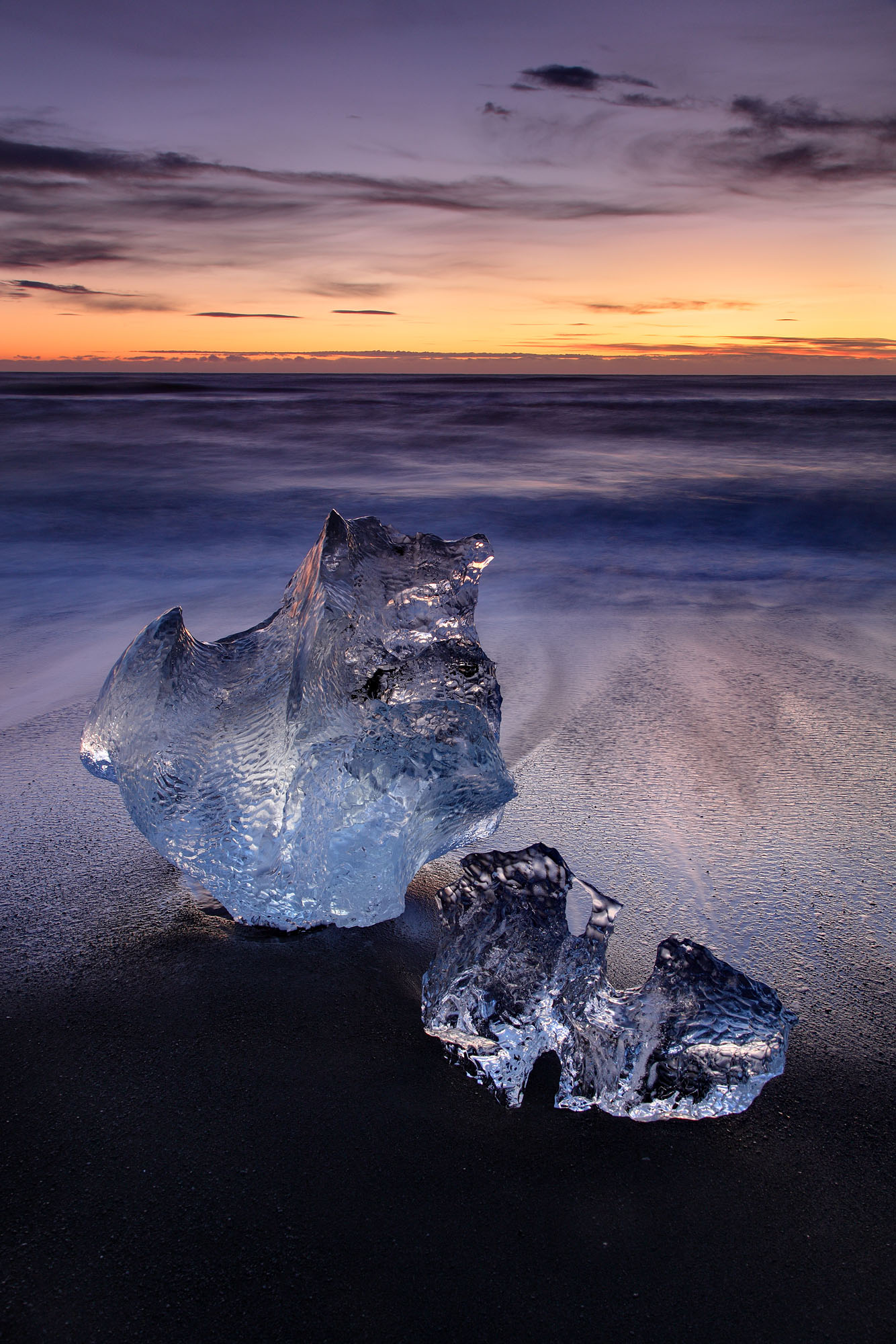
Depending on the topography beneath the ice, the 20 outlet glaciers of Vatnajökull appear either as steep icefalls or gently sloping glacier lobes. It takes between 500 and 1,000 years for the ice to travel from the interior of the ice cap to its margins. Annual snowfall ranges from 3 to 15 meters (10 to 50 feet), while differences in the underlying terrain produce ice flow rates of up to 1 meter per day (3.3 feet). Breiðamerkurjökull terminates in the 200-meter (656-foot) deep tidal lagoon of Jökulsárlón. Given these timescales, the icebergs floating in Jökulsárlón can be up to 1,000 years old. They contain a remarkable succession of black volcanic ash layers deposited by numerous eruptions over the centuries.
After three days of continuous rain, this impressive cloud cover formed above the glacier lagoon in the late evening. The likelihood that it would persist until sunset seemed vanishingly small. Contrary to all expectations, however, the clouds remained almost stationary while continually developing fascinating structures. At sunset, the scene culminated in a spectacular display of color and form, creating an extraordinary contrast with the deep-blue icebergs.