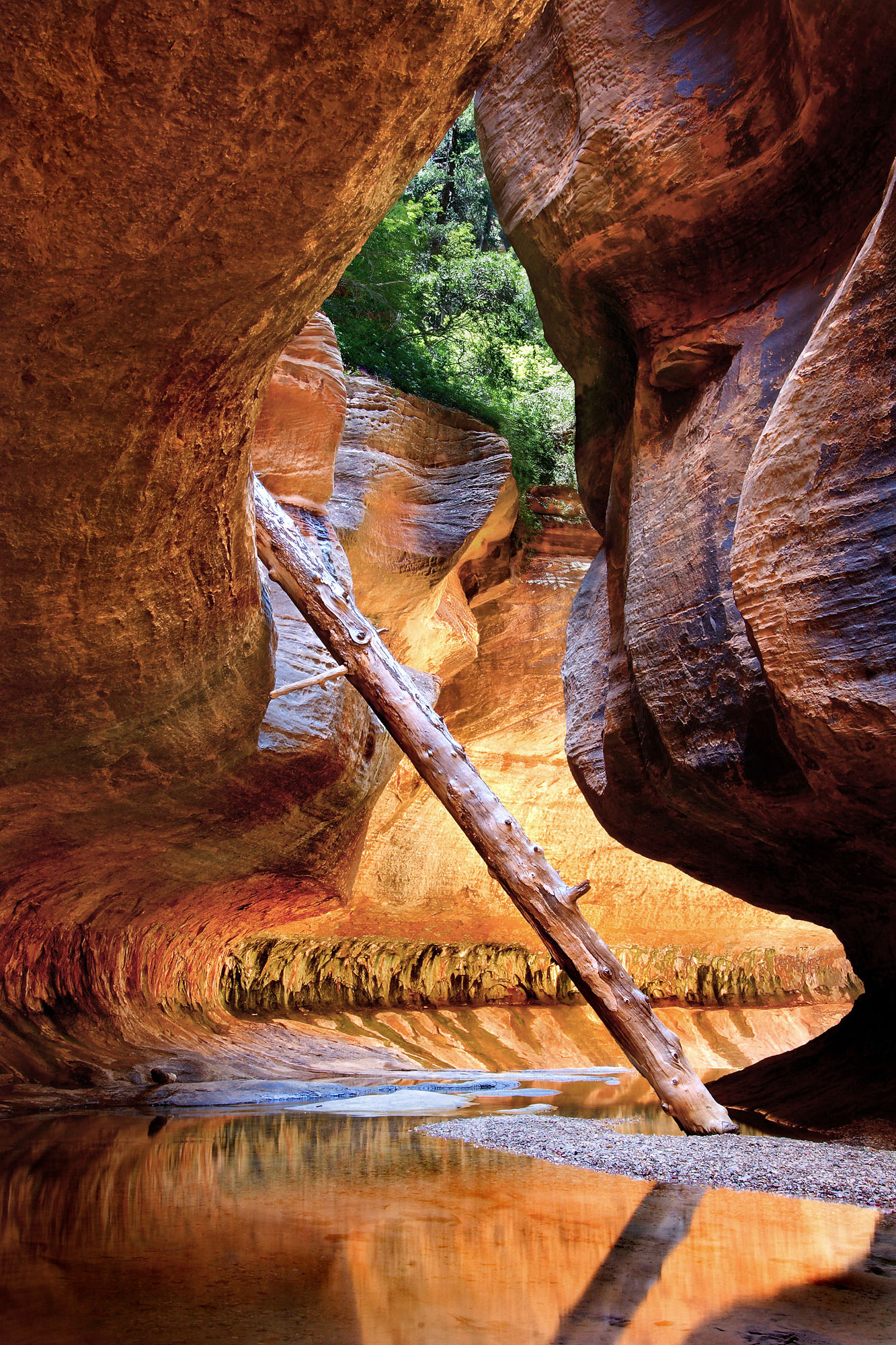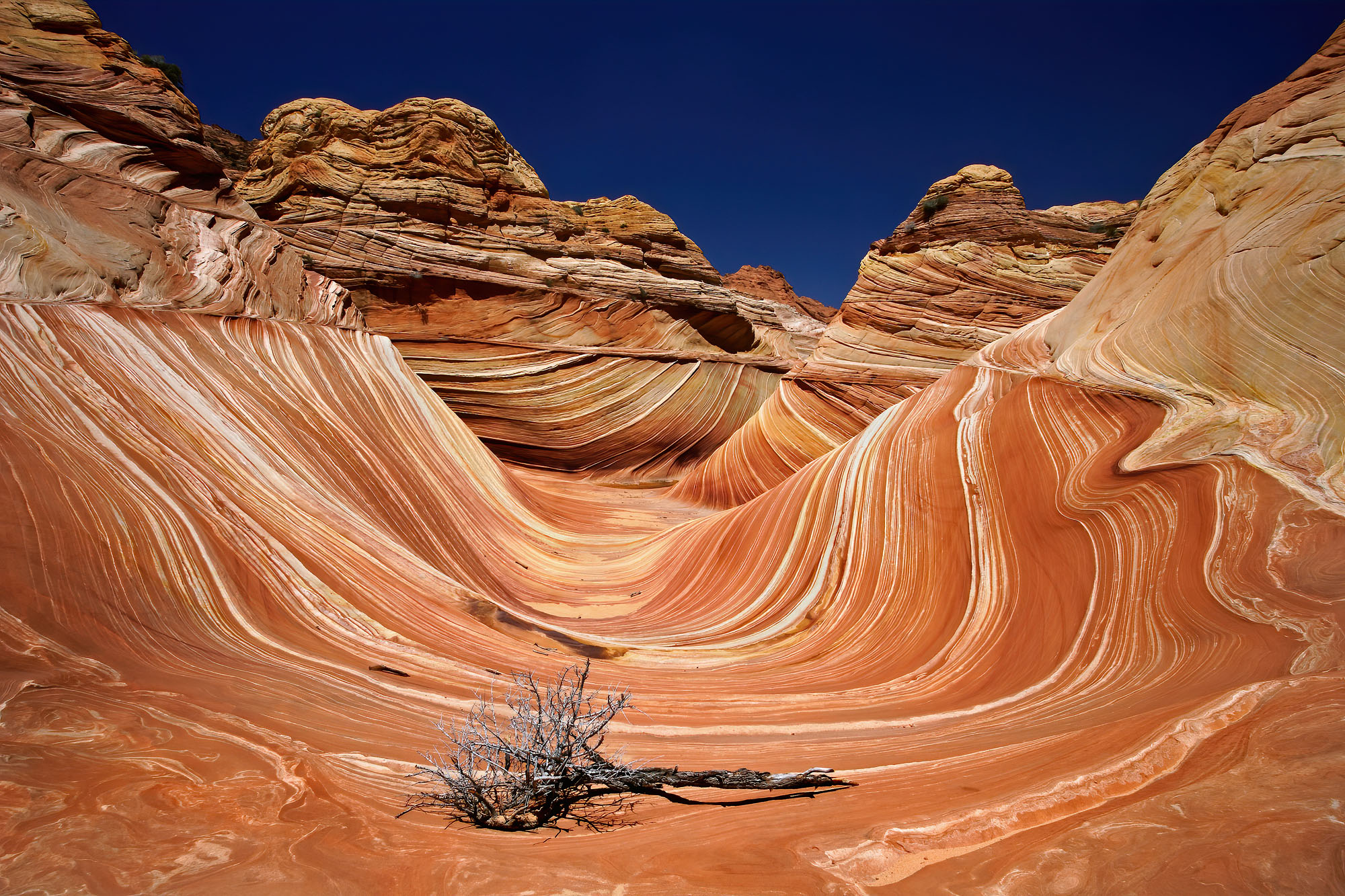
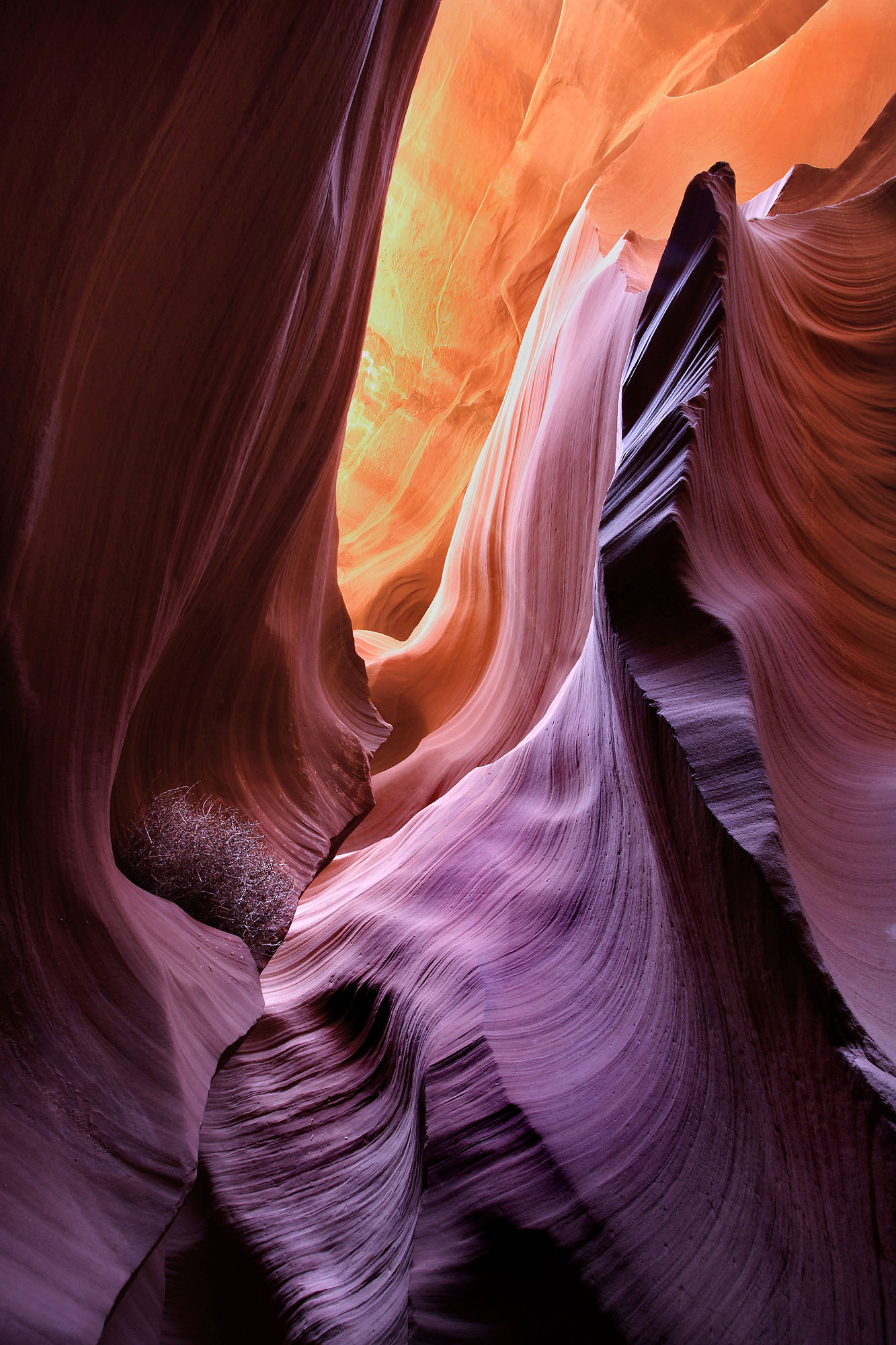
The sculpted walls of Upper Antelope Canyon near Page, Arizona, glow in an extraordinary interplay of light, color, and form. Located on Navajo Nation land, this narrow slot canyon is renowned for its flowing sandstone shapes and the dramatic transformation of its colors as the sun descends toward the canyon rim.
Upper Antelope Canyon resplendently glows in a frenzy of shapes and colors as the indirect, reflected light changes from the deep purple of the shadows to the golden yellow of the sunlit walls. At the upper opening, the canyon walls can be several meters apart (about 10 ft), while near the bottom the canyon, which reaches depths of up to 20 m (66 ft), can narrow to barely 50 cm (1.6 ft). Because direct sunlight floods the canyon around midday, its true colors and subtle textures are often revealed most beautifully when the sun is lower in the sky.
Both Antelope slot canyons drain into nearby Lake Powell, whose waters eventually flow into the Colorado River and onward through the Grand Canyon. The remarkably smooth, polished canyon walls have been shaped not only by water but also by windblown sand that is repeatedly carried through the narrow passages, gradually abrading the sandstone.
From the plateau above, the Antelope canyons are barely visible, appearing only as narrow slits in the surface of the Navajo Sandstone. Yet during millions of years, flash floods generated by intense summer thunderstorms repeatedly poured through these tiny weaknesses. On the relatively rough surface of the plateau, runoff was able to exploit fractures and other weak points in the sandstone. As the water repeatedly rushed through them, the cracks gradually widened and deepened into the continuous canyon system we see today.
The canyon is therefore both a product of immense geological time and a reminder of the sudden violence of desert storms. The contemplation of its almost incomprehensible beauty becomes even more intense when imagining the torrents of water that once surged through these seemingly tranquil passages.
Upper Antelope Canyon lies at an elevation of about 1,129 m (3,704 ft) and extends for approximately 200 m (660 ft). The interplay of flash floods, wind, and the abrasive power of sand continues to shape its remarkably smooth walls.
The sensual colors and flowing shapes of Upper Antelope Canyon, together with the delicate, hair-like tumbleweed caught in the scene, create an intimate atmosphere in which the forces of nature appear both powerful and ephemeral.