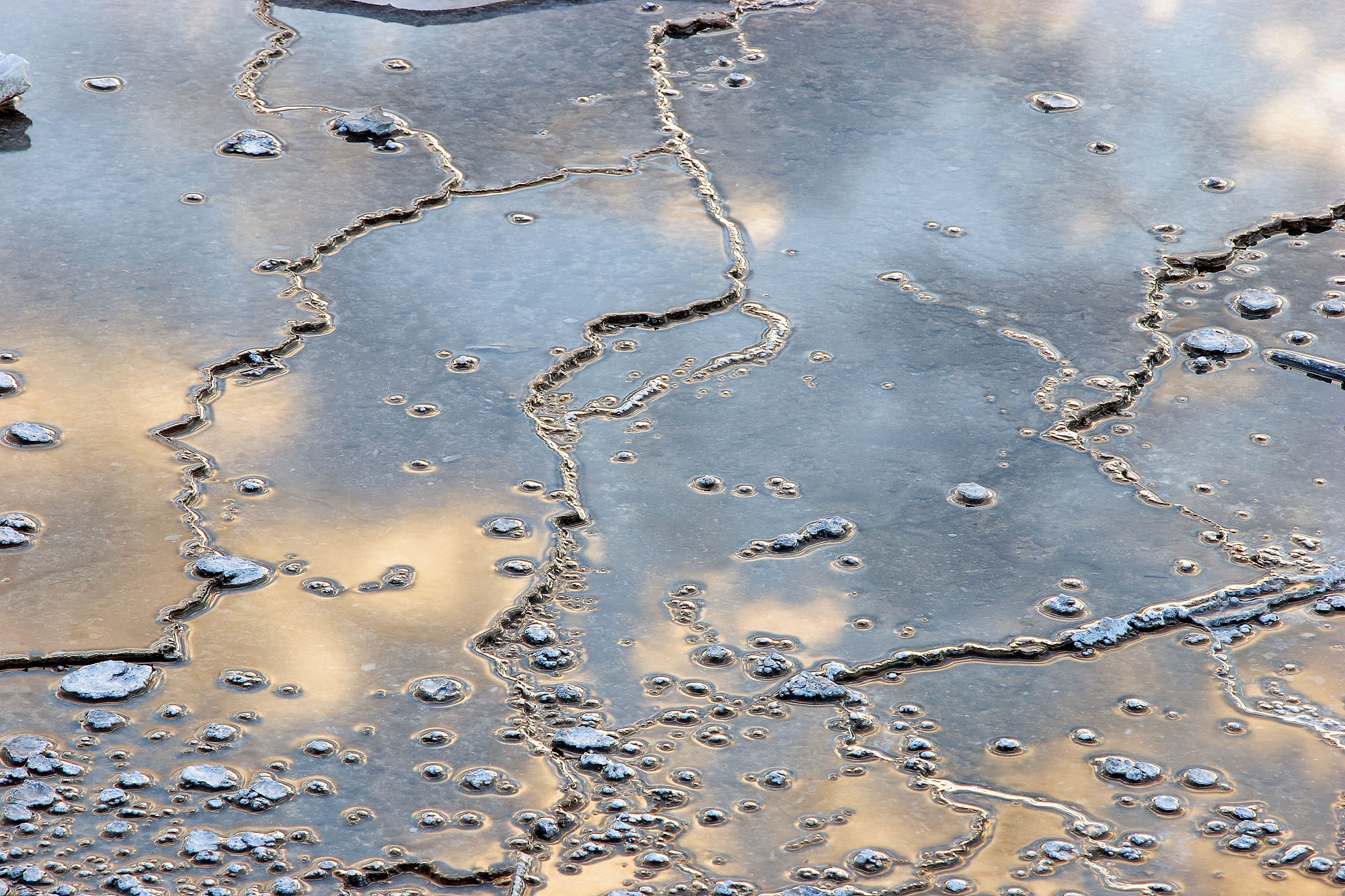
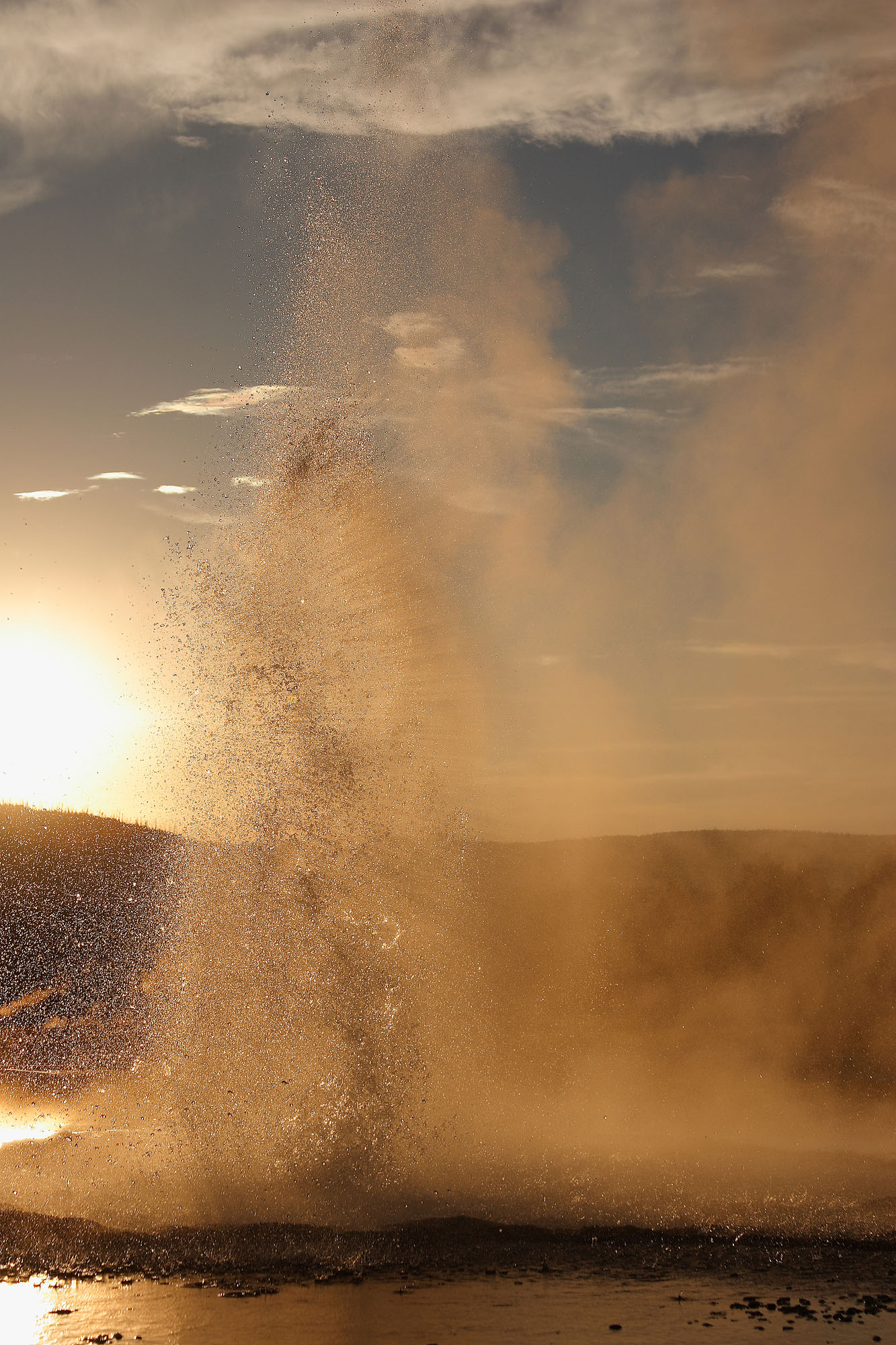
Plume Geyser in the Upper Geyser Basin of Yellowstone erupts with a high fountain of boiling water and steam. As the water passes through the vent in the ground, it is set into rapid rotation. This unique moment is frozen in time and backlit by the sun, creating pure magic.
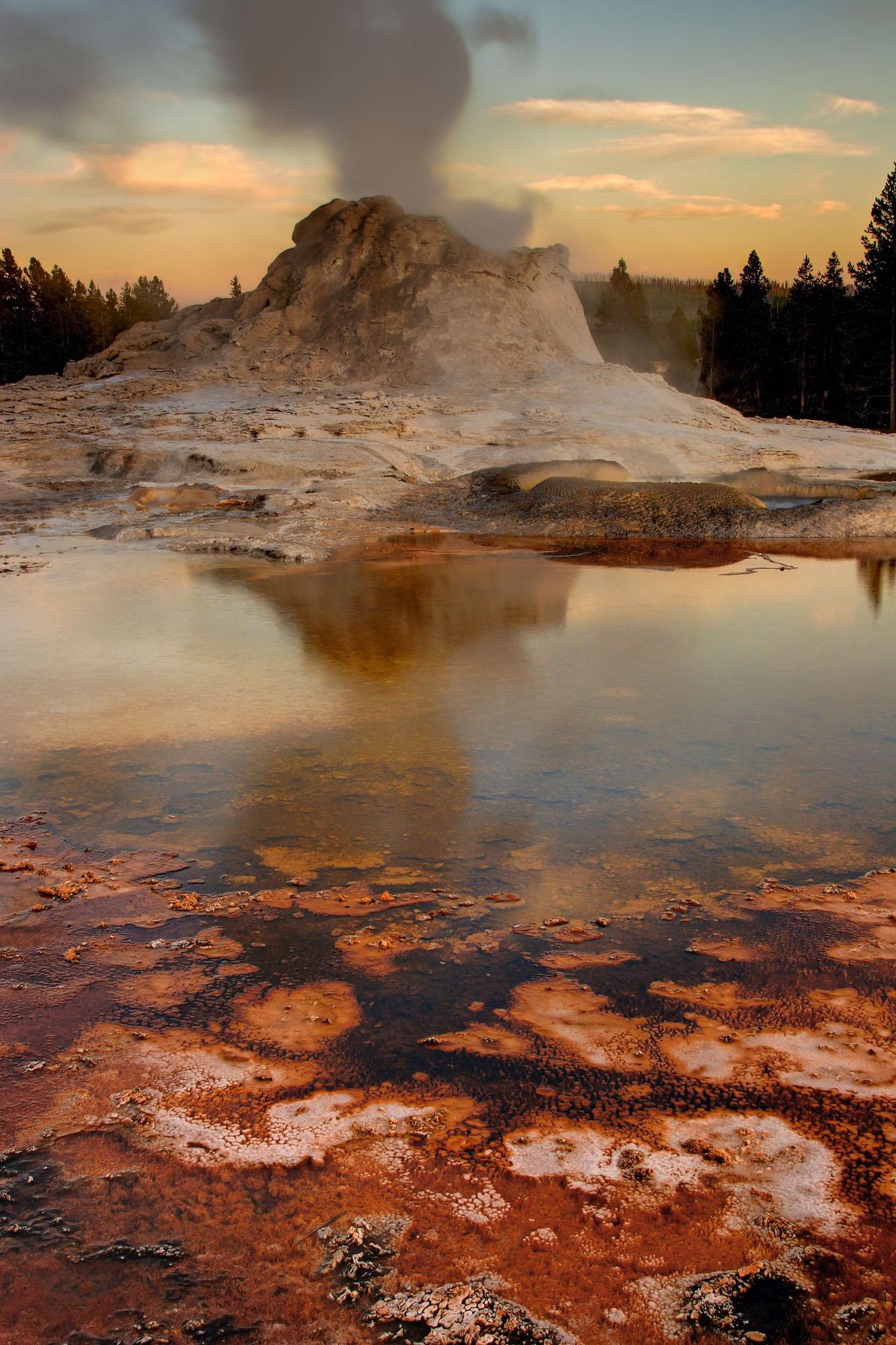
Geysers are intermittent hot springs that erupt jets of hot water and steam at regular or irregular intervals. The plumbing system of geysers is usually constricted deep underground. Percolating groundwater is heated to up to 400°F (200°C) by the magma chamber at shallow depths of several thousand feet. Steam forms under conditions that prevent free circulation. The confined steam builds up pressure within the plumbing system until it generates enough force to be ejected through a vent at the surface. The eruption cycle depends on the supply of groundwater, a watertight plumbing system, the heat supplied by the magma chamber, and earthquake activity. Thermal activity can change significantly or even cease after earthquakes.
The anvils of summer thunderstorms contain enormous amounts of ice crystals. These occur in the form of ice needles, plates, or hollow cylinders. In the upper atmosphere, the anvils drift with the strong winds. If the conditions are right, the resulting thin cirrus ice clouds display iridescent colors. These can be seen directly above the upper left part of the geyser fountain.