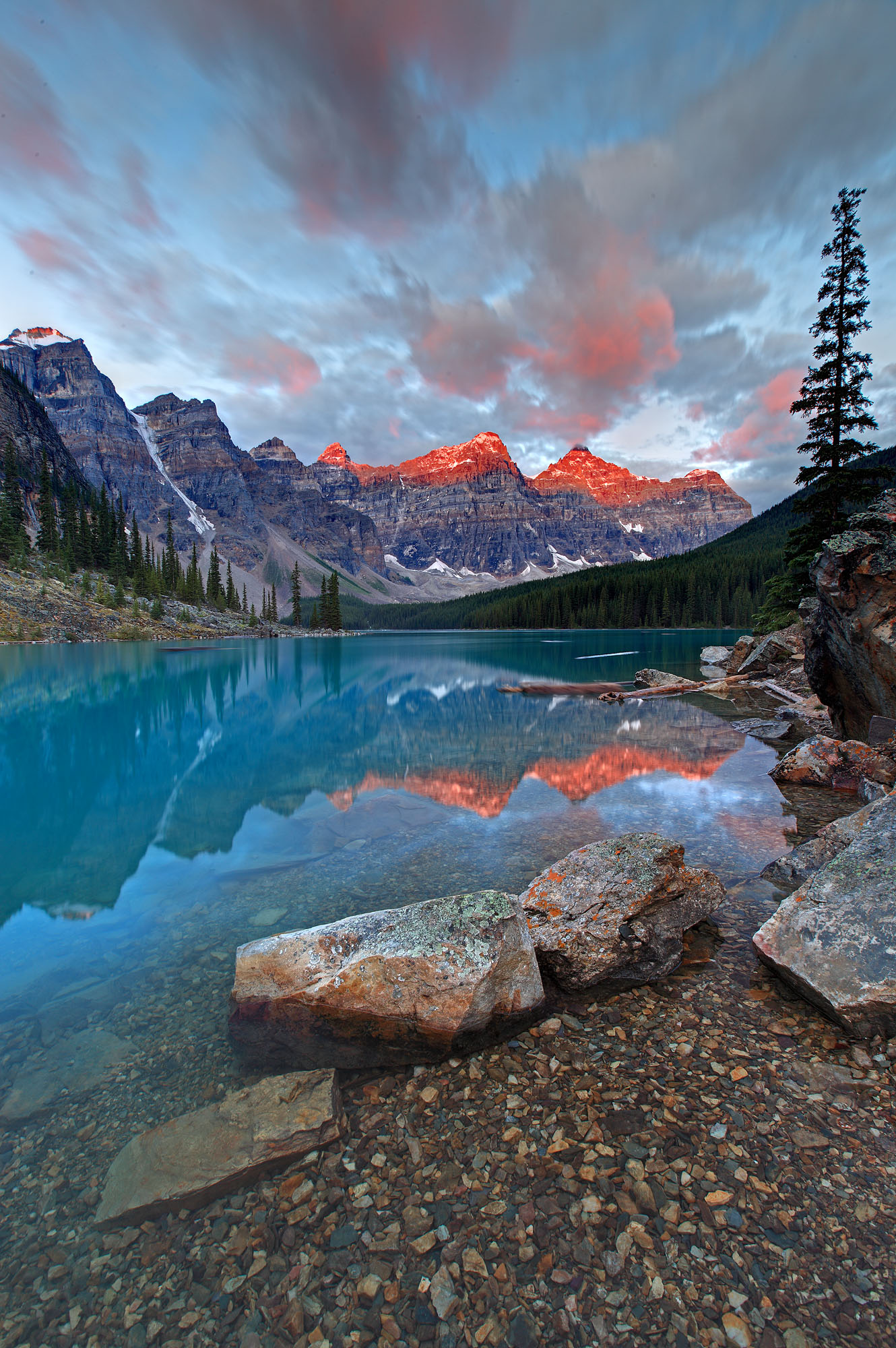
Moraine Lake in the Valley of the Ten Peaks near Banff in the Canadian Rocky Mountains is located at an elevation of 1885 m (6184 ft).
The ten peaks tower up to 4900 ft (1200 to 1500 m) above the lake, forming a continuous ridge 7.5 miles (12 km) long. The mountains consist of four sedimentary formations that lie flat on top of one another, from oldest to youngest. The prominent change in rock color from reddish brown to gray separates the Gog Quartzite from the overlying Cathedral Formation. The quartzite is up to 600 million years old and consists of sandstone composed of quartz sand grains. The reddish colors are caused by rusted, iron-rich layers. The Cathedral rocks are up to 525 million years old and consist of cliff-forming dolomite rocks produced by bacteria in a shallow ocean environment that fed on magnesium and excreted dolomite. The highest parts of the peaks consist of Stephen Shale and Eldon Limestone, which are about 515 million years old and contain fossils of some of the first animals to crawl across the ancient seafloor. In contrast to its name, picturesque Moraine Lake is not dammed by a glacial moraine but owes its existence to a huge and relatively young rockslide that occurred on the steep and prominent cliff called the Tower of Babel.
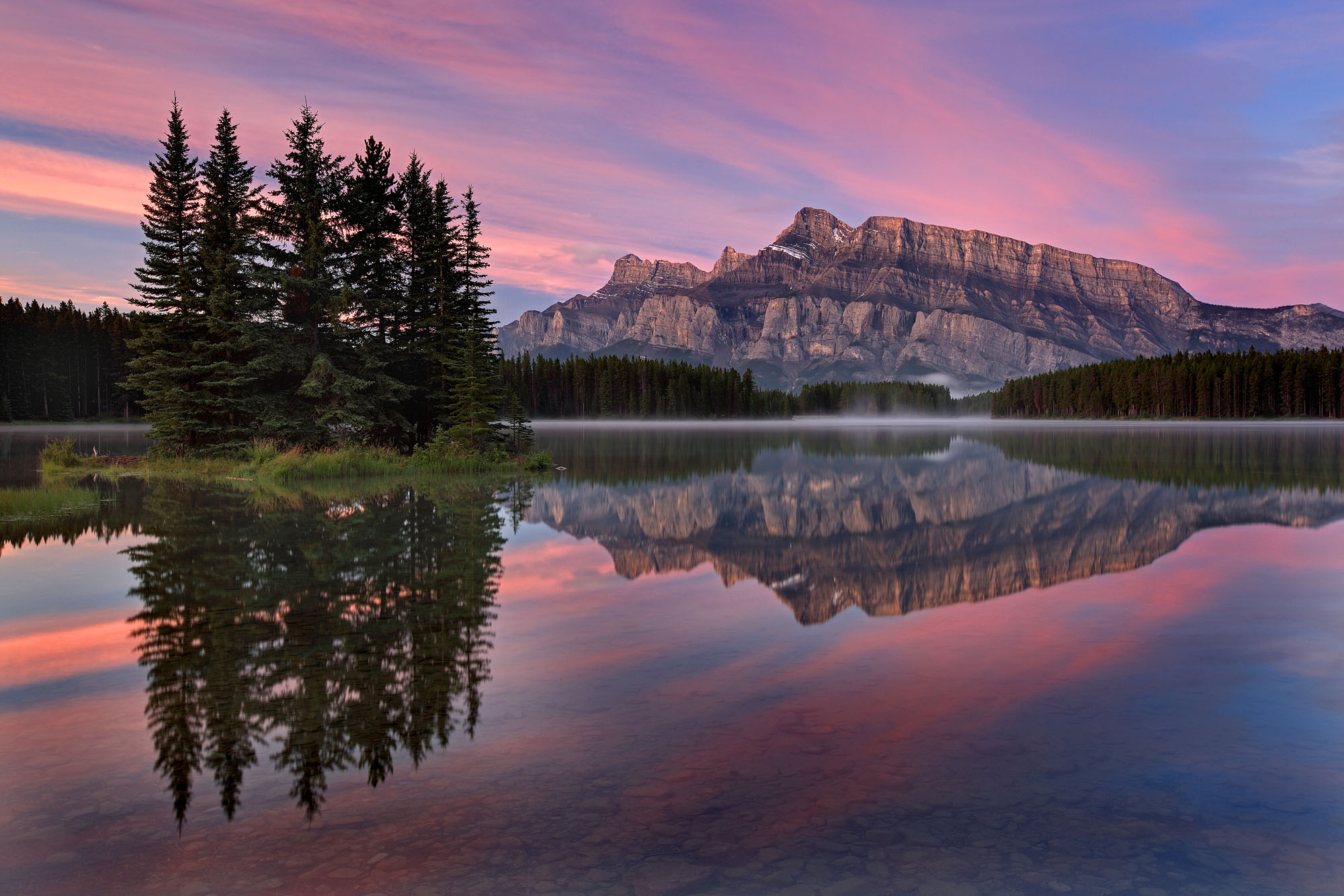
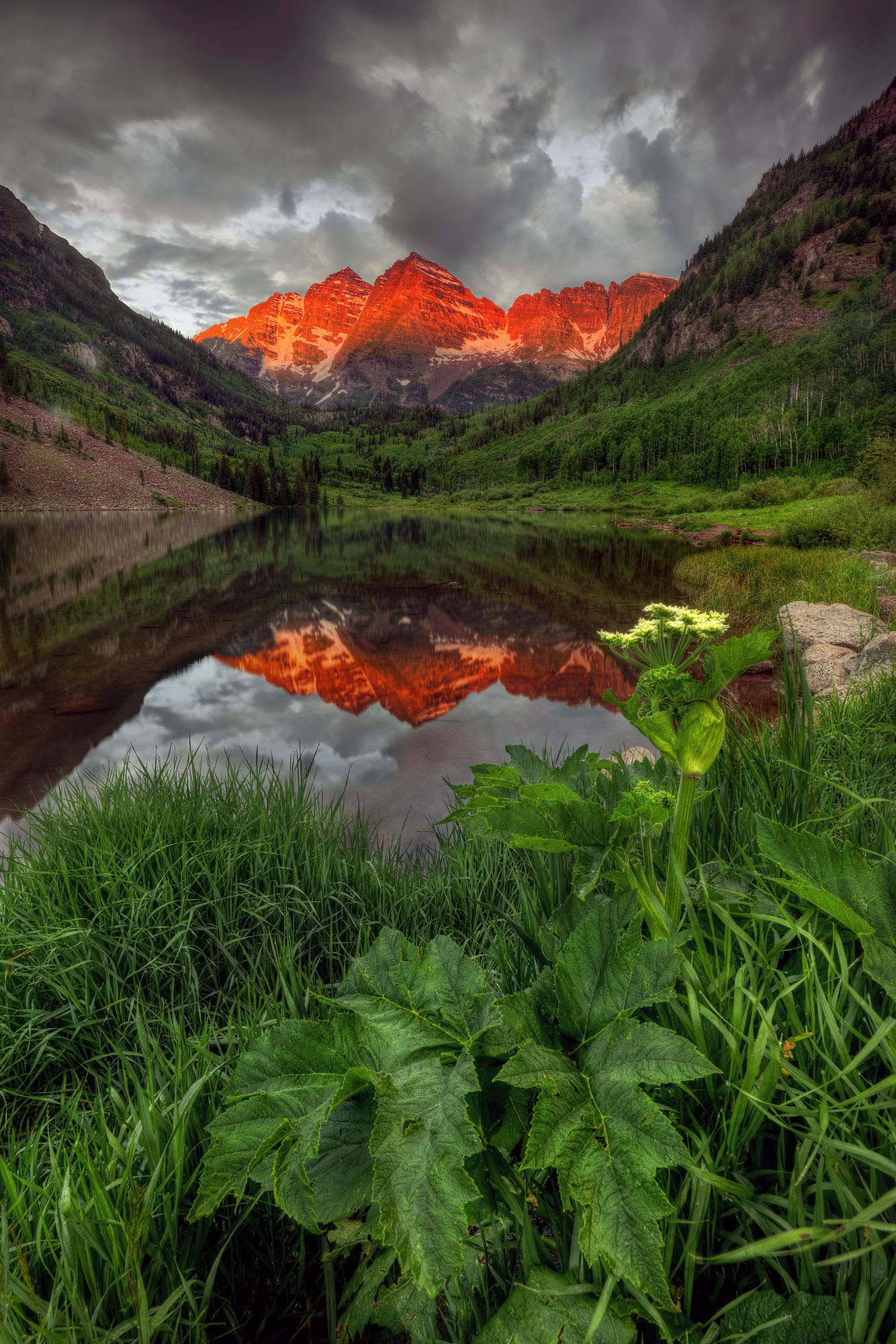
The alpenglow at sunrise was spectacular. After seven failed attempts in the pouring rain, the conditions were finally perfect, although it looked like another cold and gray morning. Just in time, however, the cloud cover opened and allowed a few sunbeams to shoot across the sky. They illuminated the fast-moving clouds and jagged peaks for only about ten seconds. After this fleeting moment of pure bliss, the landscape was once again shrouded in gray.