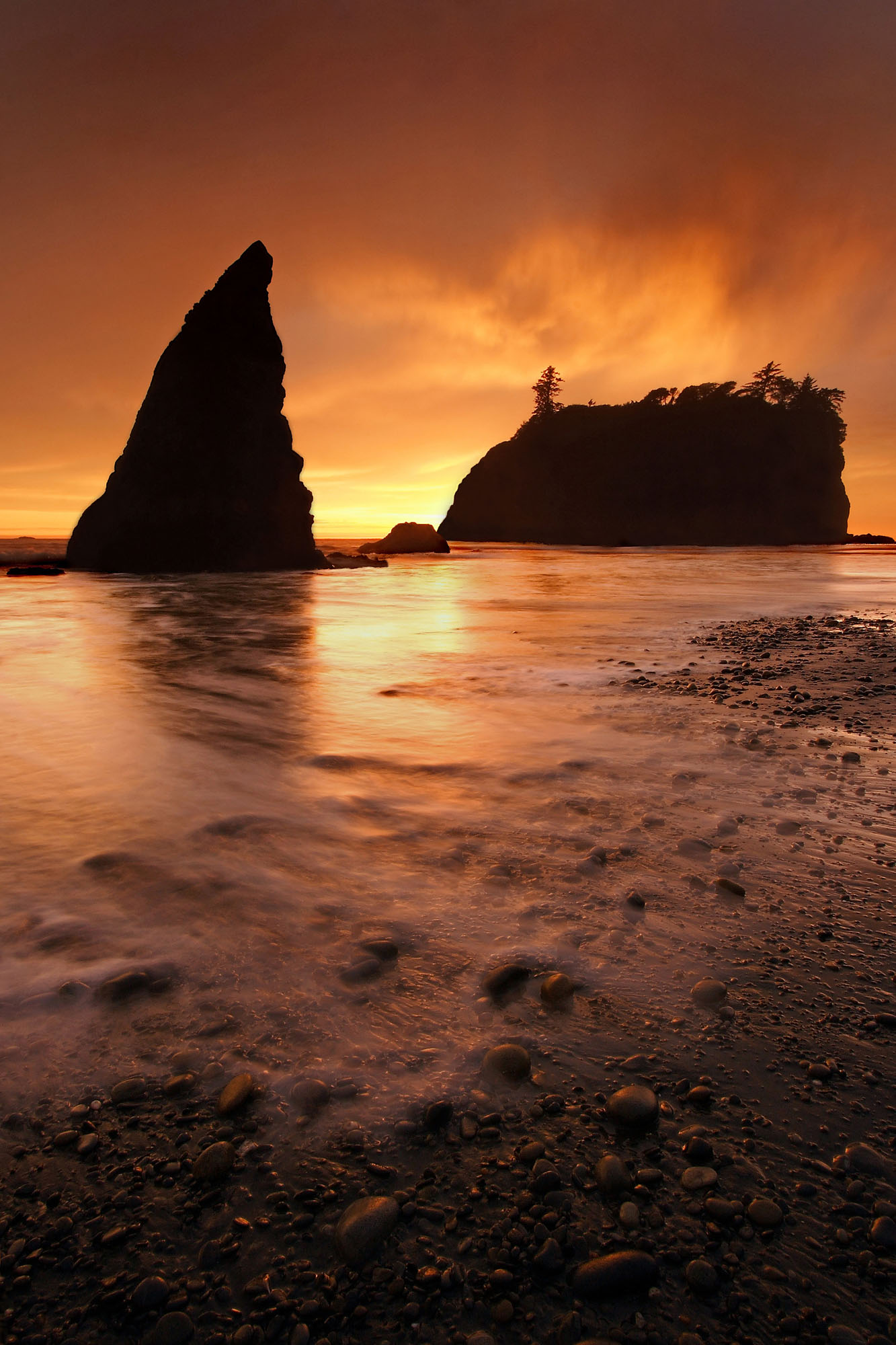
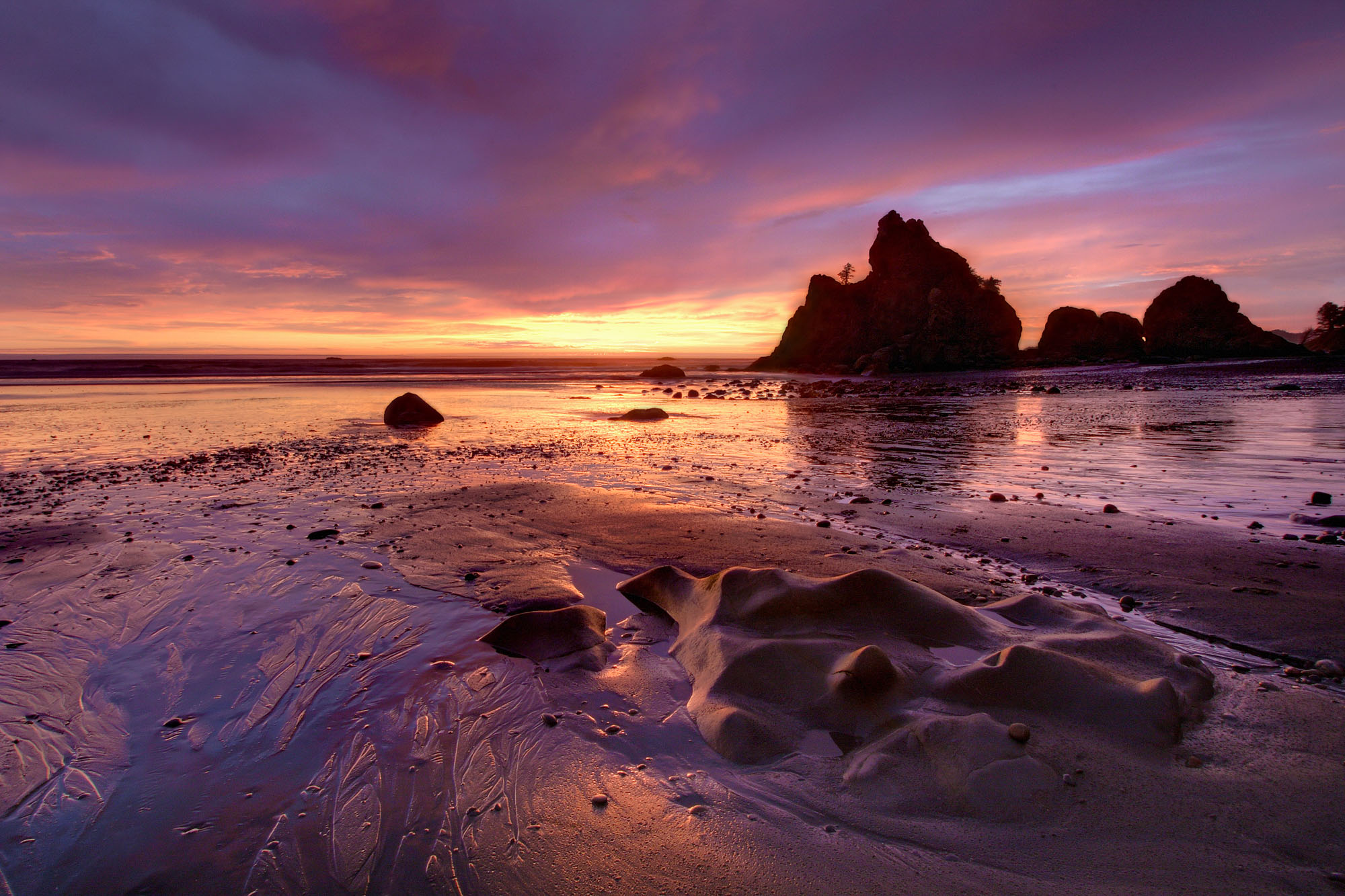
Ruby Beach in Olympic fascinates with its impressive sea stacks and sand patterns illuminated by the backlight of the setting sun. The Pacific coastline of Washington is a tectonically very active region and is repeatedly struck by severe earthquakes and tsunamis. The reason is that deep-sea sediments are welded onto the continent while the oceanic plate sinks beneath the continent.
Basalt is a dense and therefore heavy volcanic rock. The seafloor is composed of basalt in the form of pillow lavas. During seafloor spreading, oceanic plates grow older and therefore accumulate thick layers of comparatively lightweight sediments. The Juan de Fuca oceanic plate subducts beneath the North American continent, which is relatively young at about 10 million years of age. During the subduction process, the lightweight deep-sea sediments are scraped off the heavy volcanic ocean floor. This causes the sediments to become steeply tilted into a tectonic mélange, called flysch, that is attached to the seaward-growing continent. Former deep-sea ocean sediments become land through a geological process called accretion. This explains why the coastline of the Olympic Peninsula exhibits the youngest rocks, which are only 20 million years old. The surf is already eroding these former deep-sea sediments, now forming the headlands, into sea stacks.