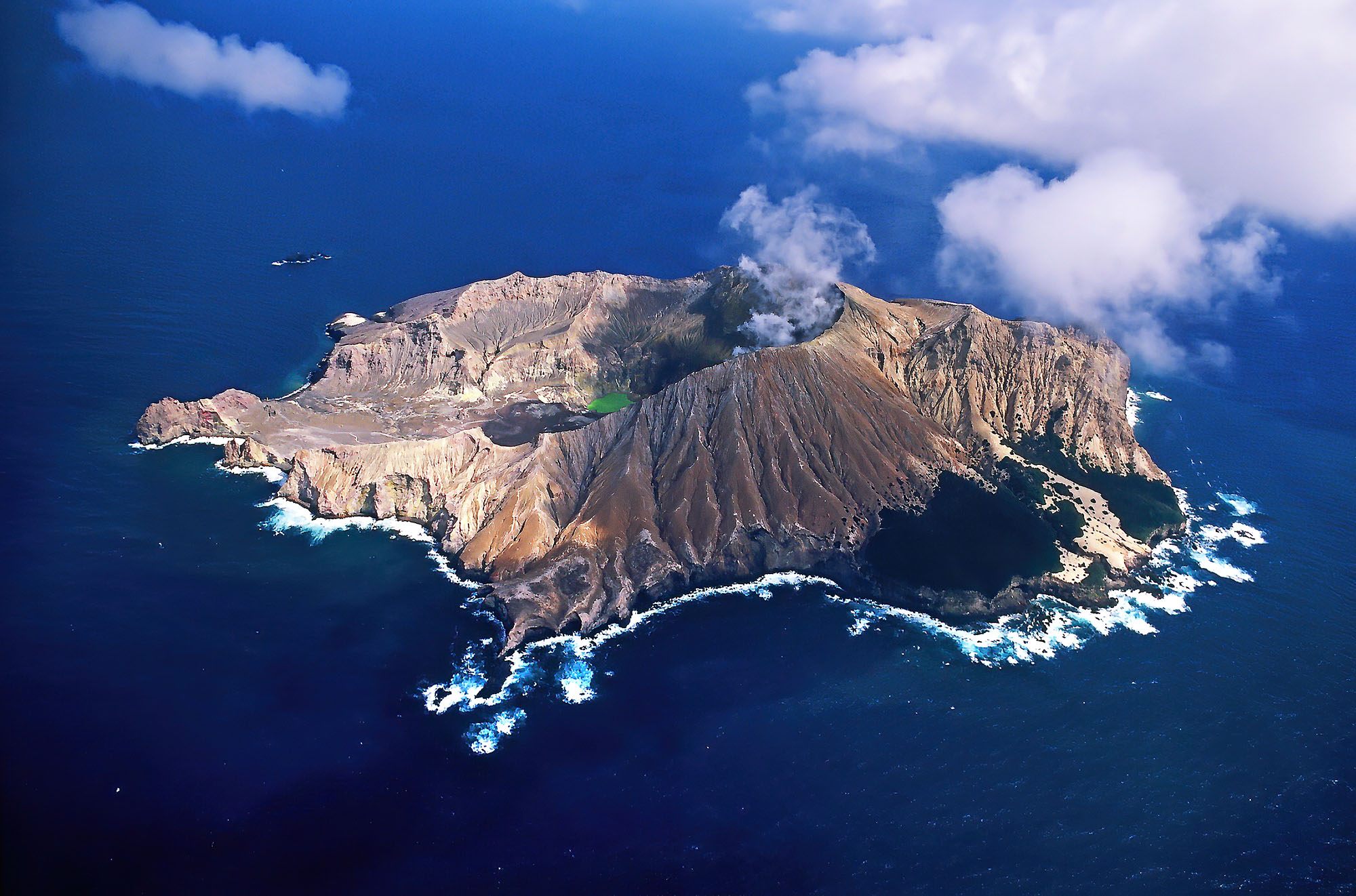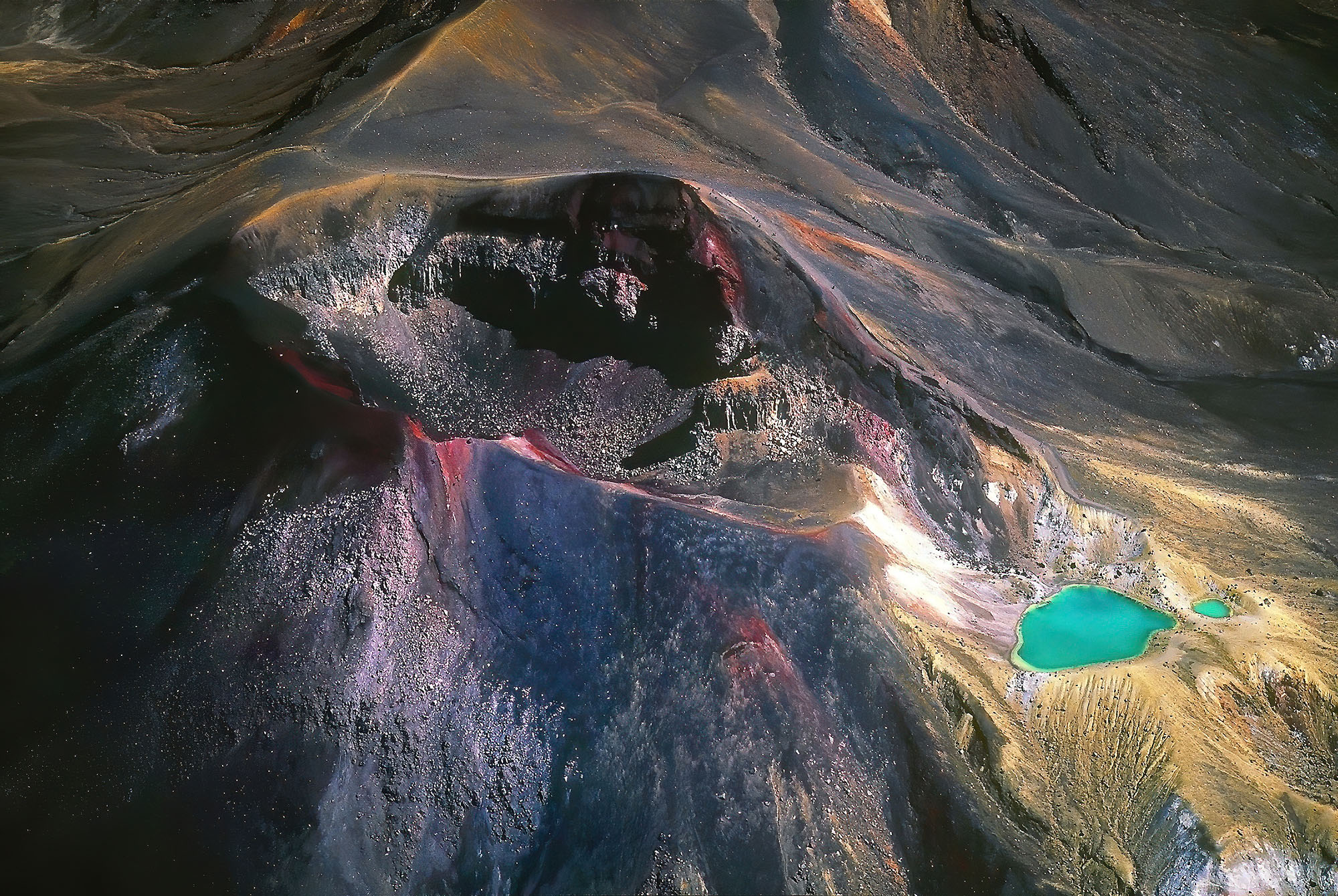
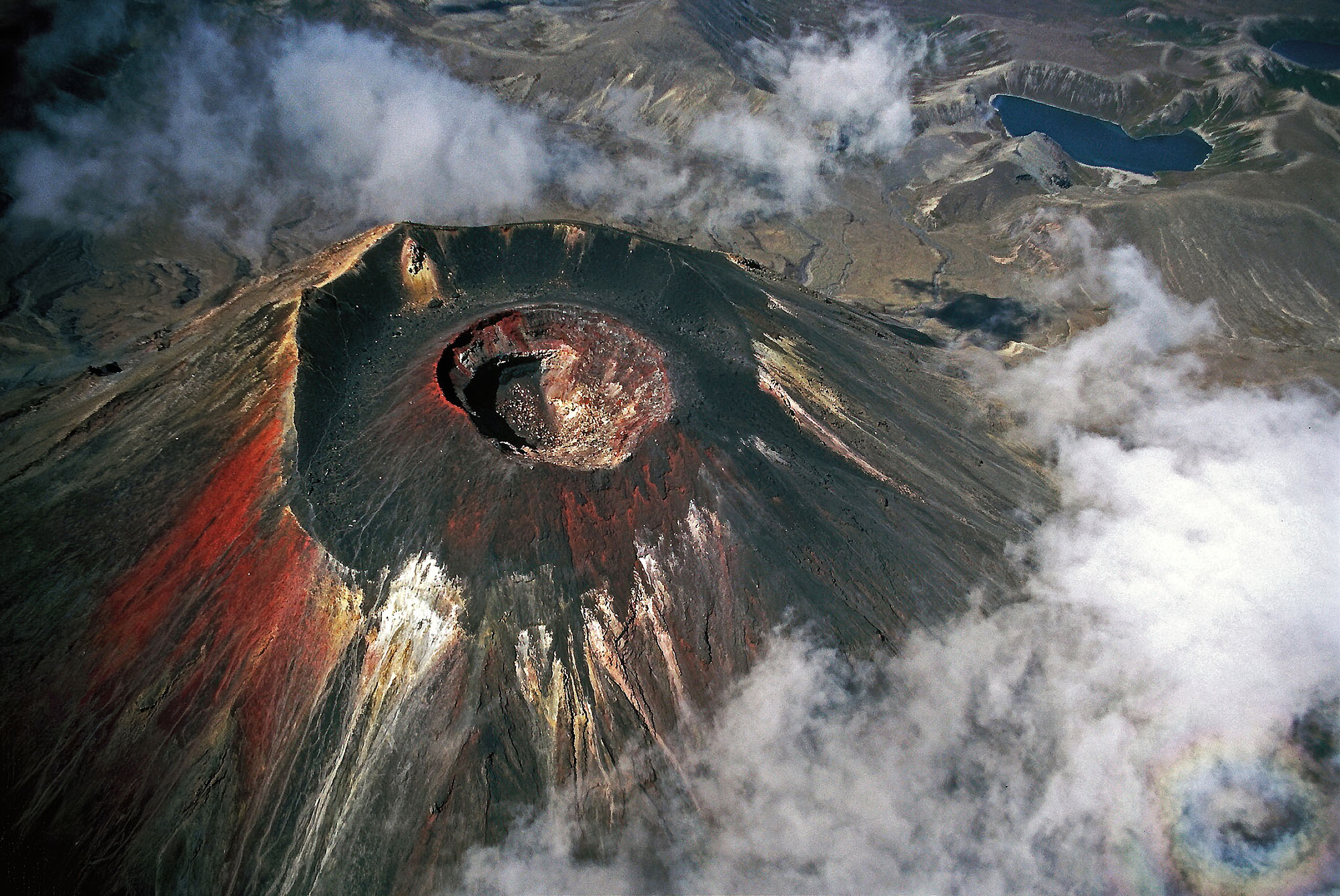
The aerial view of Mount Ngauruhoe volcano in New Zealand reveals its young and beautiful crater, which last erupted in 1973 and 1975. Its steep slopes are covered with colorful ash and pumice. The 2300 m (7500 ft) high and perfectly shaped stratovolcano consists of layers of explosive andesite lava and pyroclastic tephra. Although it is a majestic volcano in its own right, it is geologically a secondary cone of Mount Tongariro. This young vent in the Taupō Volcanic Zone on the Central Plateau of the North Island first erupted about 2500 years ago and has been active ever since, with more than 70 eruptive episodes since 1839.
The Tongariro volcanic chain is located on a two-million-year-old plateau of the huge Taupō volcano. Taupō’s historic eruptions even influenced the climate in Europe. At a depth of 75 km (47 mi), the Pacific Ocean seafloor plate subsides beneath the Indo-Australian tectonic plate. Continuously heating up, it reaches the melting point at a depth of 140 km (87 mi). This rising magma feeds the volcanoes and causes the episodic eruptions of varying intensity.
The deep-blue Two Lakes are water-filled explosion craters in the barren land surrounding Mount Ngauruhoe.