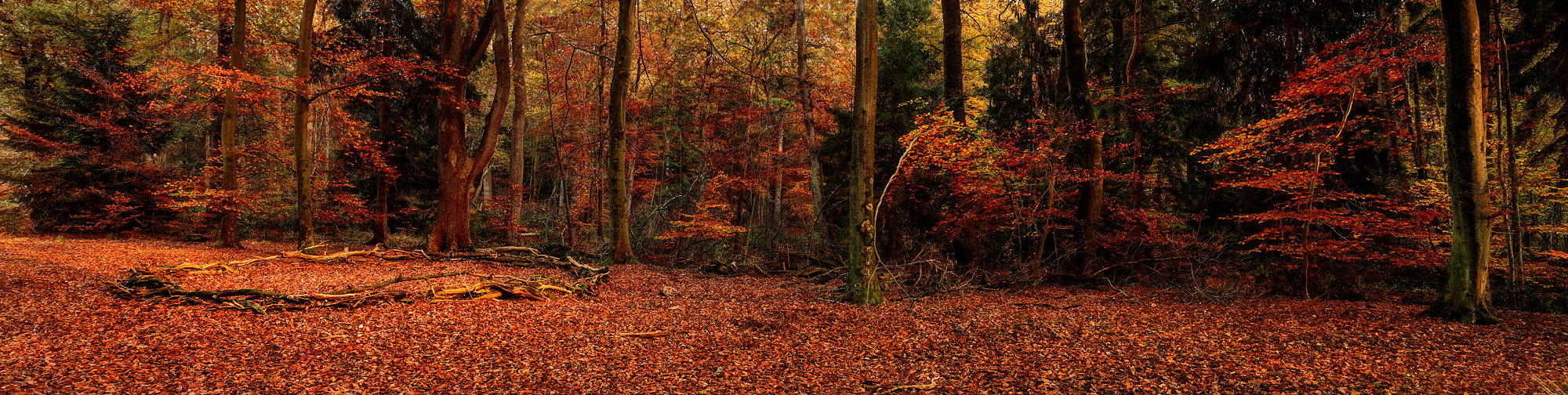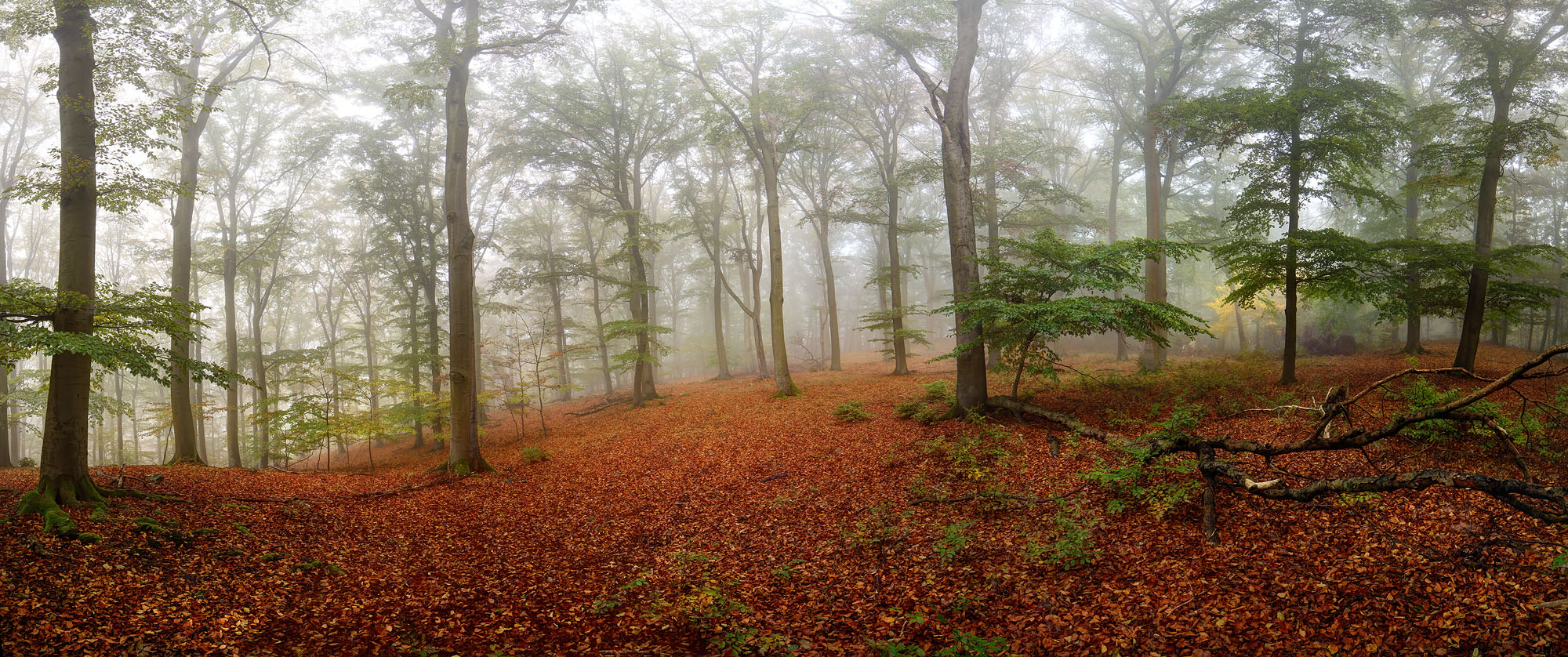
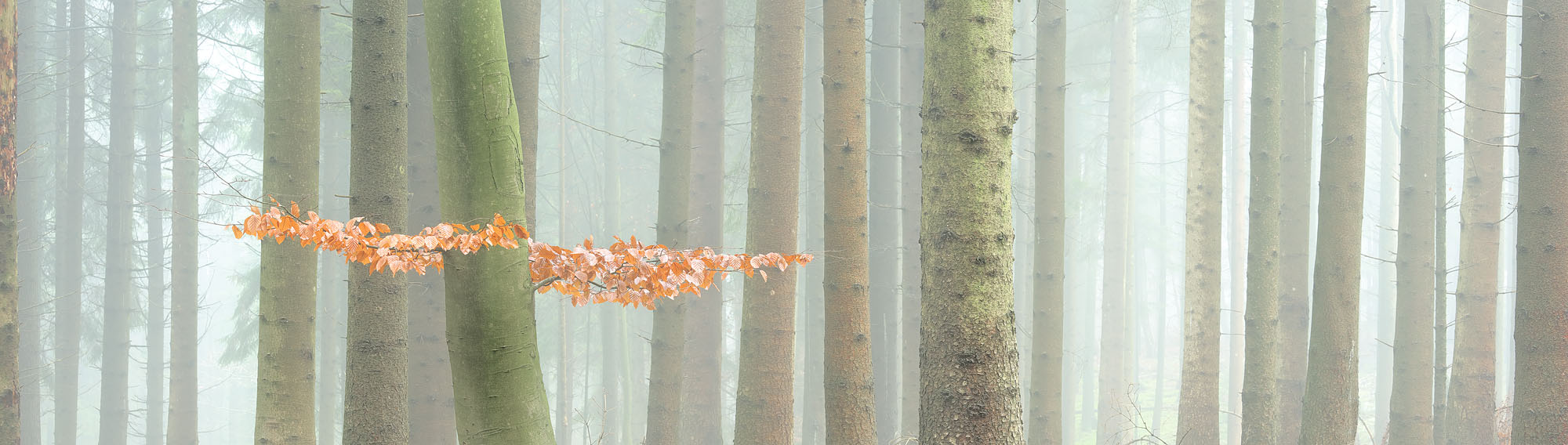
Mature beech trees reach heights of 30 to 45 meters and can live for 300 years or more. Their mighty crowns form a dense canopy that cloaks the forest floor in deep shadow. Hardly a ray of sunlight reaches it, creating a cool and humid forest climate.
For young beech trees, this environment is a challenge, because light is scarce. Yet the beech responds to this shortage with an extraordinary strategy: it does not live as an individual, but as part of a community. Through their extensively interconnected root systems, the trees communicate with one another and can support young and weakened members of their species with nutrients. In this way, the forest gains resilience and becomes more robust than any individual tree could ever be.
This interaction is a fascinating example of the principle of emergence: the whole is more than the sum of its individual parts. The true strength of the forest arises from the connections between its inhabitants.
Anyone who looks closely at beech trees will quickly recognize that no tree is like another. Their elegant, almost feminine-looking growth forms and their social care for one another have earned them the name “mother of the forest.”
But beech trees are not only a habitat; they are also water reservoirs. Their steeply rising branches collect rainwater and channel it like a natural plumbing system toward the trunk. Along the smooth bark, the water reaches the forest floor and supplies the soil organisms in the root zone. In this way, beech trees contribute to the forest’s water balance and to the storage of water in the forest soil.
Beech trees can retain their withered leaves well into winter, as here with this “Crown of the Forest” on a winter day in dense fog. The following spring, the beech revealed itself with a new generation of fresh, luminous, almost neon-green leaves.