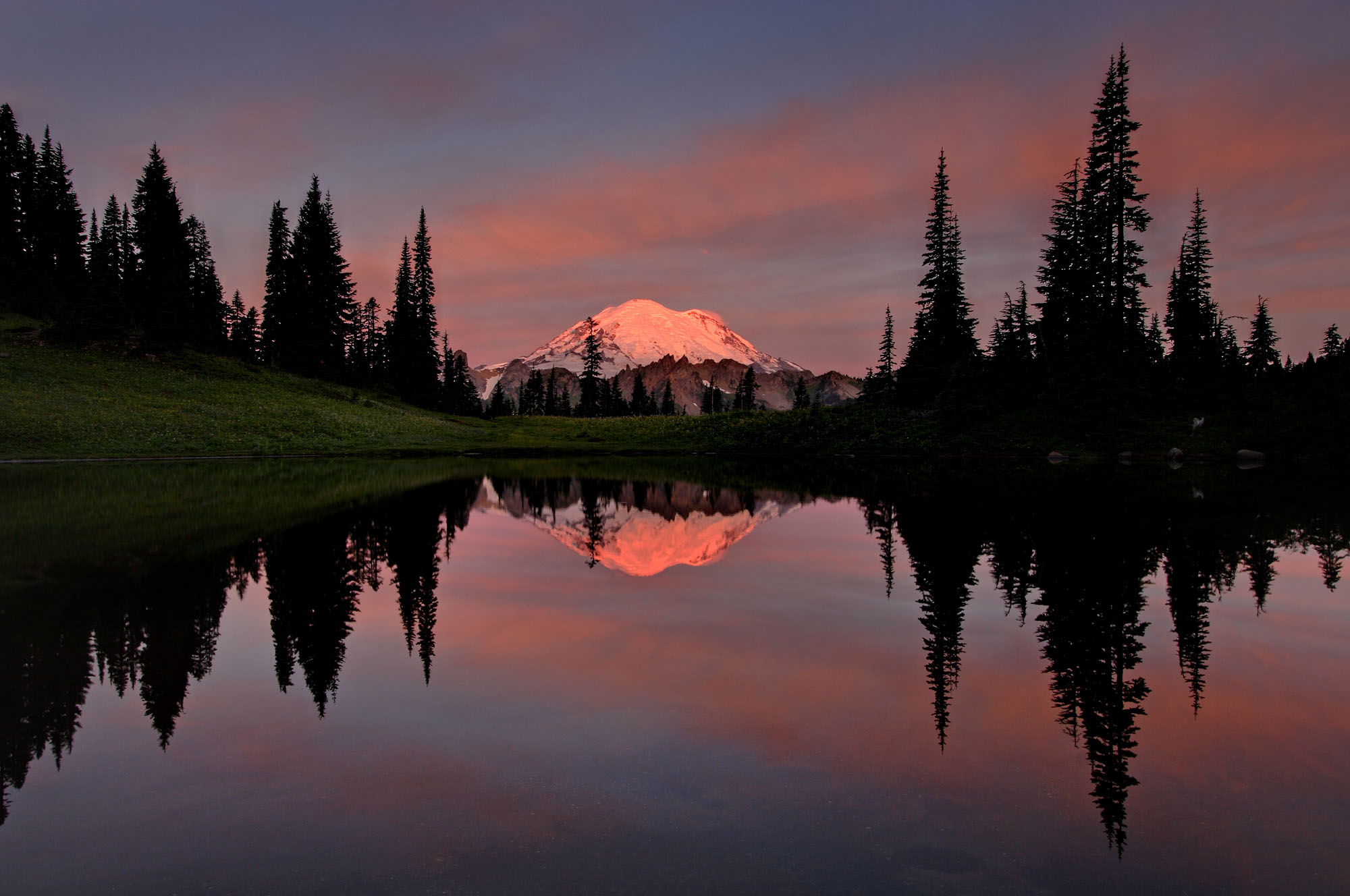
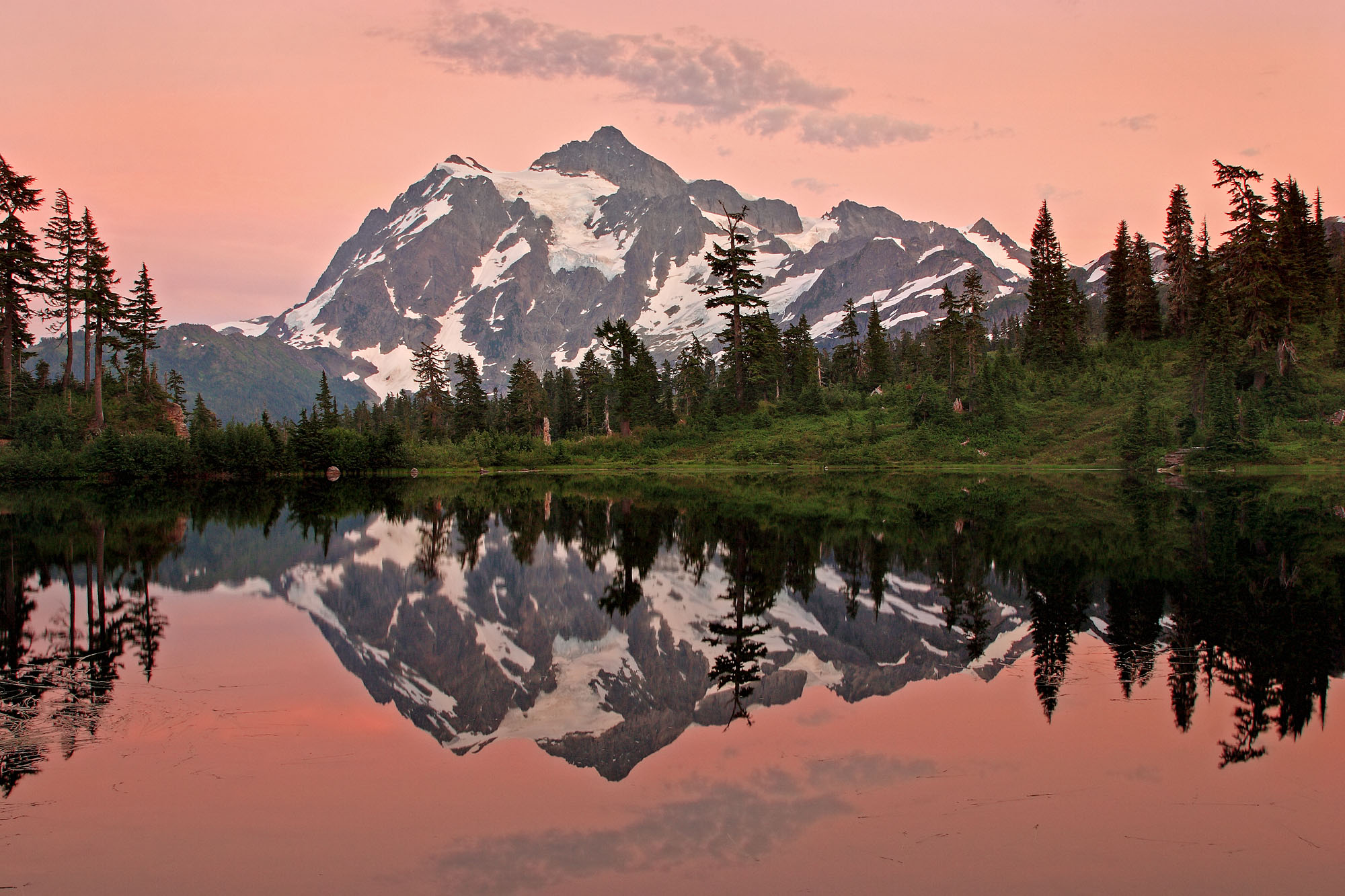
Mount Shuksan is mirrored in Picture Lake in the North Cascades of Washington. In the last light of dusk, high cirrus clouds of an approaching low-pressure system illuminate the sky in deep pink. The wild and rugged North Cascades mountain range is also geologically wild terrain.
Mt. Shuksan is a glacial horn that rises to an elevation of 9,131 ft (2,783 m) and intercepts the moisture-laden winds coming in from the Pacific Ocean. Hence, annual precipitation reaches 110 inches (2.8 m), with snow accumulation of up to 46 ft (14 m). This nourishes glaciers, streams and lakes. Glaciers during the last Ice Age gouged out hollows in the lava bedrock of the neighboring Mt. Baker volcano, which are today occupied by lakes. During the summer months, soil washed down by creeks slowly fills the lake, resulting in a transition from lake to meadow, where mountain hemlock and Pacific silver firs are growing.
The North Cascades consist of very old oceanic and continental terranes of different origins that arrived here as microplates during the late Mesozoic and early Tertiary. Young volcanoes are superimposed on this mountain range as a result of the ongoing steep subduction of the Juan de Fuca oceanic plate beneath the North American continent.