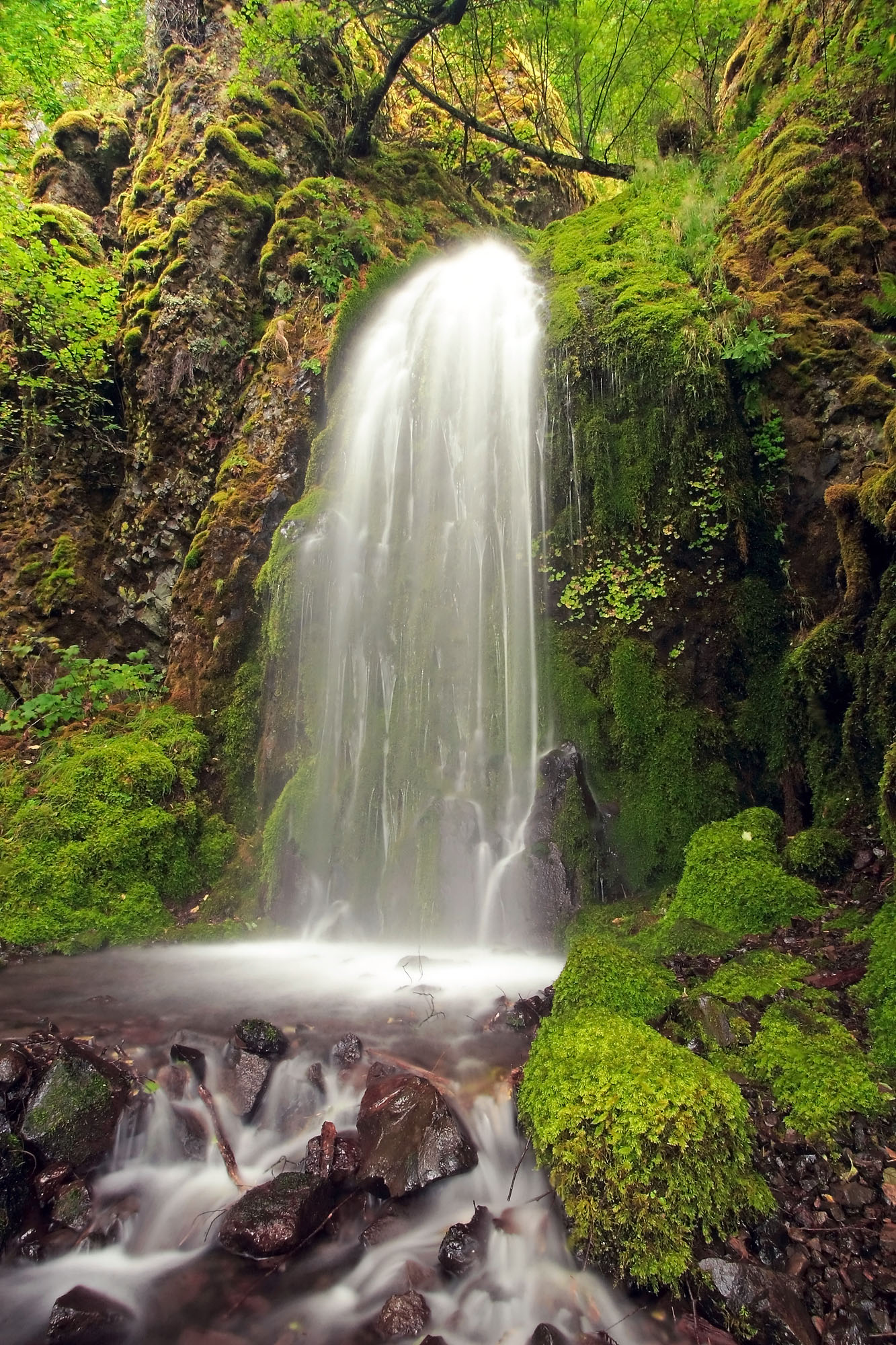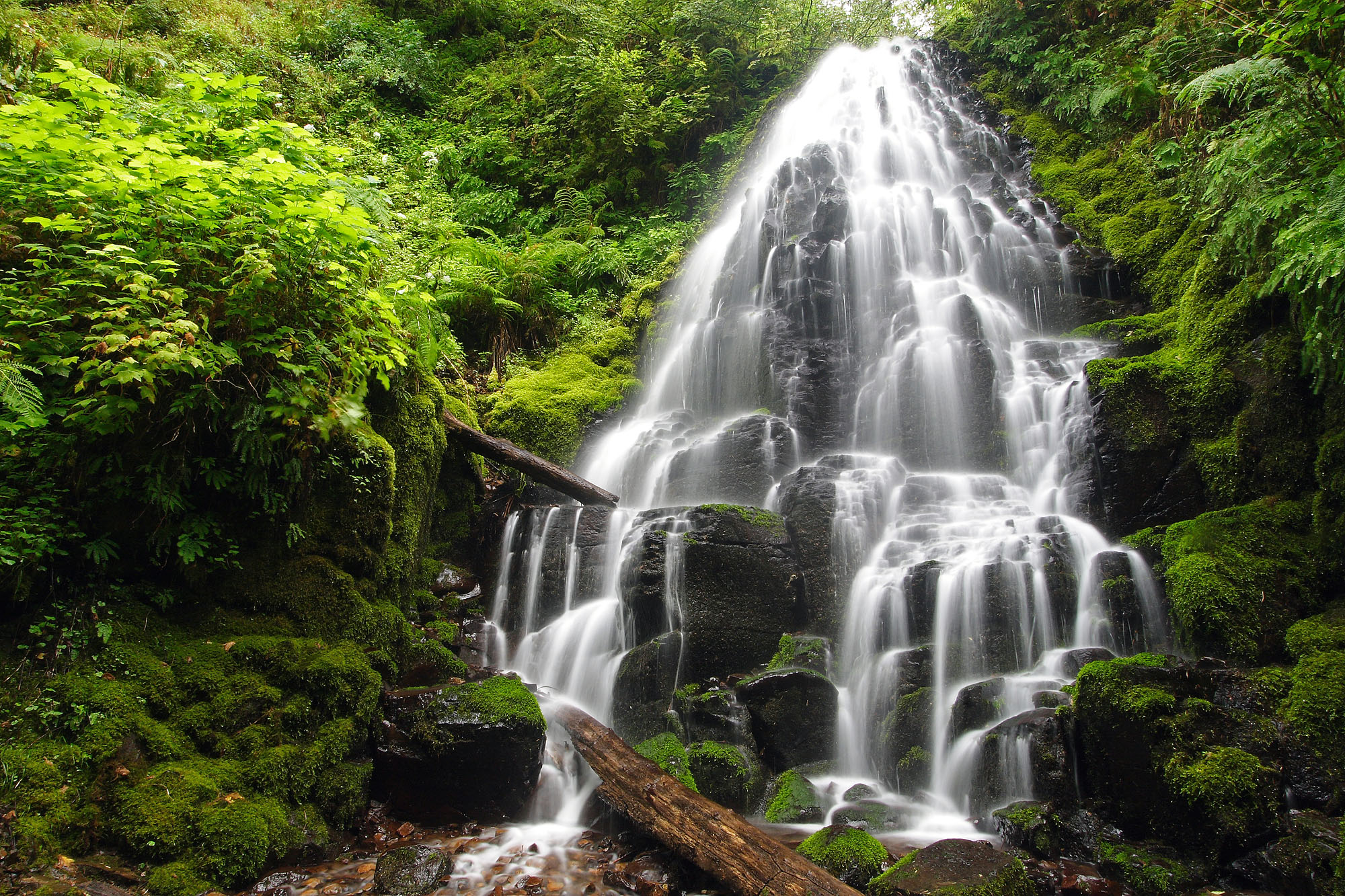
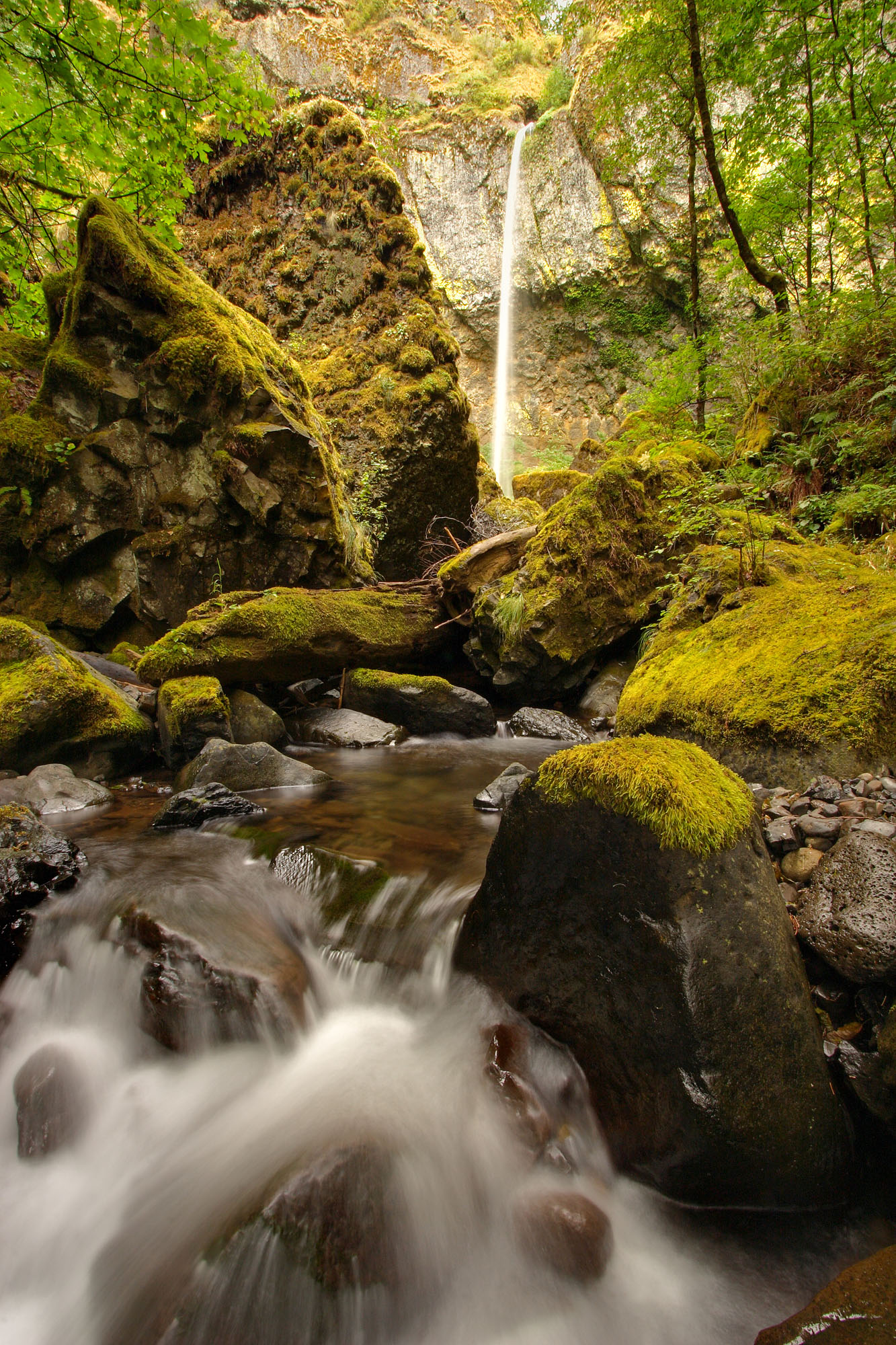
Elowah Falls of McCord Creek in the Columbia River Gorge in Oregon plunges 65 m (213 ft) into a natural amphitheater of layered basalt, lichens and mosses.
Despite the cataclysmic outpourings of flood basalts about 17 million years ago, the beautiful Columbia River Gorge was the scene of up to 90 catastrophic events that occurred between 13,000 and 15,000 years ago. At that time, the Ice Age was coming to an end. The large ice sheet covering British Columbia advanced into the mountainous terrain of northern Idaho and northeastern Washington, slowly filling the Columbia Basin between the Cascade Range and the Rocky Mountains. The advancing ice blocked the Clark Fork River, which drained the ice sheet and numerous glaciers in the Rockies. Consequently, meltwater backed up into the valleys of northwestern Montana, forming a huge lake known as Glacial Lake Missoula.
The water reached a depth of about 2,000 ft (600 m), while the ice dam blocked the canyon over a length of 30 miles (50 km). At that time, the ice dam began to float, opening tunnels through which the meltwater drained within a matter of hours. Finally, the ice dam collapsed, resulting in a torrential flood that carved the canyon walls of the Columbia River Gorge. Rivers flowing into the gorge were left hanging above the newly deepened canyon, giving rise to today’s beautiful waterfalls.