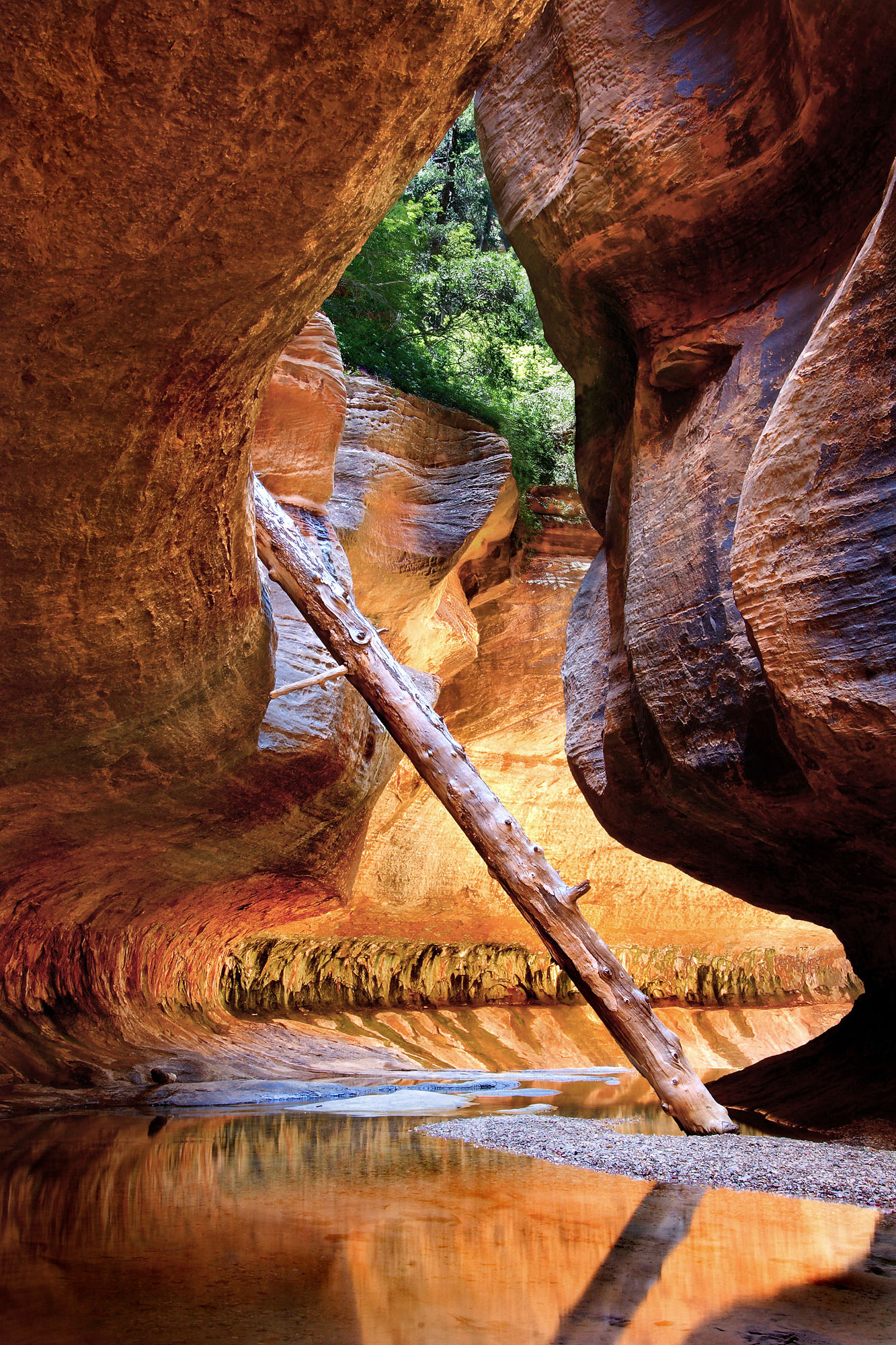
The Subway in Utah’s Zion Canyon is a unique rock formation located in the lower reaches of the Left Fork of North Creek, a tributary of the Virgin River that flows through Zion Canyon National Park. On a broader scale, Zion lies along the western margin of the Colorado Plateau. The Subway is one of the most spectacular slot canyons in the region, carved into Navajo Sandstone, a rock formation from the age of the dinosaurs more than 190 million years ago.
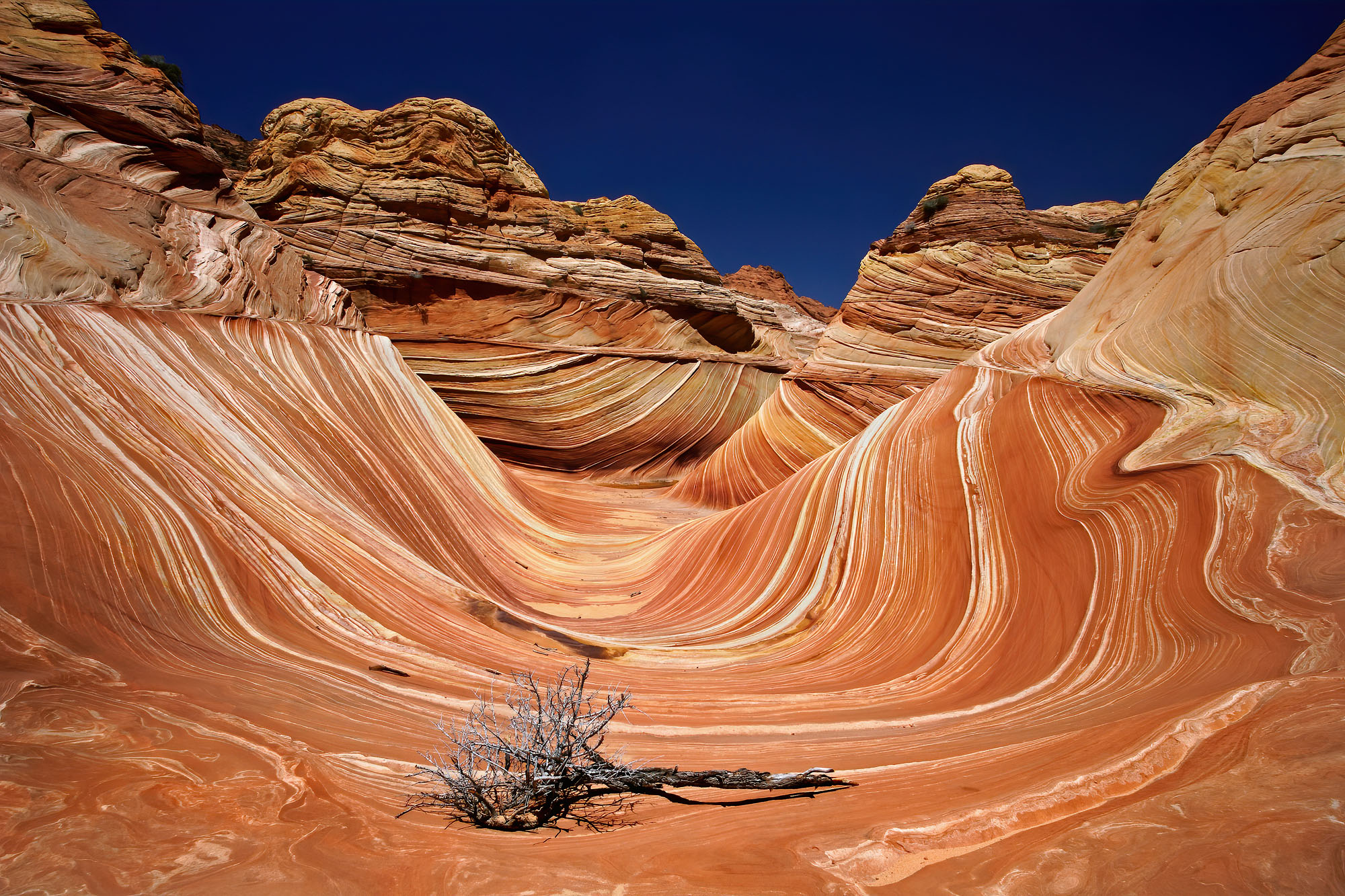
This Navajo Sandstone formed during the Jurassic Period, when the region was a vast desert of windblown sand dunes. About 600 meters (2,000 feet) of quartz-rich sand accumulated here, carried by rivers and streams that eroded the Appalachian Mountains far to the east. The wind then sculpted the sand into enormous dunes, creating a landscape that must have resembled today’s Sahara. Over time, the buried sand was compressed and cemented into the sandstone we see today.
Tiny amounts of iron oxides are responsible for the extraordinary colors of the Colorado Plateau. When exposed to oxygen in air and water, these minerals oxidize and form rust. Their different chemical compositions include hematite, limonite, and goethite, which stain the quartz sand in deep reds, yellows, and even pinks.
The Subway lies within the lowermost and therefore oldest layers of the Navajo Sandstone. Tectonic movements across the Colorado Plateau fractured the rock layers along vertical joints. Into these fractures, the underlying and much older siltstone of the Kayenta Formation was exposed. Located beneath the Navajo Sandstone, the Kayenta Formation consists largely of ancient river and lake deposits from a landscape that once teemed with life, including dinosaurs.
This siltstone is considerably softer than the overlying sandstone and therefore erodes more rapidly under the forces of water and wind. As North Creek began to flow through the region, it gradually exploited these fractures and cut into the sandstone, forming a slot canyon at a rate of about 0.4 millimeters (0.016 inches) per year, roughly the diameter of a grain of sand. At that rate, a million years would be enough to cut 400 meters (1,300 feet) into the rock, and Zion Canyon itself took roughly two million years to develop.
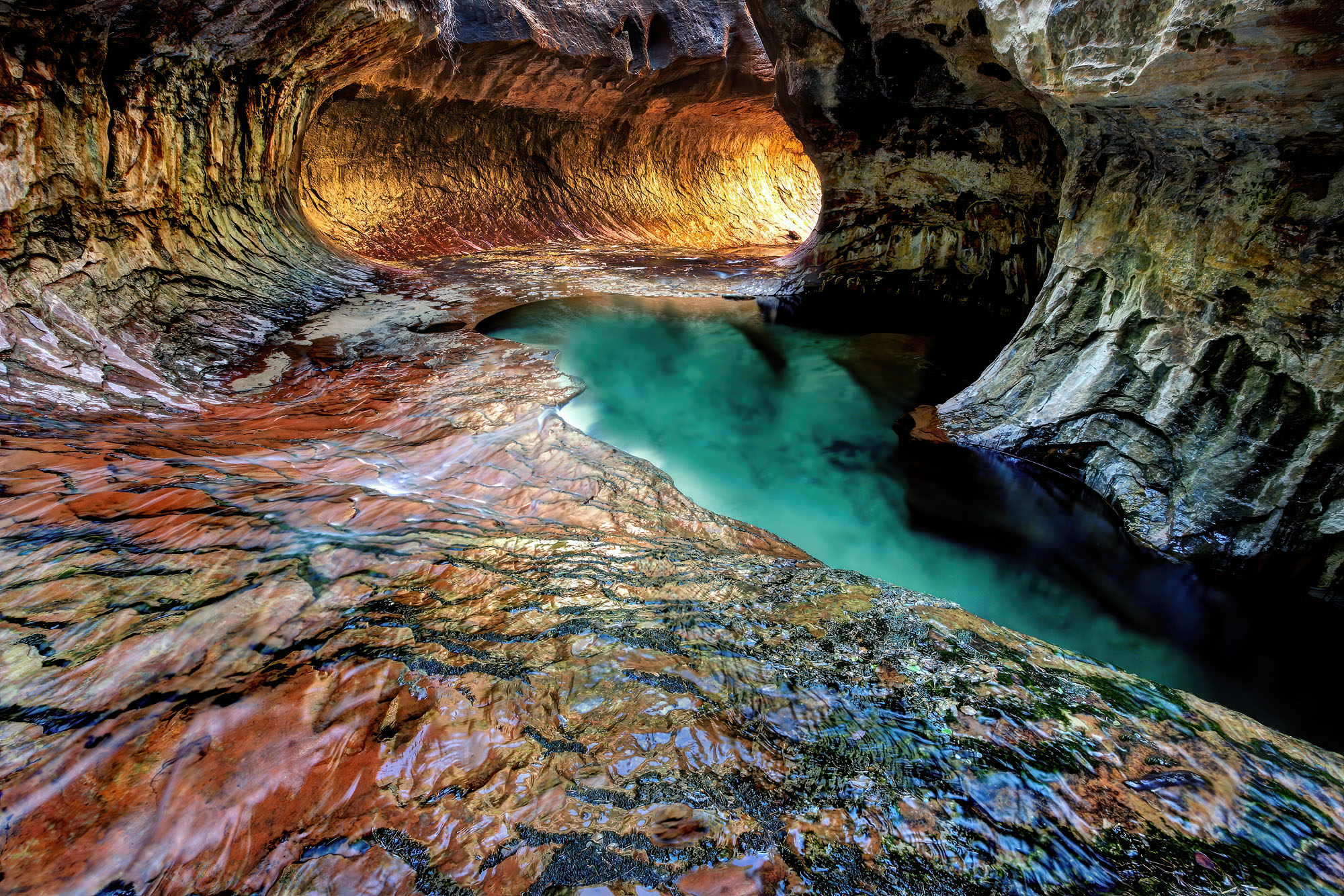
Once North Creek reached the softer siltstone, it began to erode it much more rapidly, sculpting the distinctive inverted keyhole shape of the Subway. The narrow, twisting passages and smooth, curving walls are a testament to both the relentless power of erosion and the beauty it can create. This process, known as differential weathering, continues to widen and round the interior of the canyon while the sandstone walls above remain narrow and steep.
The Subway features a fascinating variety of geological patterns, including potholes, circular cavities created by swirling water, and joints that appear as long, narrow grooves running through the rock. Most of the erosion occurs during summer flash floods, when localized but intense thunderstorms associated with the summer monsoon release torrential amounts of rain.
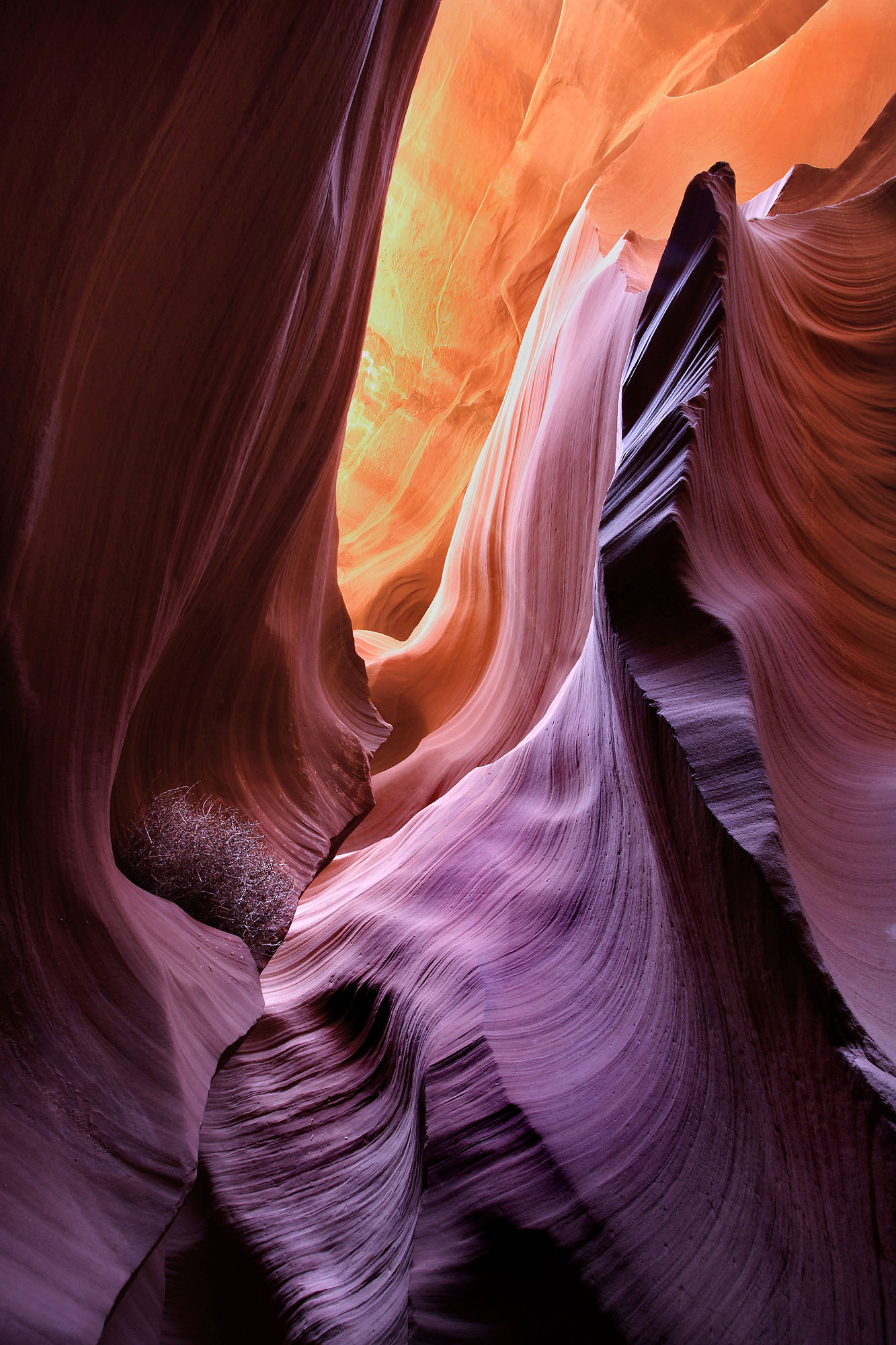
When photographed from the right angle, the striking geometry of the Subway can appear almost completely enclosed overhead, creating the illusion of a tunnel filled with mesmerizing light. This golden illumination is visible for only a few minutes around midday, shortly before direct sunlight reaches the canyon floor. It results from sunlight reflecting repeatedly off the curved canyon walls. As the sun moves across the sky, indirect light reaches different parts of the Subway, revealing its extraordinary colors and textures. The curved sandstone walls are particularly effective at reflecting and redistributing this light.
The Kayenta Formation also contains numerous dinosaur tracks, including a site known as the Dinosaur Stomping Ground about a mile upstream from the Subway. The tracks were left by several species, including sauropods and theropods, offering a glimpse into an ancient landscape of streams and rivers where dinosaurs roamed, mostly as three-toed bipedal animals.
Sojourning in the Subway while its sandstone walls seem to burn with color, painted by iron oxides and scattered sunlight, is an extraordinary experience. Together with the flowing water and the ever-changing hues reflected in the potholes, the canyon creates an atmosphere in which the eternal journey of the elements becomes almost tangible.