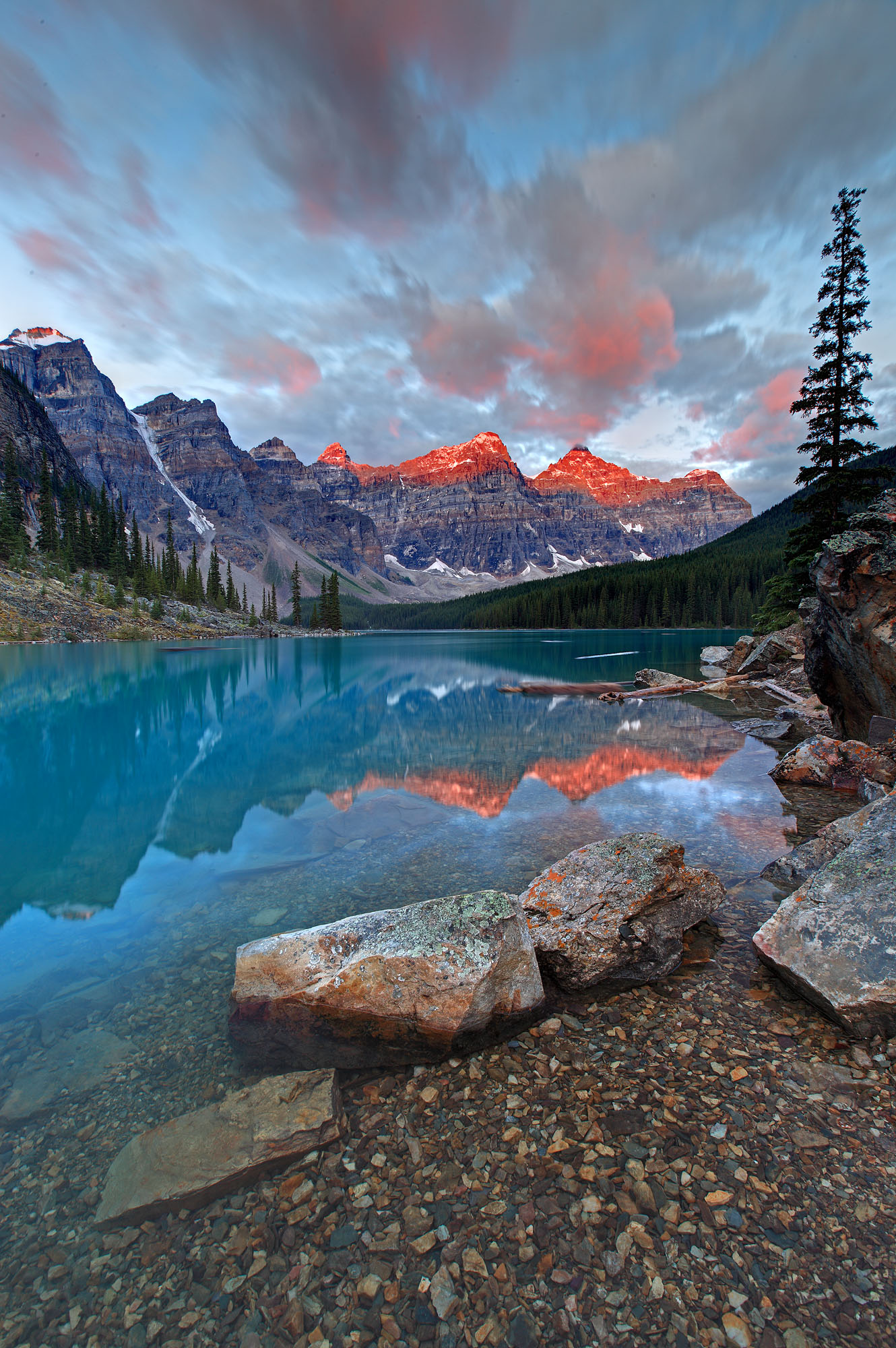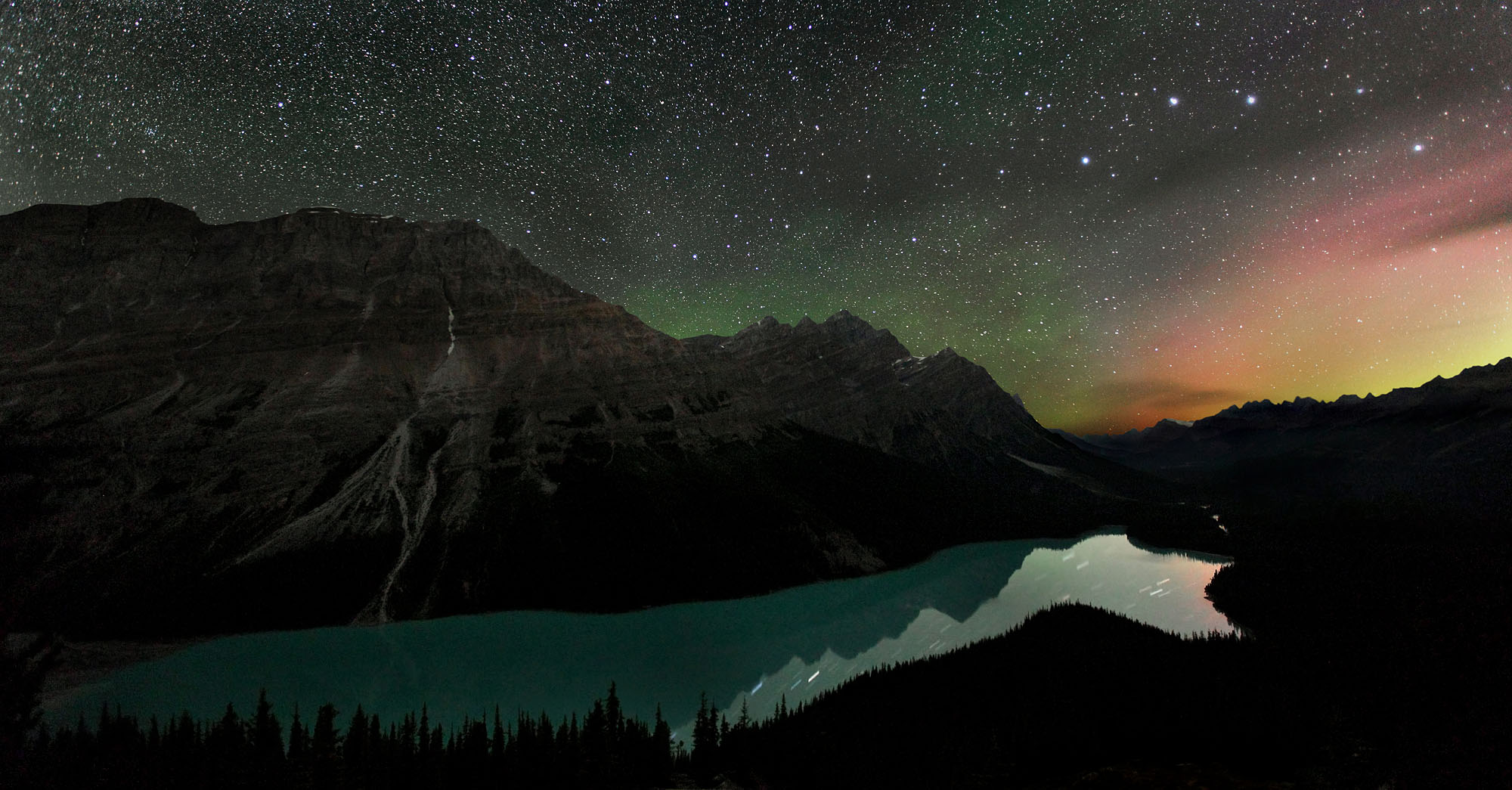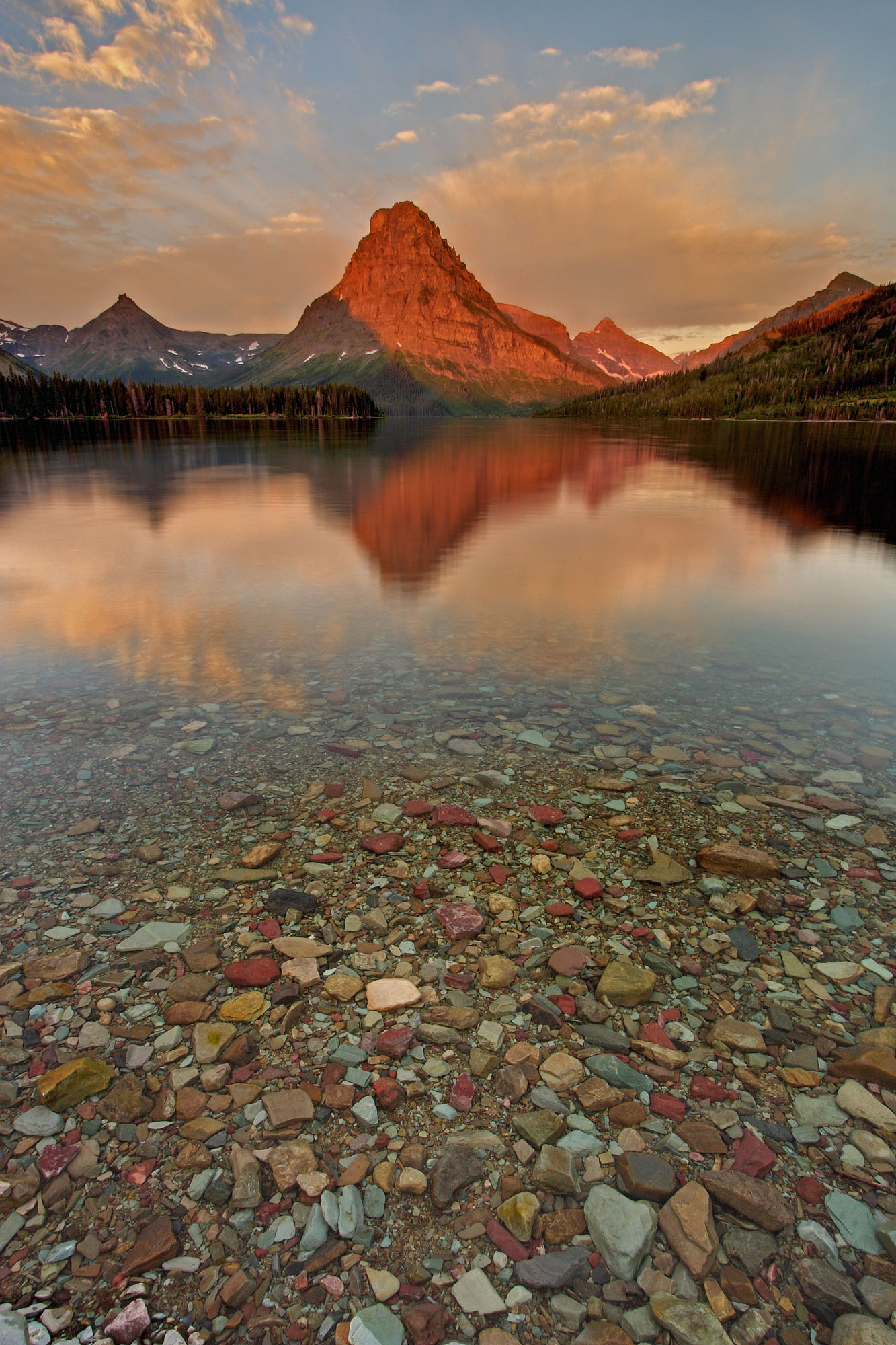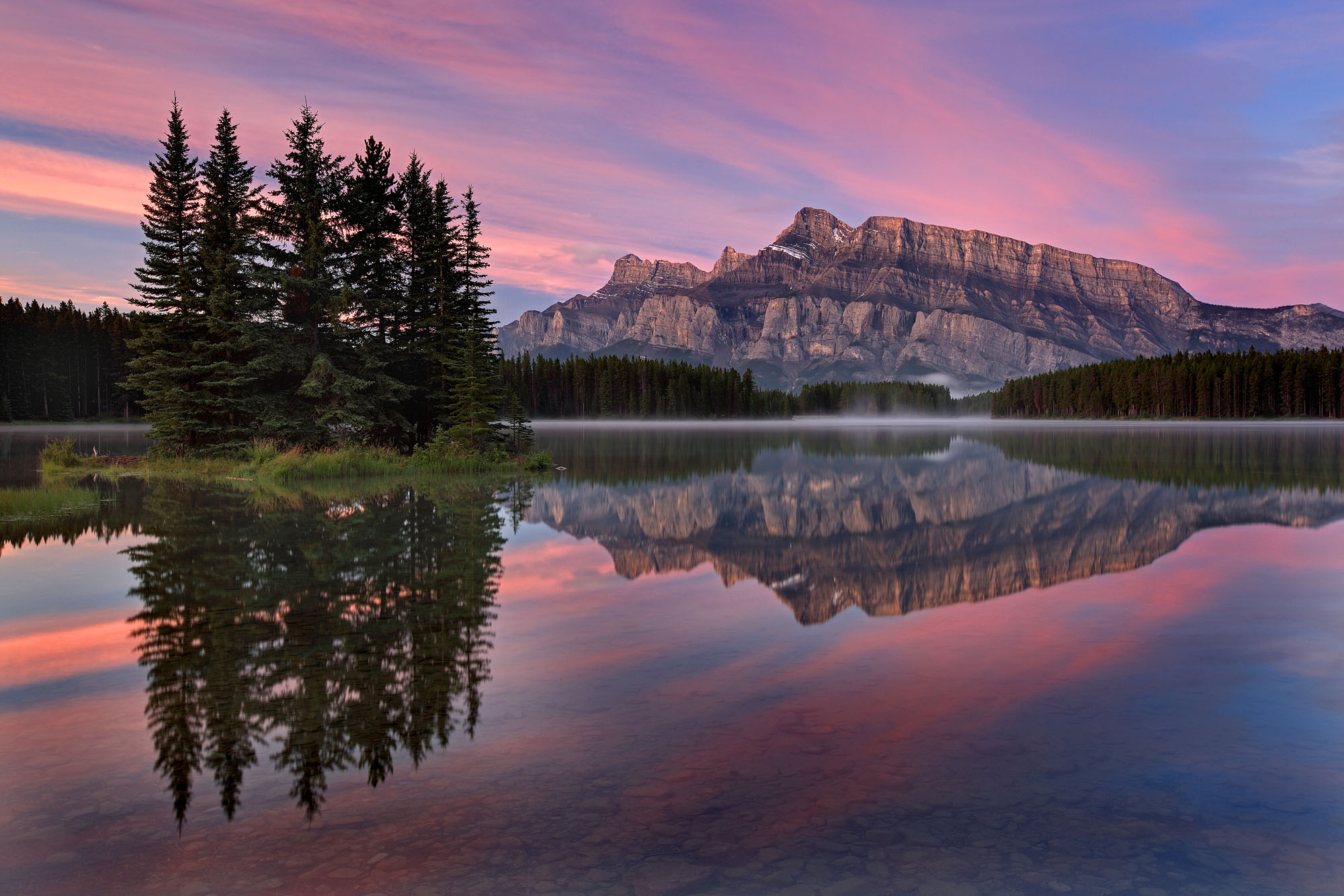
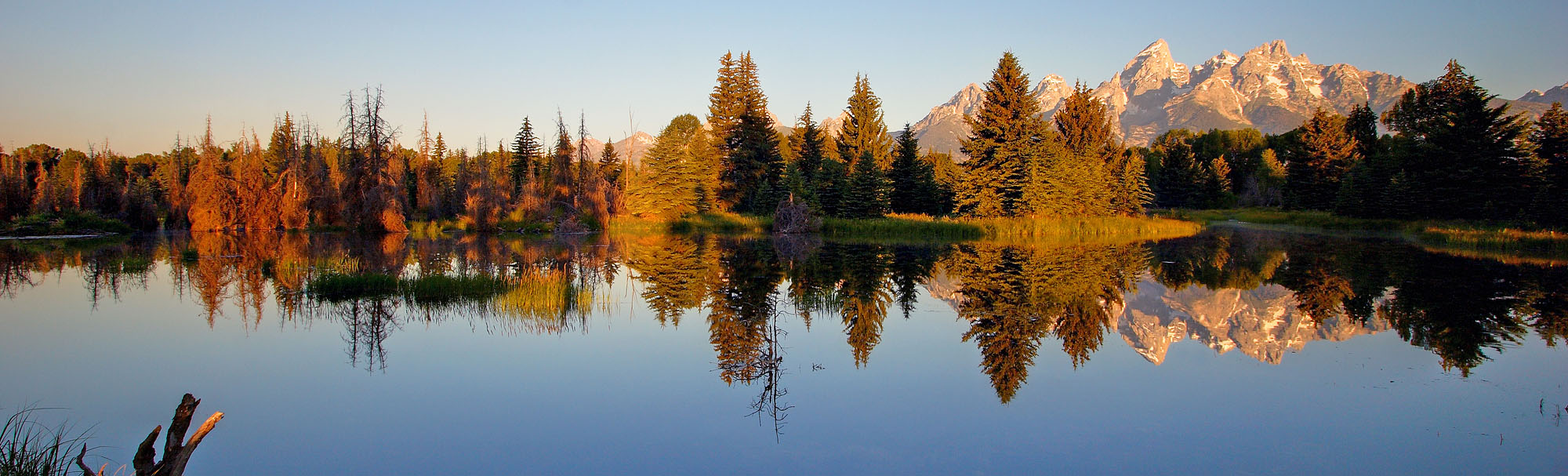
The sky-high Grand Teton Range of the Rocky Mountains in Wyoming is beautifully mirrored at sunrise in the Oxbow Bend at Schwabachers Landing. From left to right, the peaks are South, Middle and Grand Teton, Mount Owen and Teewinot.
This impressive mountain range was uplifted through intense, sporadic, earthquake-producing jolts while the adjacent valley of Jackson Hole subsided, including the Snake River. This explains the absence of foothills, giving a direct view of the lofty, jagged peaks and deeply carved canyons. Towering 1,600 m (one mile) above Jackson Hole, the Grand Tetons rise to 4,197 m (13,770 ft) above sea level. Although they are the youngest range in the Rocky Mountain system, they expose 2.5-billion-year-old granites and gneisses. Enormous extensional faults fractured the Jackson Hole formation 9 million years ago. Two rectangular blocks of the Earth’s crust moved like giant trapdoors, one swinging skyward to form the mountains, while the other hinged downward to create the valley. The sandstone remnants on today’s peaks were once connected to the layer that now lies an estimated 24,000 feet (7,300 m) below the valley floor. Rain, ice, and wind constantly eroded the sedimentary layers from the central peaks, uncovering the resistant granite and gneiss. Cascading water cut steep gorges into the rising range. The eroded material filled Jackson Hole and thereby leveled the sinking valley.
Legend has it that the Tetons were named by needy French trappers. They called the mountains “les trois tetons,” meaning “the three breasts.” This leaves little doubt about the meaning of the name Grand Teton. However, the name could also have a much less poetic origin, referring to the Lakota Native Americans, who were also known as the Teton Sioux. Whatever the origin of the name, the Grand Tetons are certainly a magnificent sight at Schwabachers Landing in the Oxbow Bend.