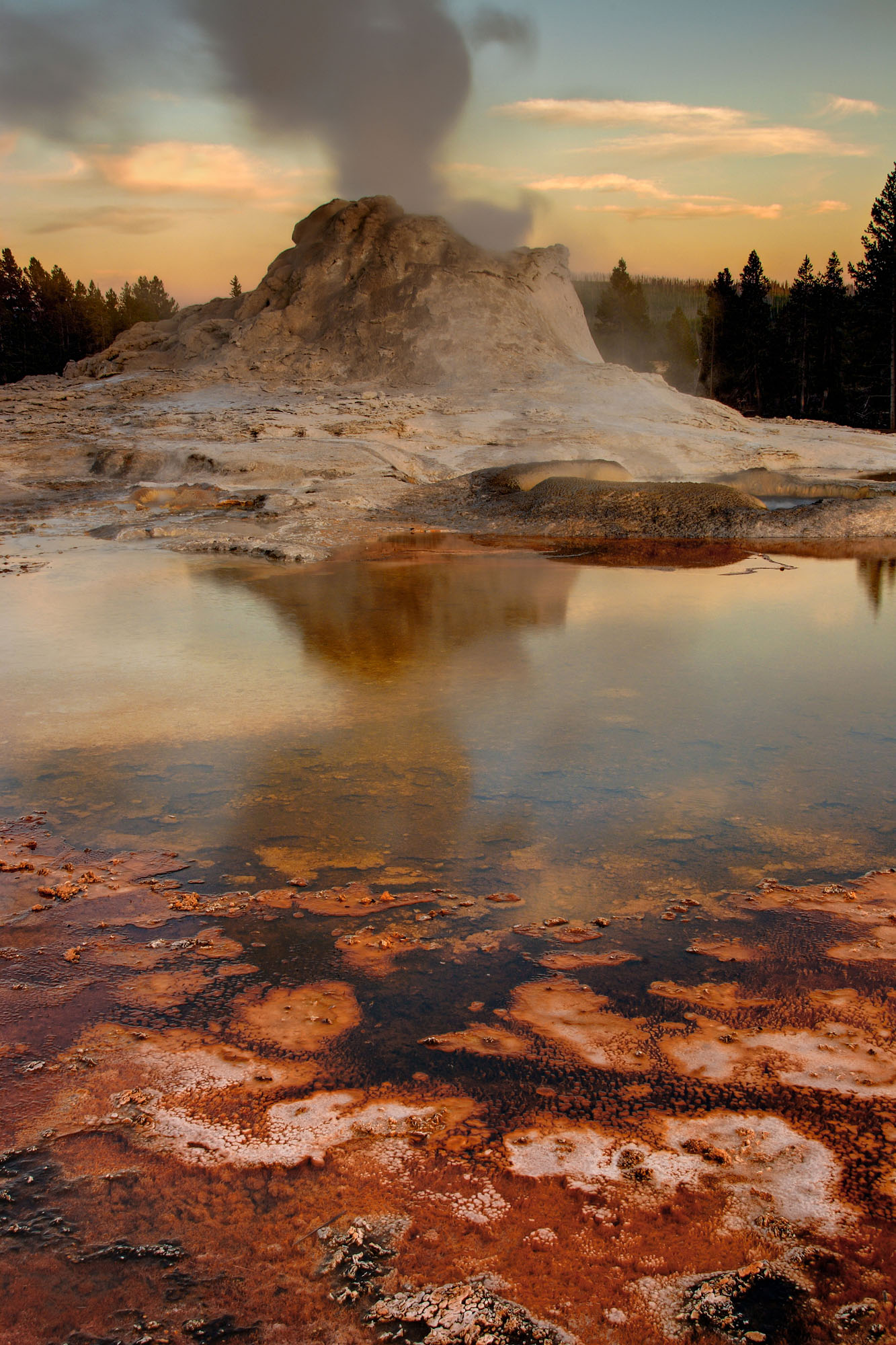
Castle Geyser in the Upper Geyser Basin of Yellowstone is the world’s largest geyserite sinter cone.
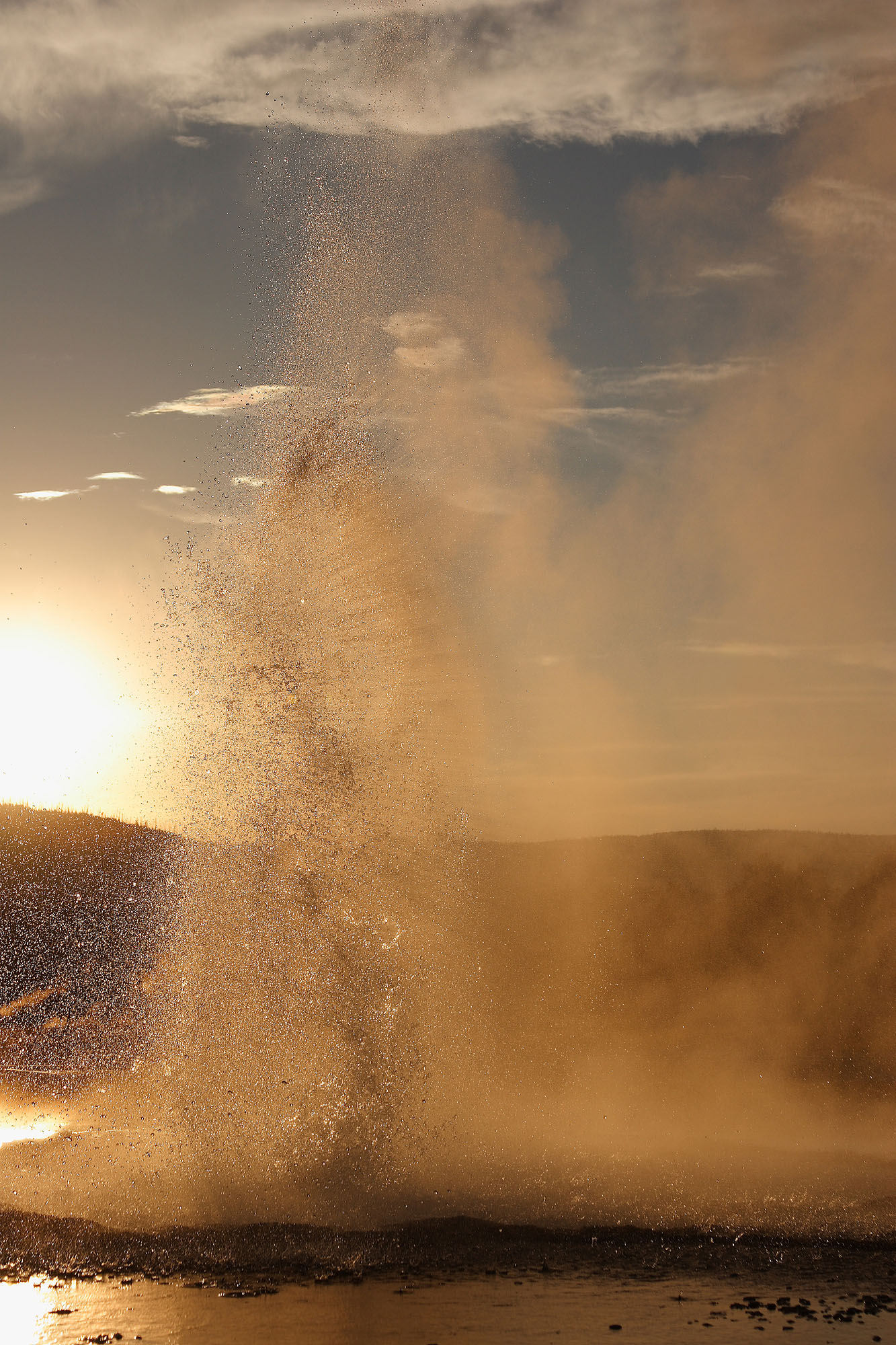
This sinter cone is thousands of years old and sits on an even older platform. It is the largest sinter formation of its kind in the world. Castle erupts every 13 hours for about 20 minutes, with its fountain reaching a height of 75 feet (24 m). The eruption is followed by a noisy steam phase lasting 30 to 40 minutes.
The chemistry of the water, especially its acidity and temperature, is essential for determining which species of microorganisms can thrive in it. The hydrothermal waters of the Upper Geyser Basin are neutral to slightly alkaline and dissolve various minerals from the volcanic bedrock underground. This creates an ideal habitat for thermophilic microorganisms living in water at temperatures of around 131°F (55°C). The reddish to brownish microbial mats contain bacteria that feed on iron. The iron oxides contain traces of toxic arsenic and mercury, which the microbes have adapted to tolerate.
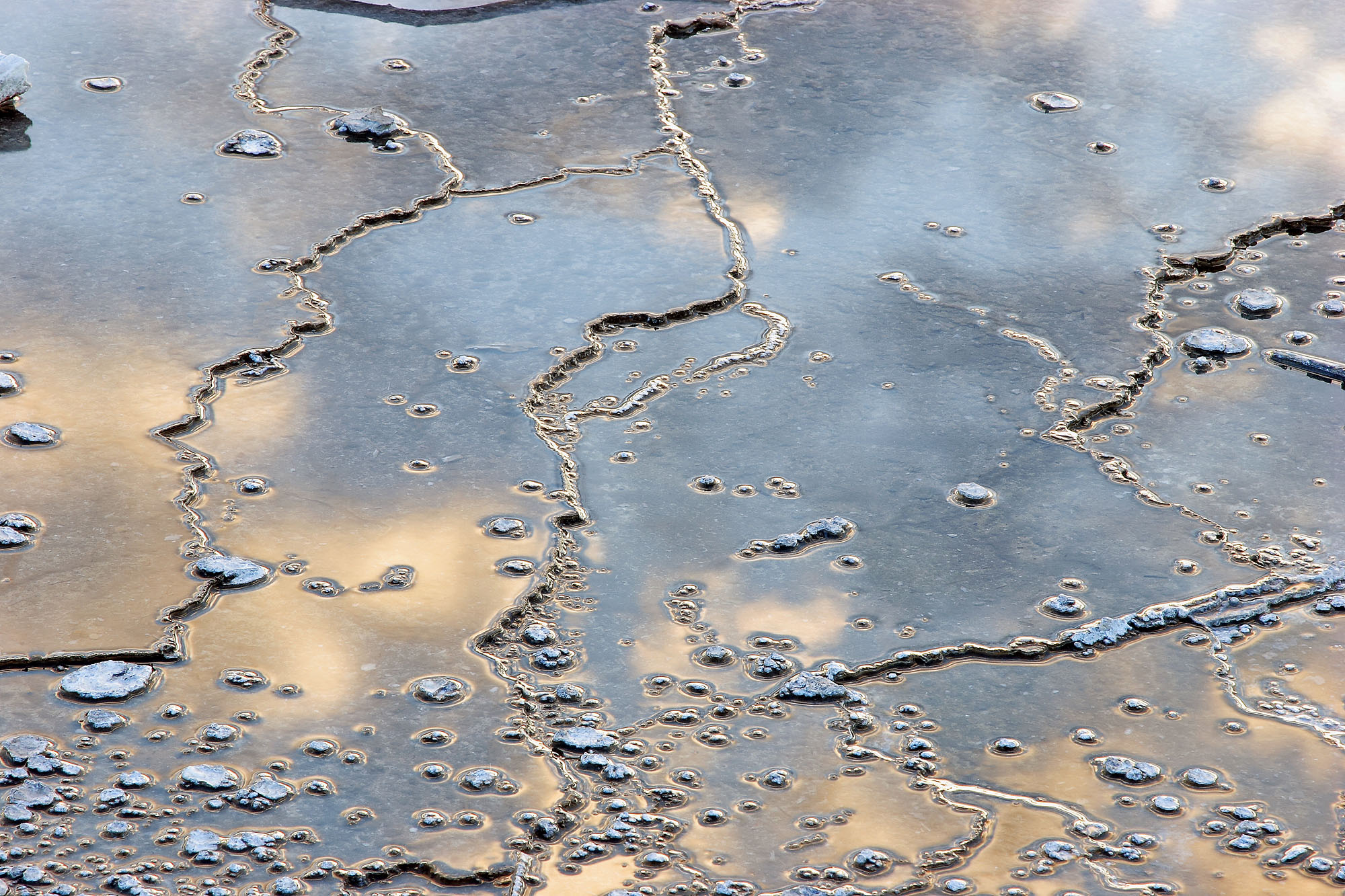
The light of dusk is additionally caused by smoke from a nearby forest fire. The smoky scenery is reflected in the calm waters of the geyser.