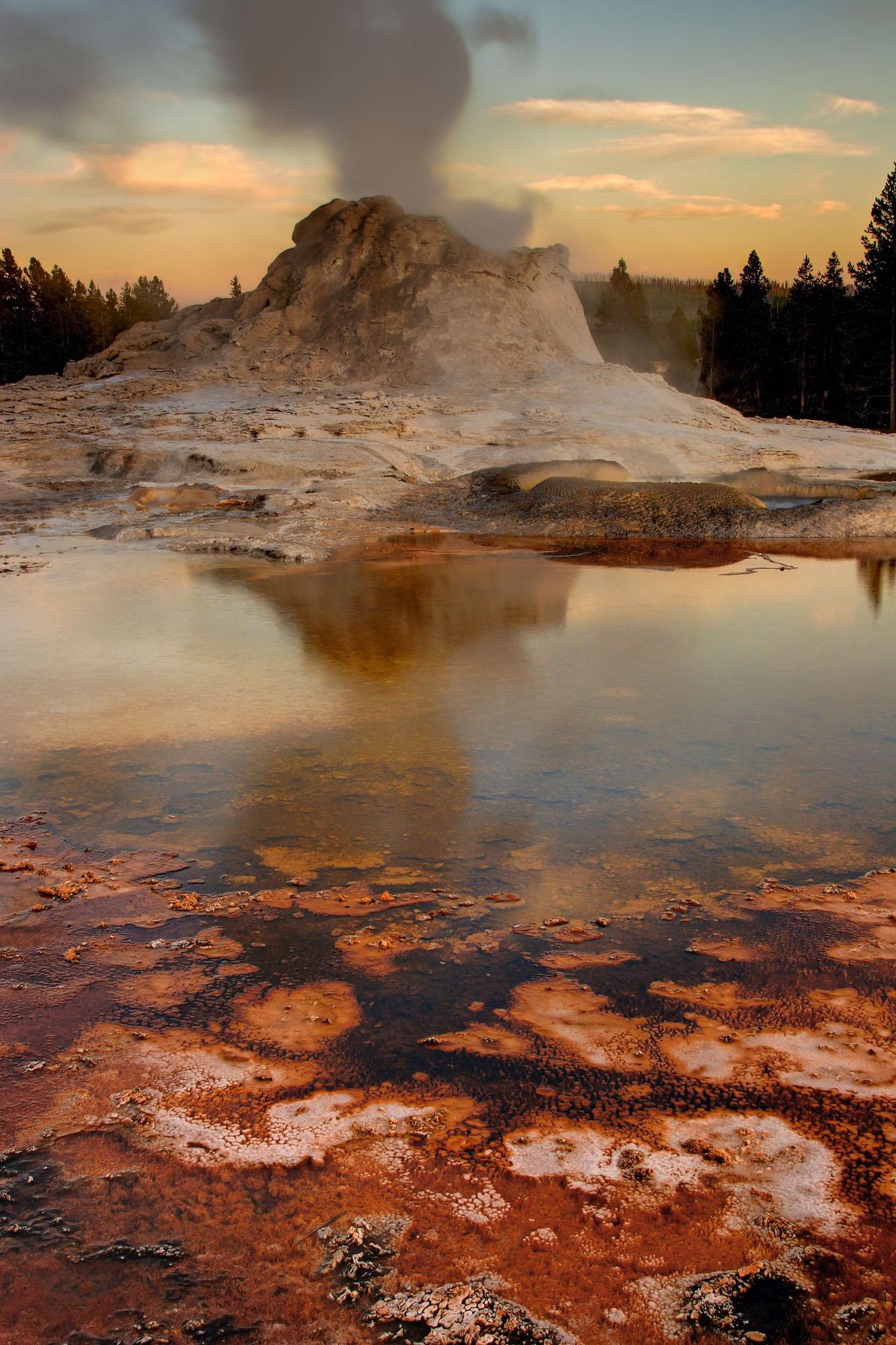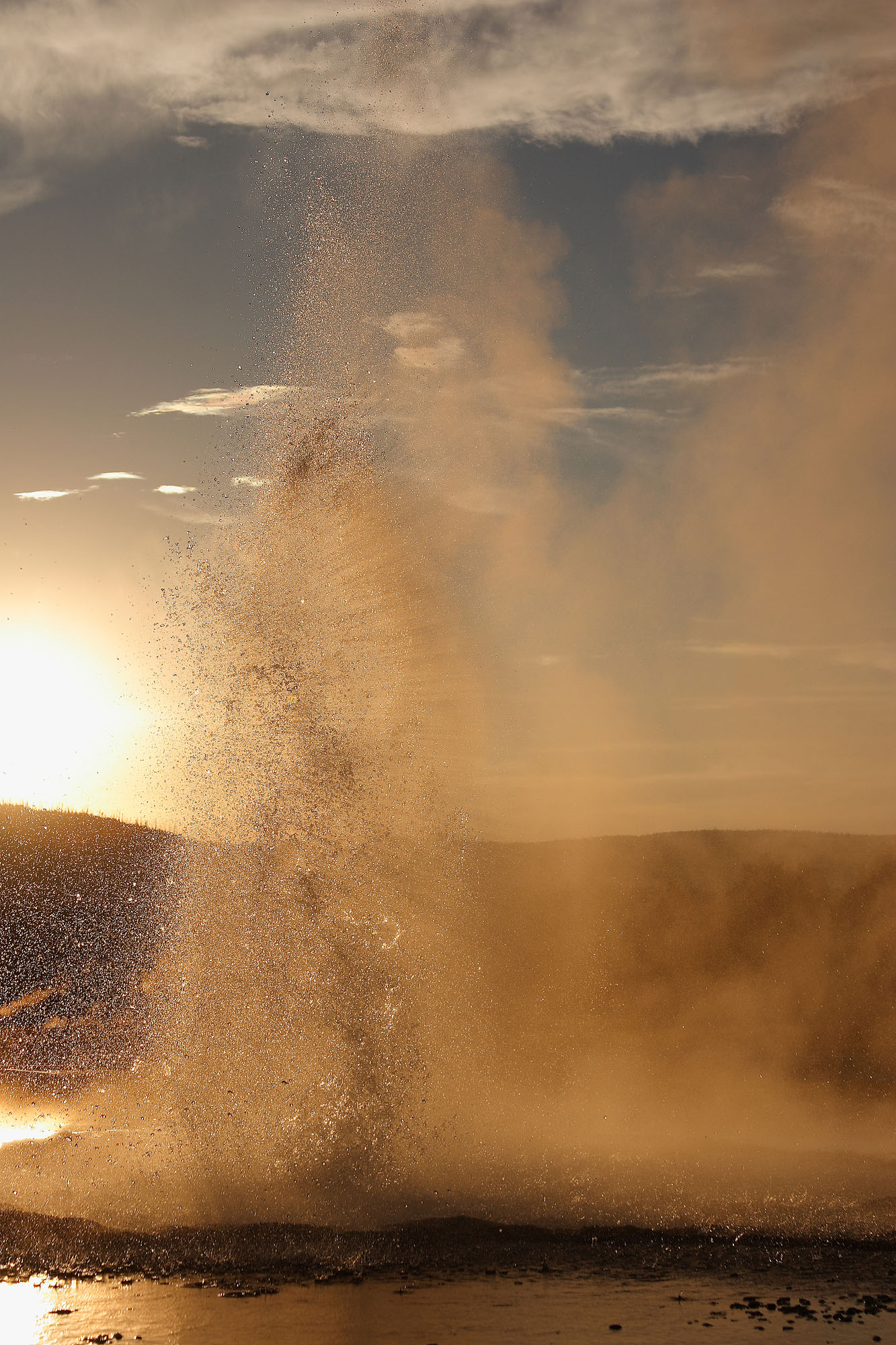
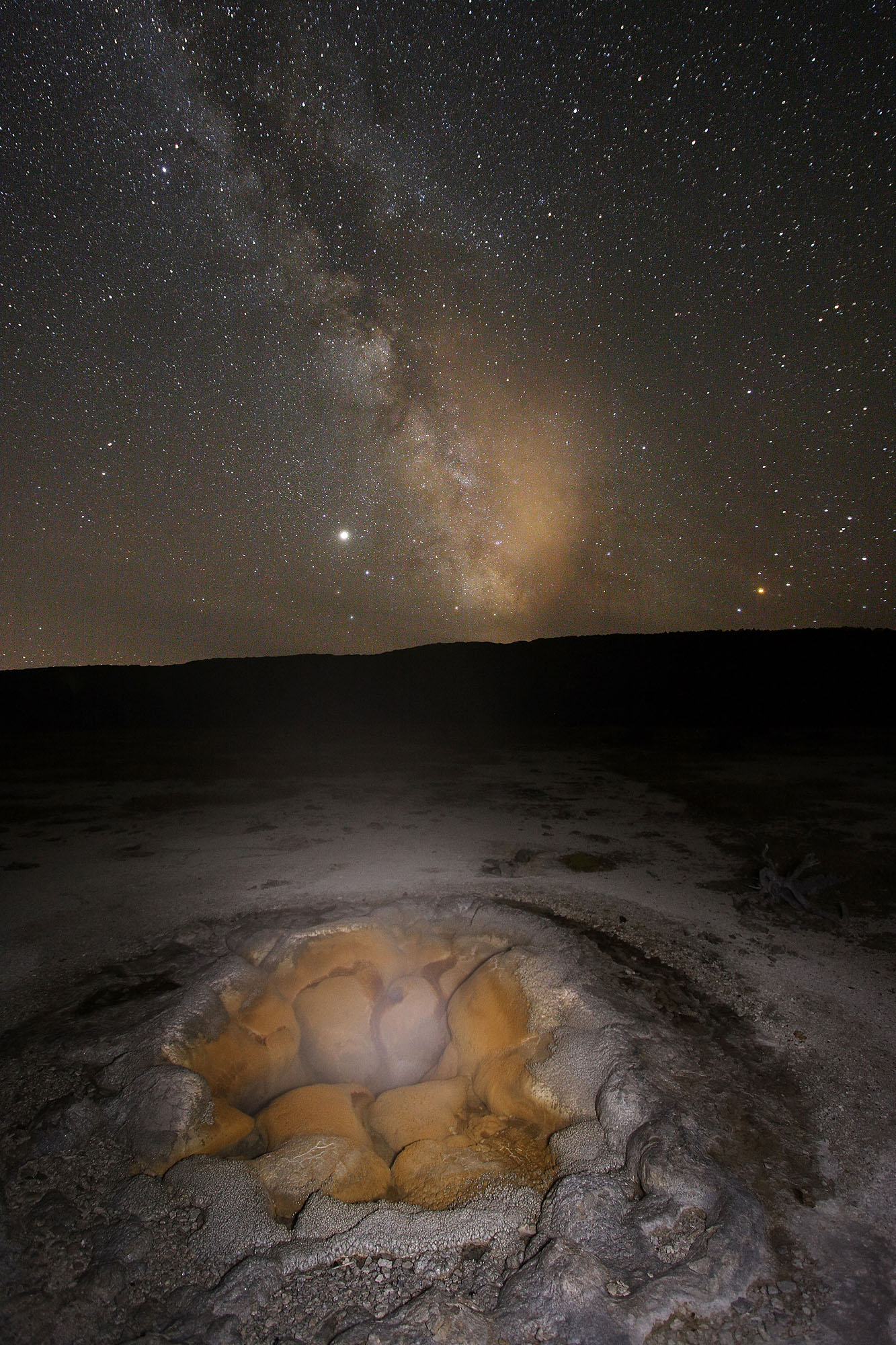
At new moon, the Milky Way rises above Shell Geyser in the Biscuit Basin of Yellowstone. The geyser expels boiling water and hot gases into the cold air. The rising steam cloud merges with the Milky Way, as if the geyser were exhaling into space.
The geyser erupts at intervals of about five minutes, driven by the Yellowstone magma chamber at shallow depth. Gases released by volcanic activity, including water vapor, hydrogen sulfide, carbon dioxide, and carbon monoxide, contribute important trace constituents to Earth’s atmosphere. The hot steam entering the cold air causes instantaneous condensation, forming a cloud that appears to extend above the sloping terrain into the eastern branch of the Milky Way.
The brightest object to the left is Jupiter. To the right of the Milky Way, the constellation Scorpius is visible, with its red star Antares, which is about 700 times larger than our Sun and lies at a distance of only 520 light-years.