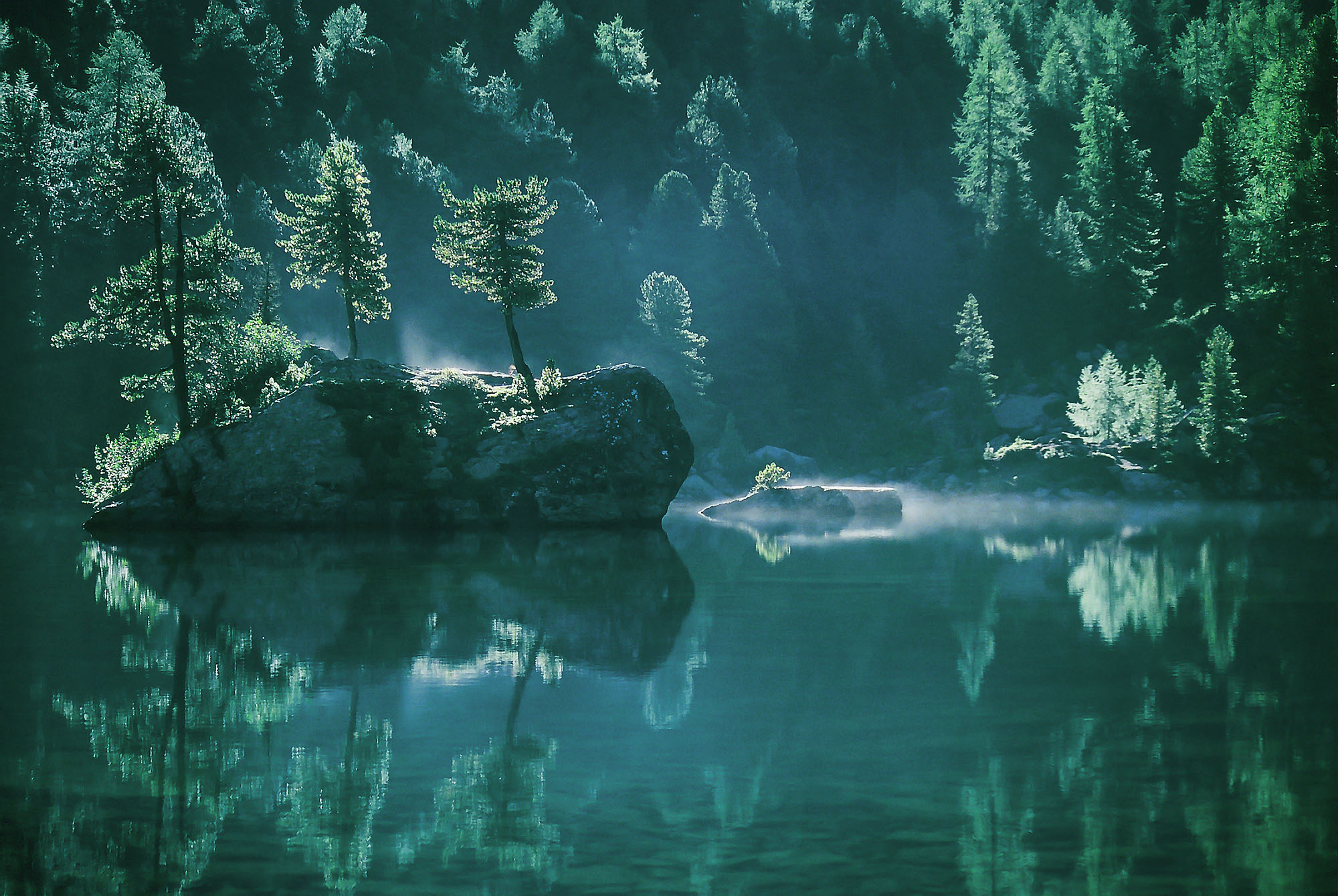
The lush green forest around the alpine lake Lago di Saoseo in Val da Camp, in Switzerland’s Graubünden region, is spellbound by a mystical light as the rising sun shines through the trees. In summer, the early morning light reaches across the mountain ridge and warms the ice-cold air of the high mountain valley. For a fleeting moment, the rising humidity forms mist and fog, creating this enchanting atmosphere.
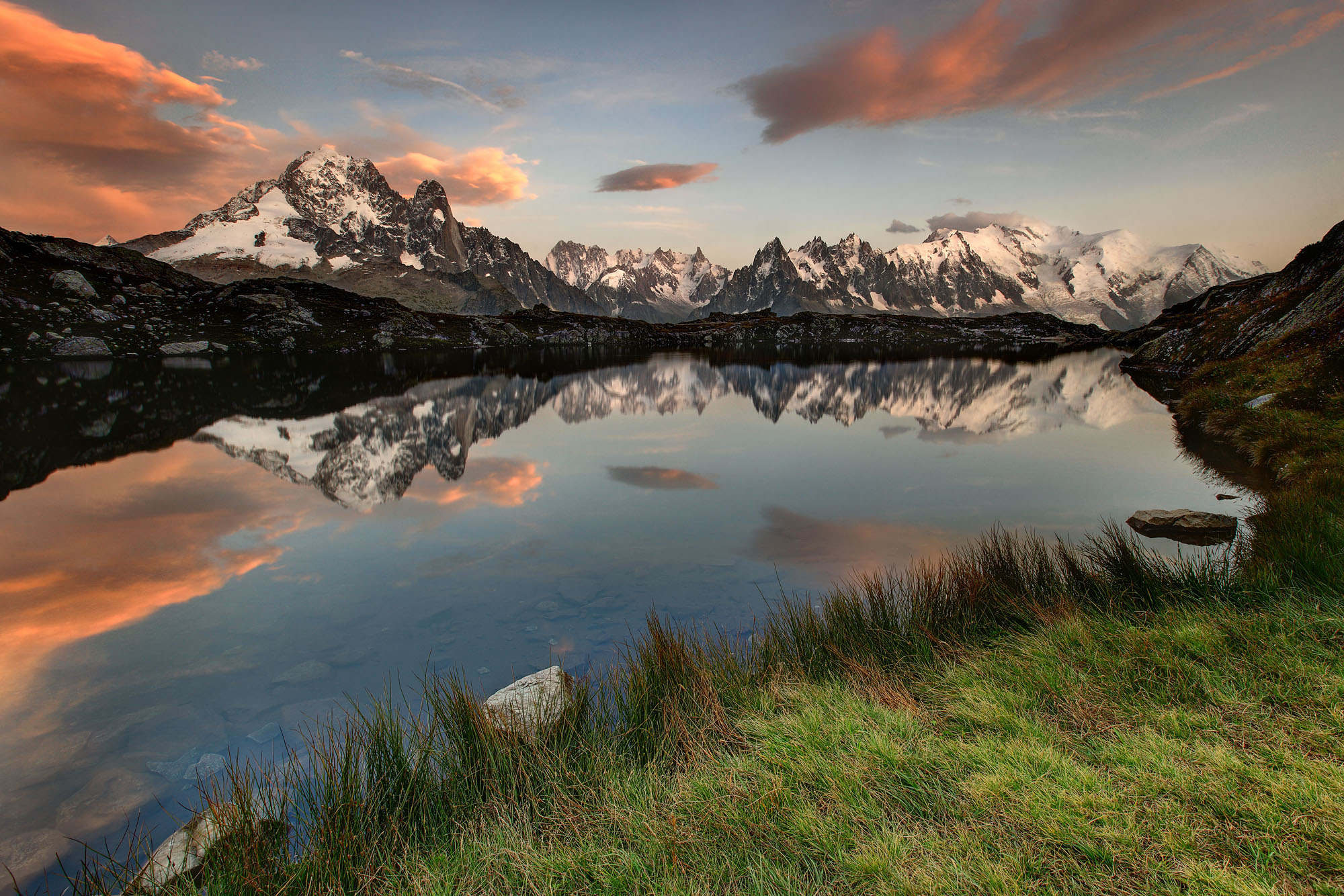
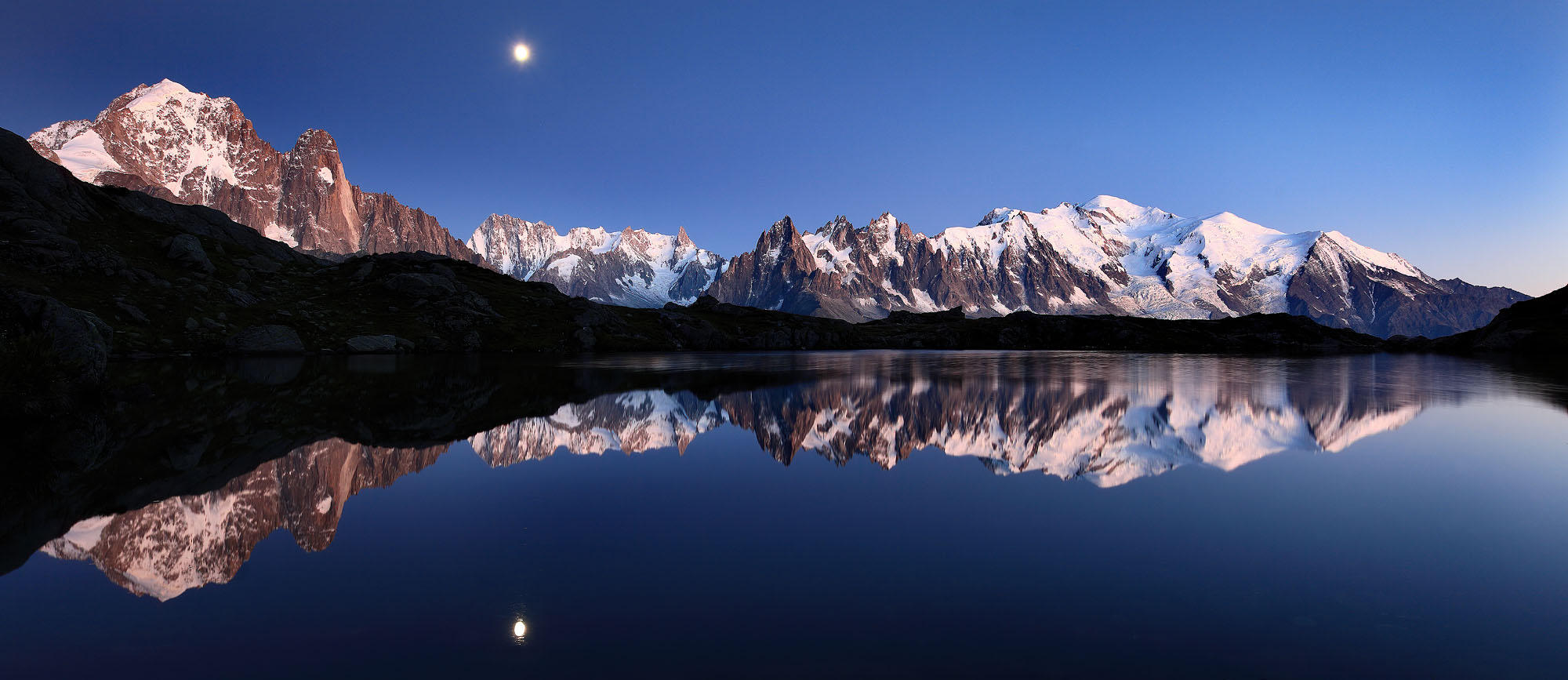
Tarns are mostly formed in postglacial landscapes, occupying scooped-out cirques carved by glaciers during the last ice age. Some lakes, like Lago di Saoseo, formed behind rockslide barriers. In either case, these small, hidden alpine lakes are among the most beautiful landforms in the European Alps and are true gems.
The mountain-building processes that created the European Alps are the result of complex geological events that have unfolded over the past 250 million years. The ancient Tethys Ocean was more than 600 miles (1,000 kilometers) wide and occupied what is now the Mediterranean region. As active subduction on both sides of the ocean progressively consumed its seafloor, the Tethys narrowed to less than 60 miles (100 kilometers), including its deep trenches. This ultimately led to the collision of the African and European continents.
As a consequence, a mountain range rose from sediments deposited on the floor of the Tethys Ocean, volcanic oceanic crust thrust onto the continents as ophiolites, and continental granite that was partly transformed into gneiss. These different rock units were stacked and displaced along immense fault structures known as nappes.
The limestone sediments of the Tethys Ocean, including ancient coral reefs, now occur at elevations of up to 8,200 feet (2,500 meters). The rocks of the central Alpine crest often contain greenstones, highly metamorphosed rocks that originated from the volcanic basaltic seafloor of the Tethys Ocean. During the collision of the European and African plates, these rocks were uplifted to elevations of more than 13,000 feet (4,000 meters).
Such geological processes are rare, and they produce equally rare mineral assemblages. Tourmaline and emerald are among the characteristic minerals associated with these metamorphic rocks.