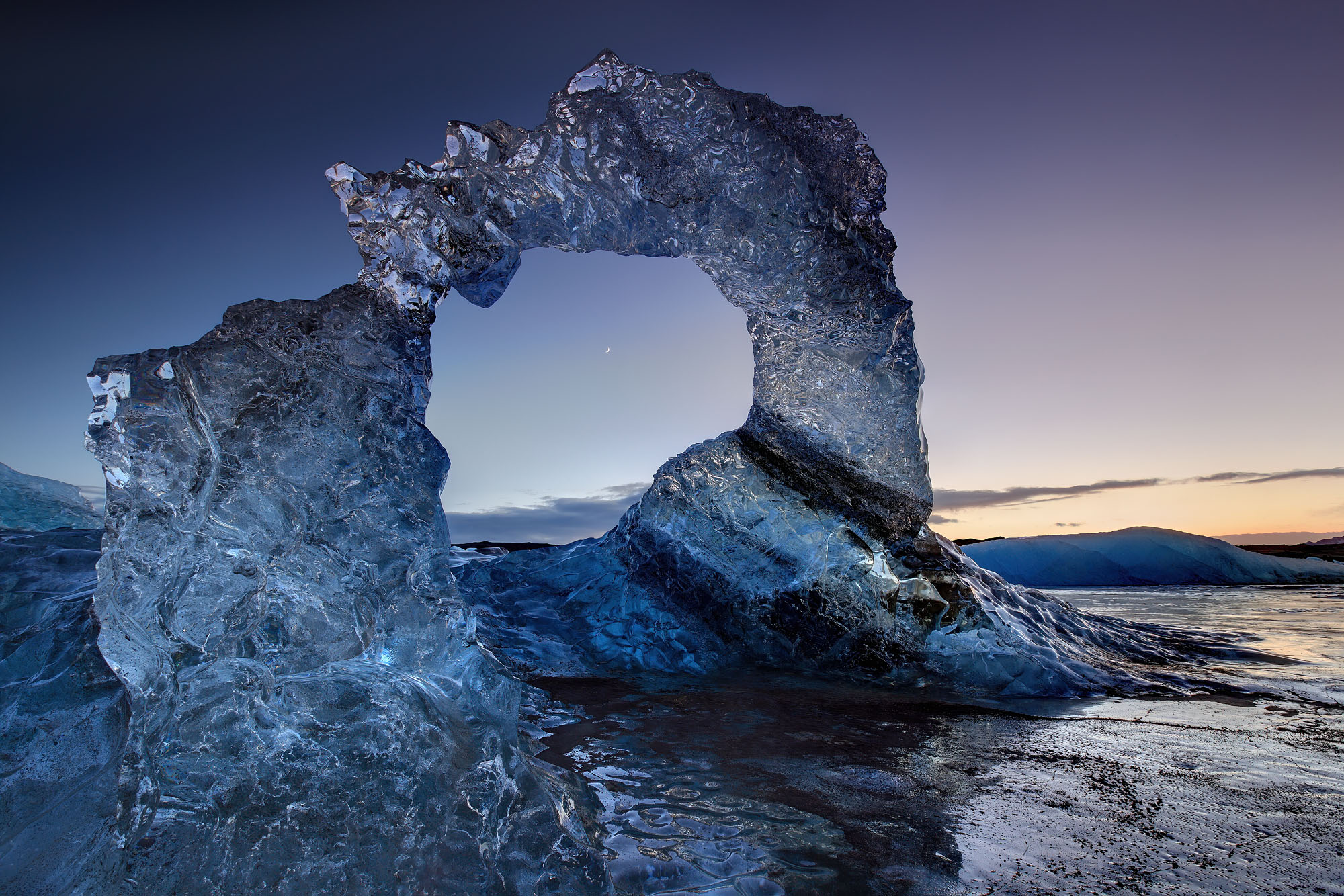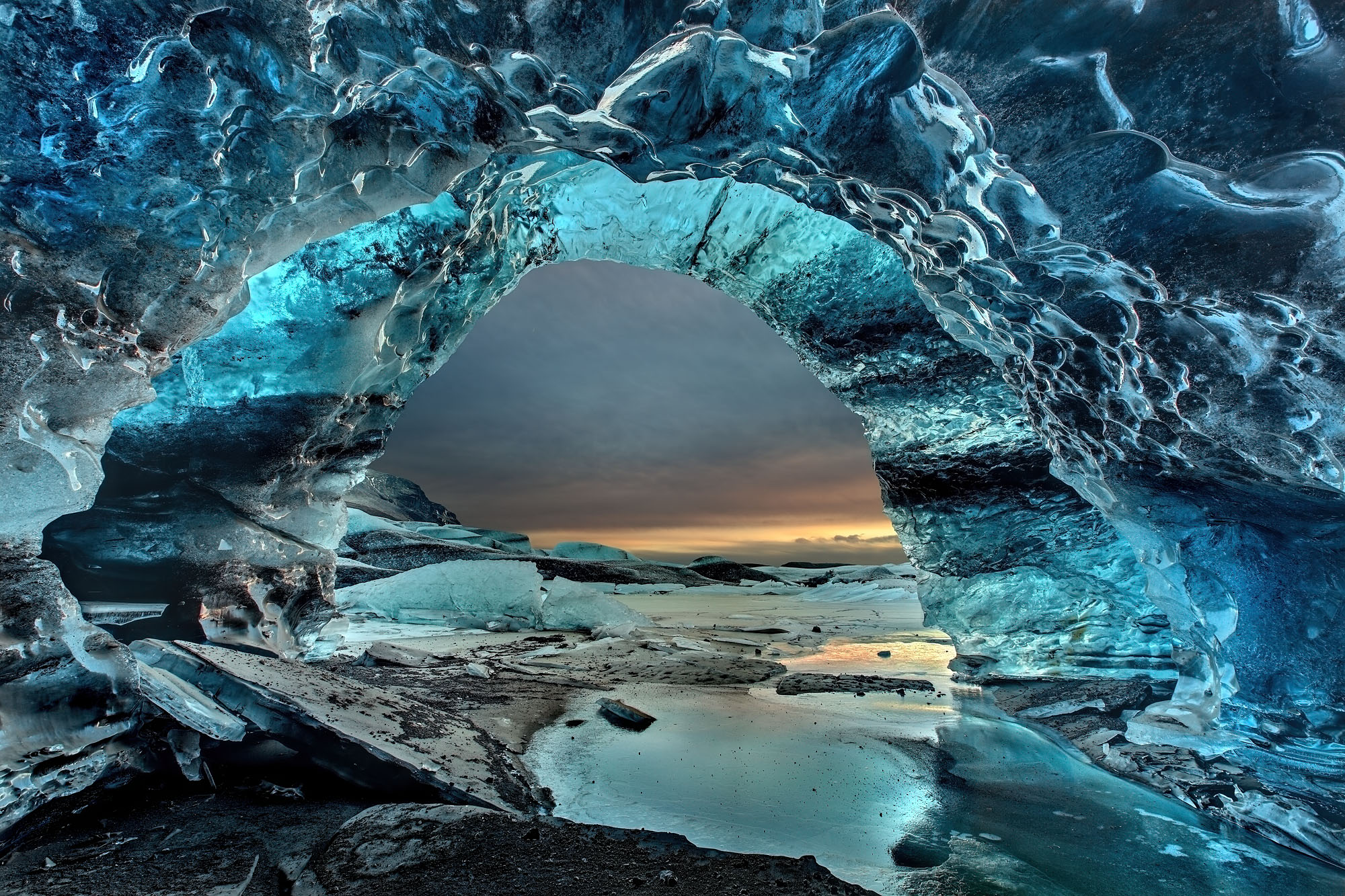
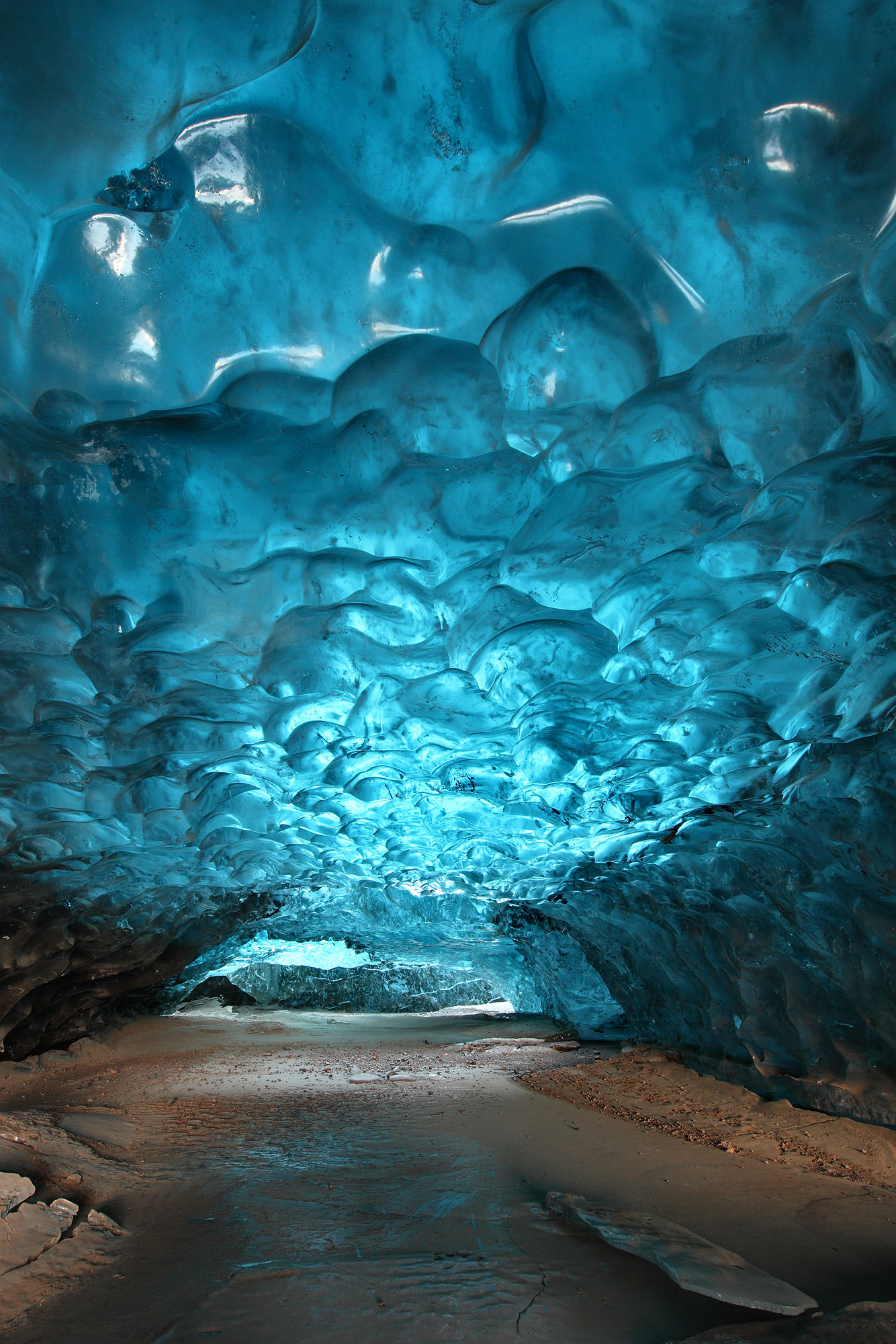
Entering this otherworldly ice cave, with its deep-blue meltwater-carved forms and impressive dimensions of 50 meters (164 feet) in length, 10 meters (33 feet) in width, and 1.8 meters (6 feet) in height, creates an awe-inspiring atmosphere inside the Svínafellsjökull glacier in Skaftafell, Iceland.
The snow is up to 1,000 years old and has gradually metamorphosed into highly compressed glacial ice containing almost no air bubbles. The ice absorbs most wavelengths of visible light, while the shortest blue wavelengths are preferentially scattered. This is what gives the ice grotto its extraordinary deep-blue color.
The cave was formed by a glacial moulin. Rainwater and meltwater accumulating on the glacier surface gather into streams that enter the ice through crevasses. These waterfalls bore deep shafts into the glacier, while the water continued to flow beneath the ice, carving long meltwater tunnels along the glacier bed. Turbulent water flow gradually sculpted the ice into the seemingly surreal shapes inside the cave.
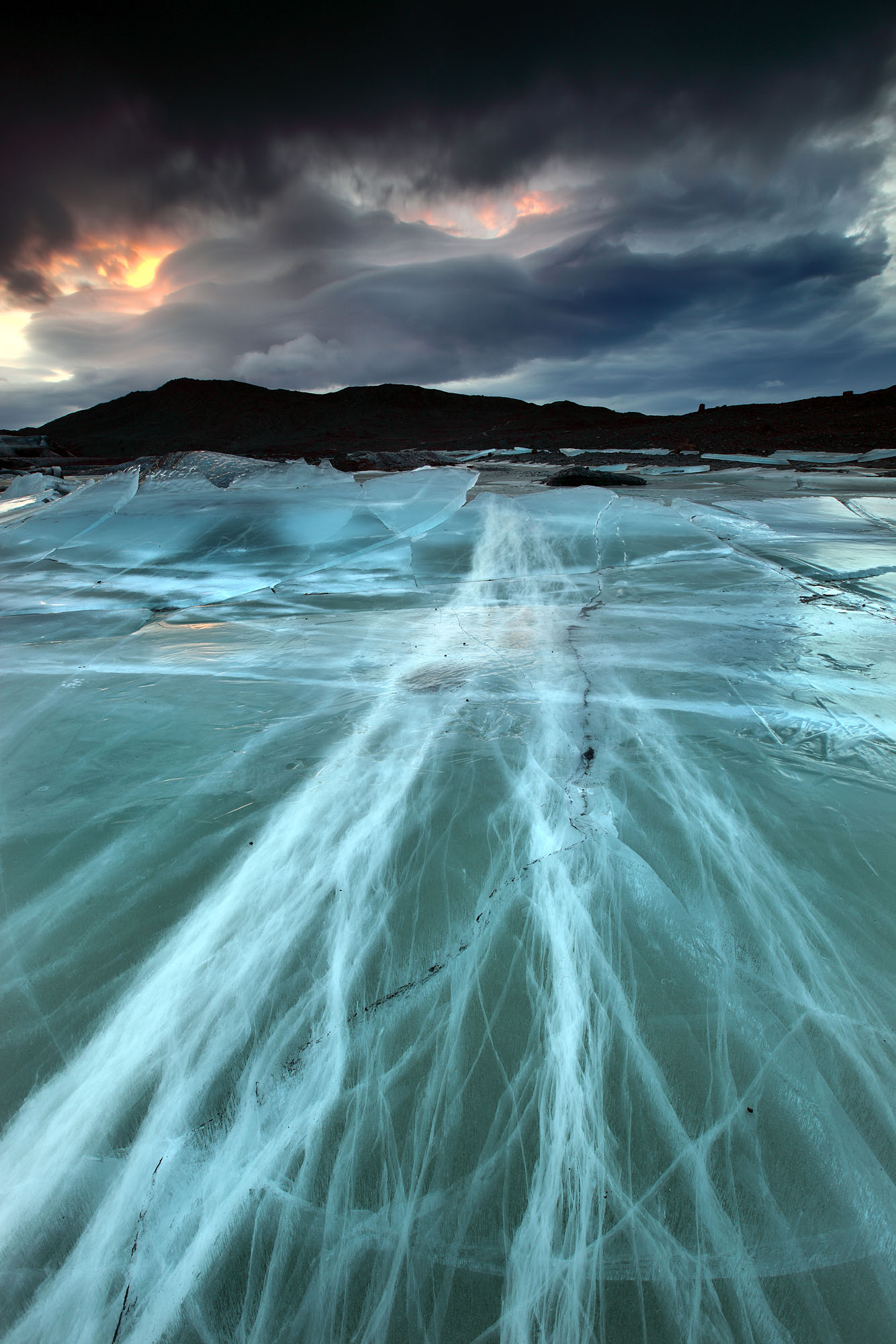
At the glacier terminus, the meltwater eventually emerges through the glacier mouth, opening a view back into the ice cave. Fine-grained sediment carried by the meltwater, together with volcanic ash blown across the glacier by the wind, causes the frozen meltwater stream on the cave floor to appear muddy brown.
Because the glacier advances at a remarkable rate of about 1 meter per day (3.3 feet) across uneven terrain, the rear section of the cave eventually broke apart and opened into a deep crevasse, known as a sérac. Indirectly reflected daylight entered the cave through this opening, bathing its interior in a remarkably even light.
The surreal scenery, combined with the constant crackling and groaning of the slowly moving ice, made it impossible to escape the overwhelming impression of standing inside this living, moving world of ice.