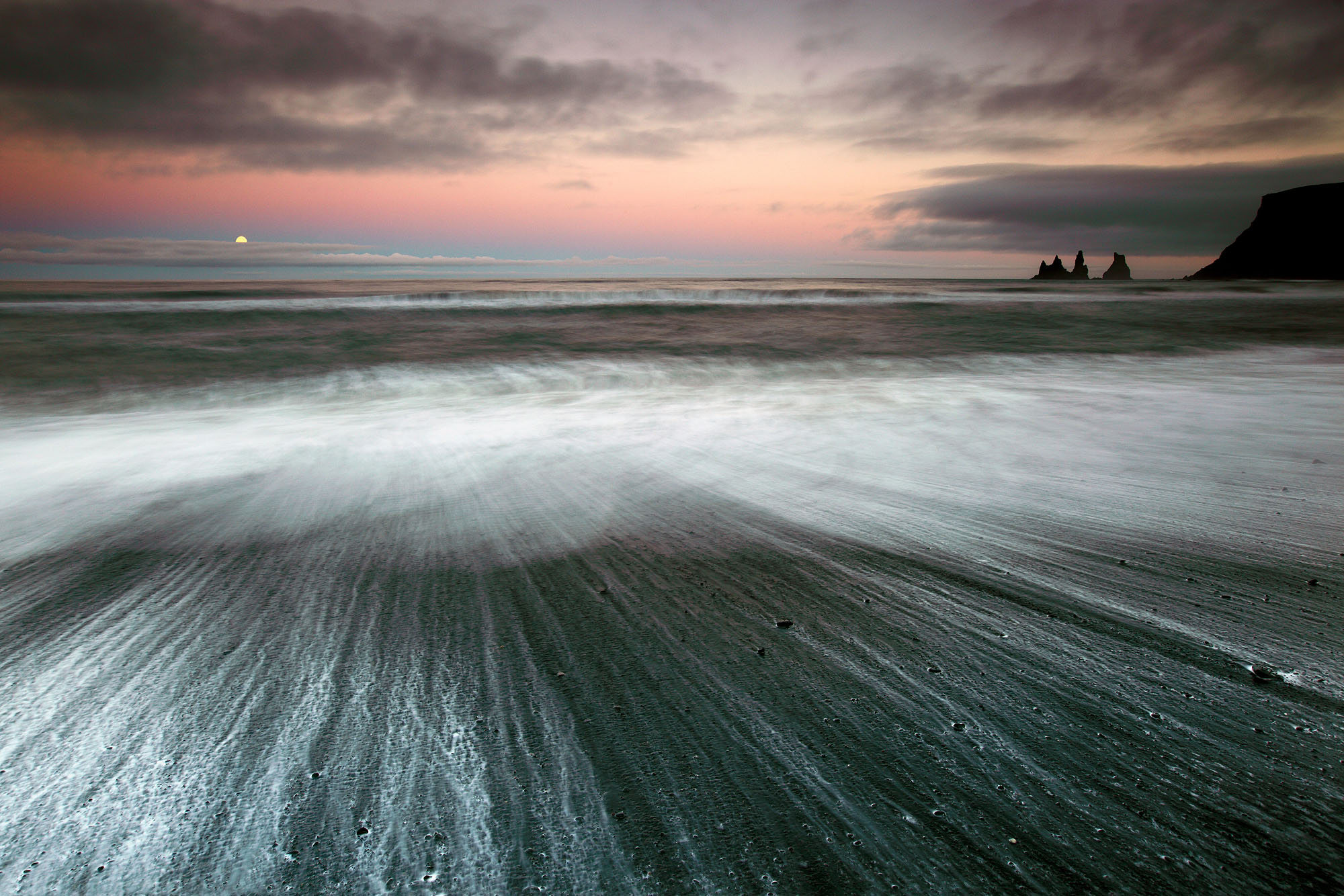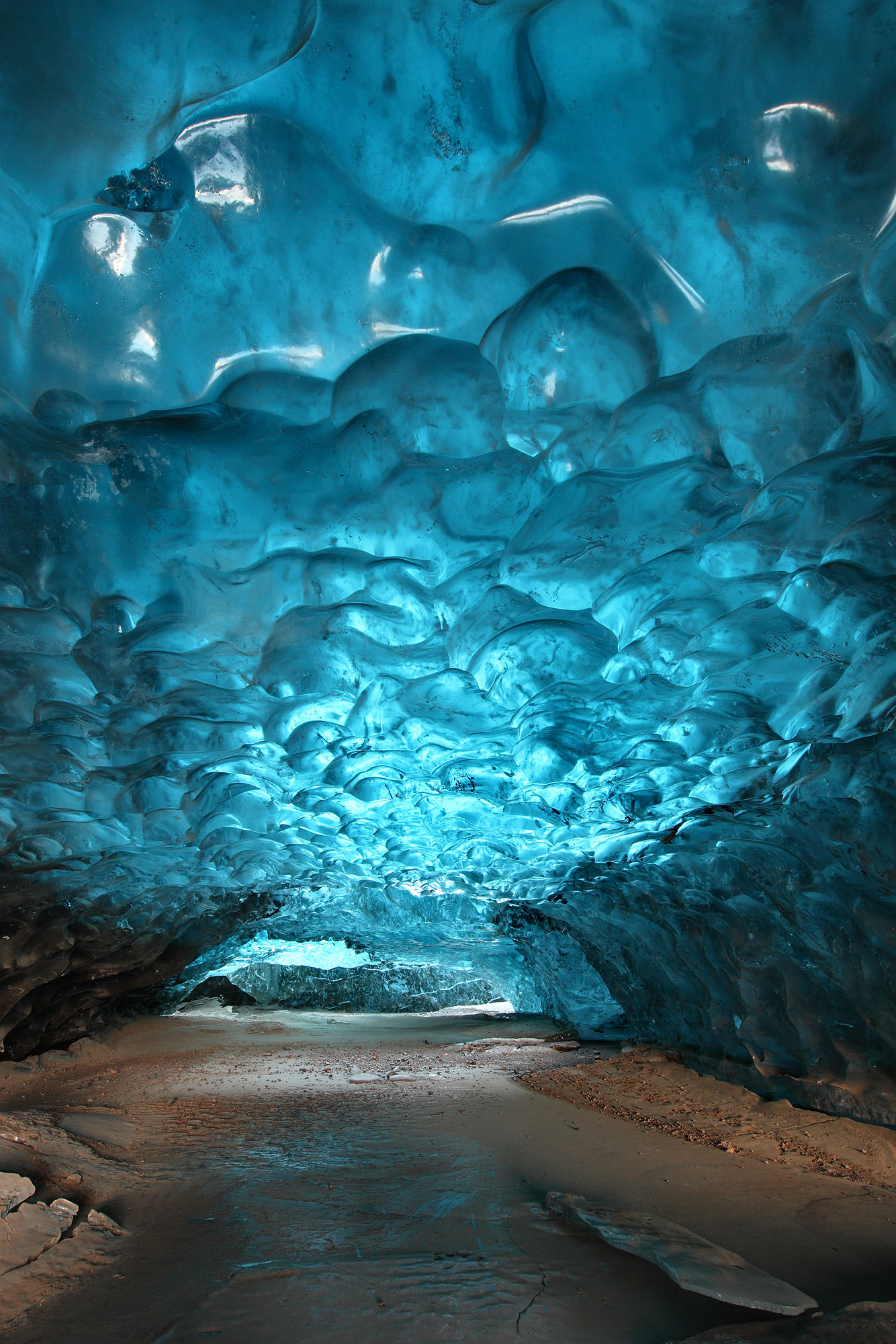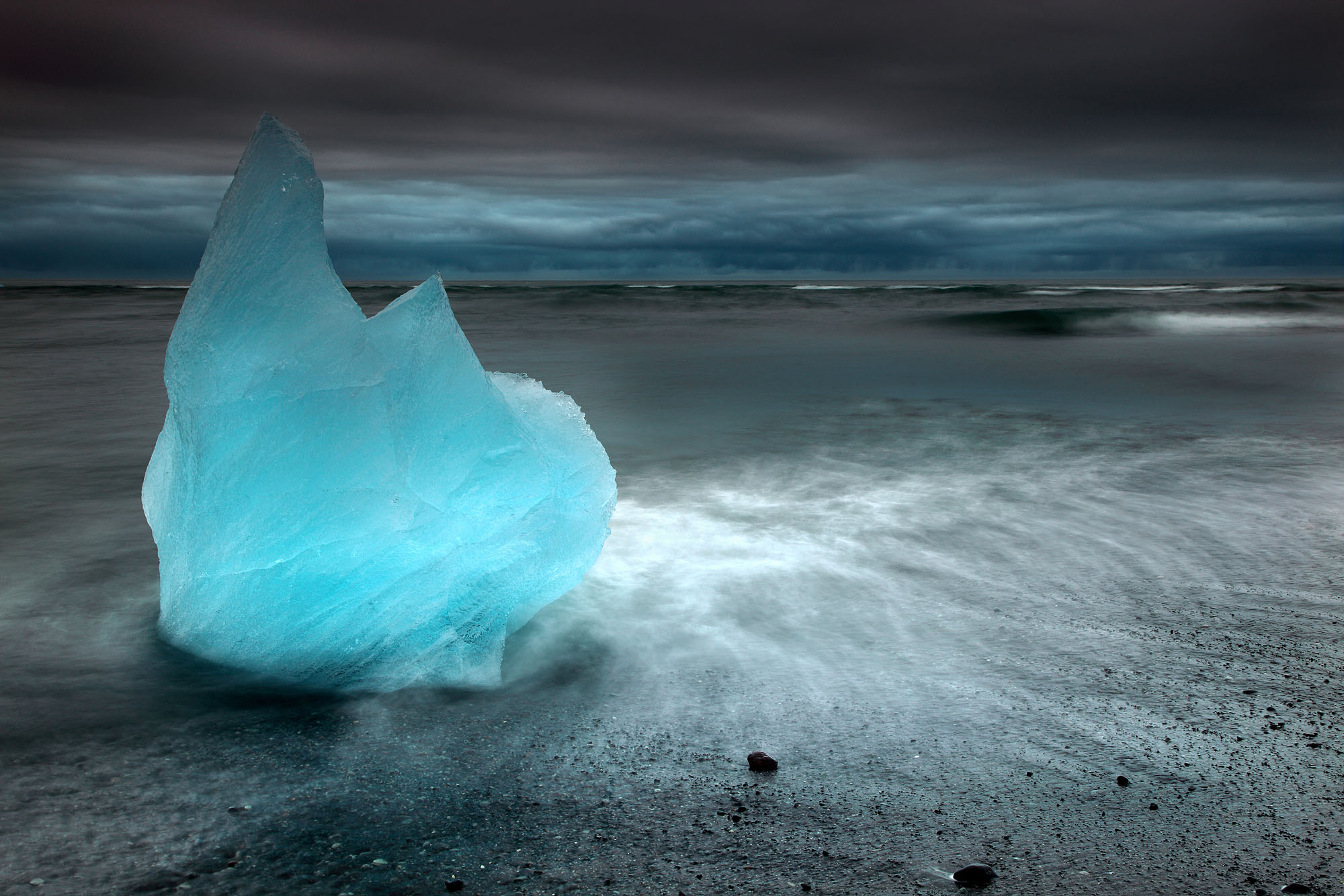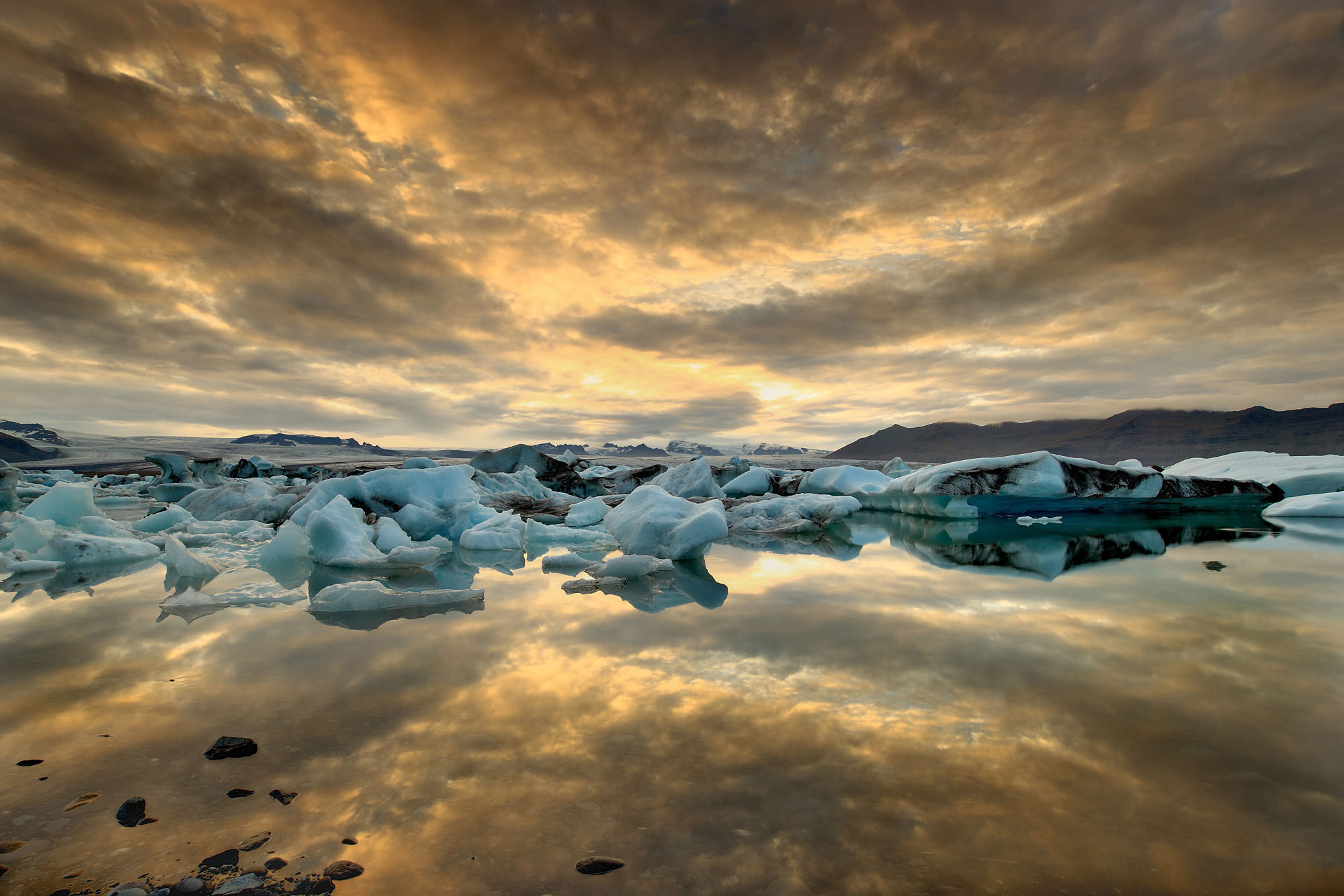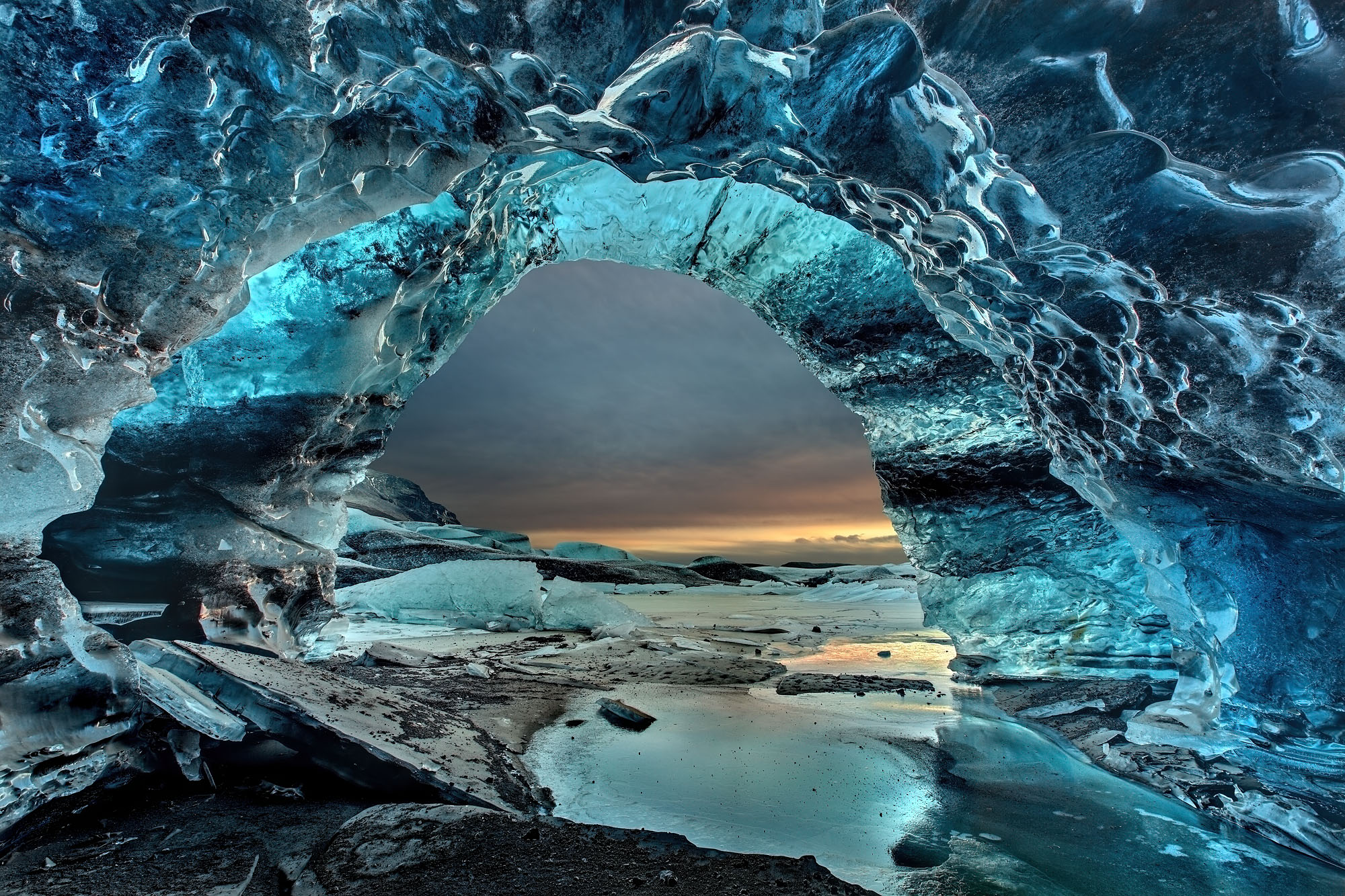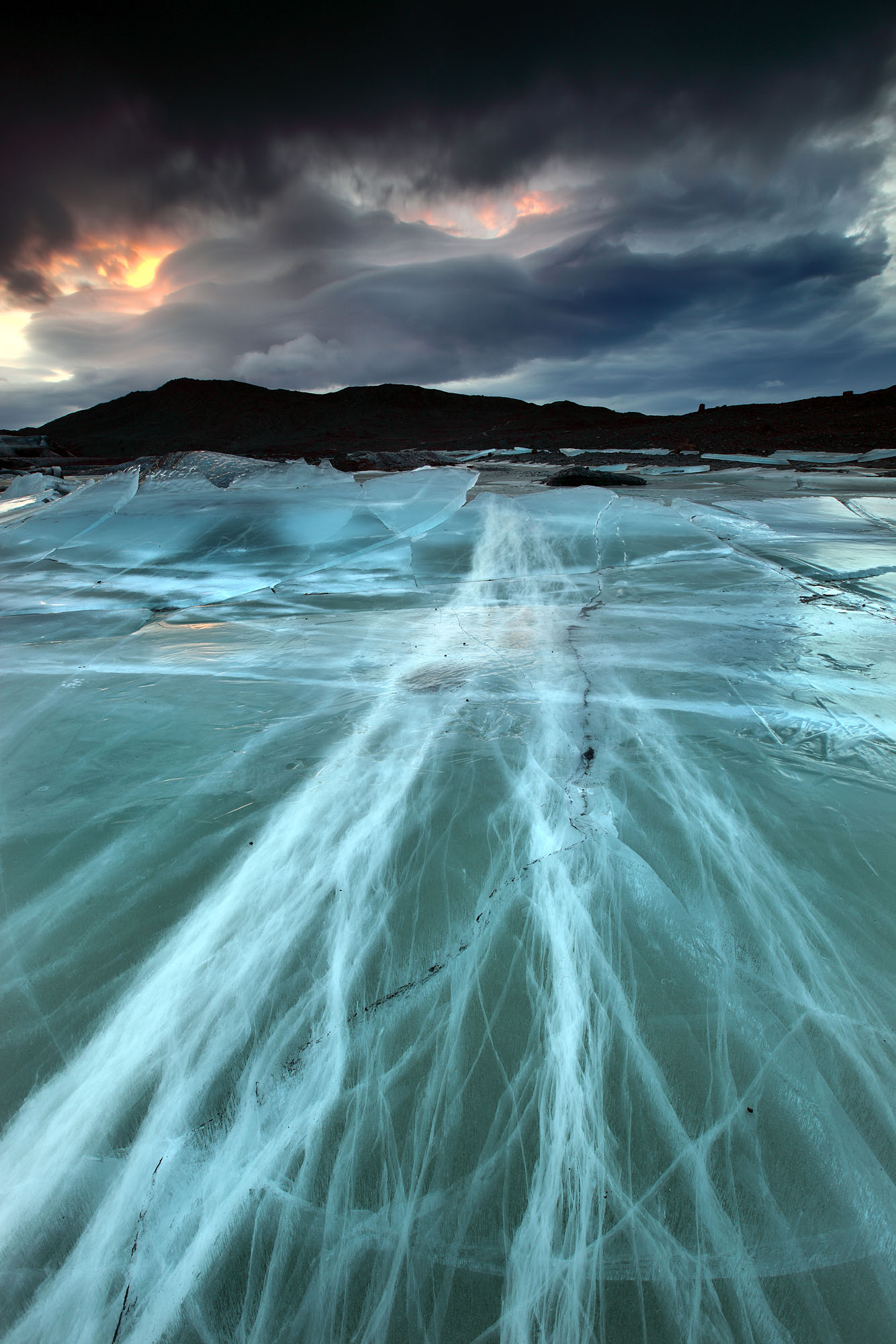
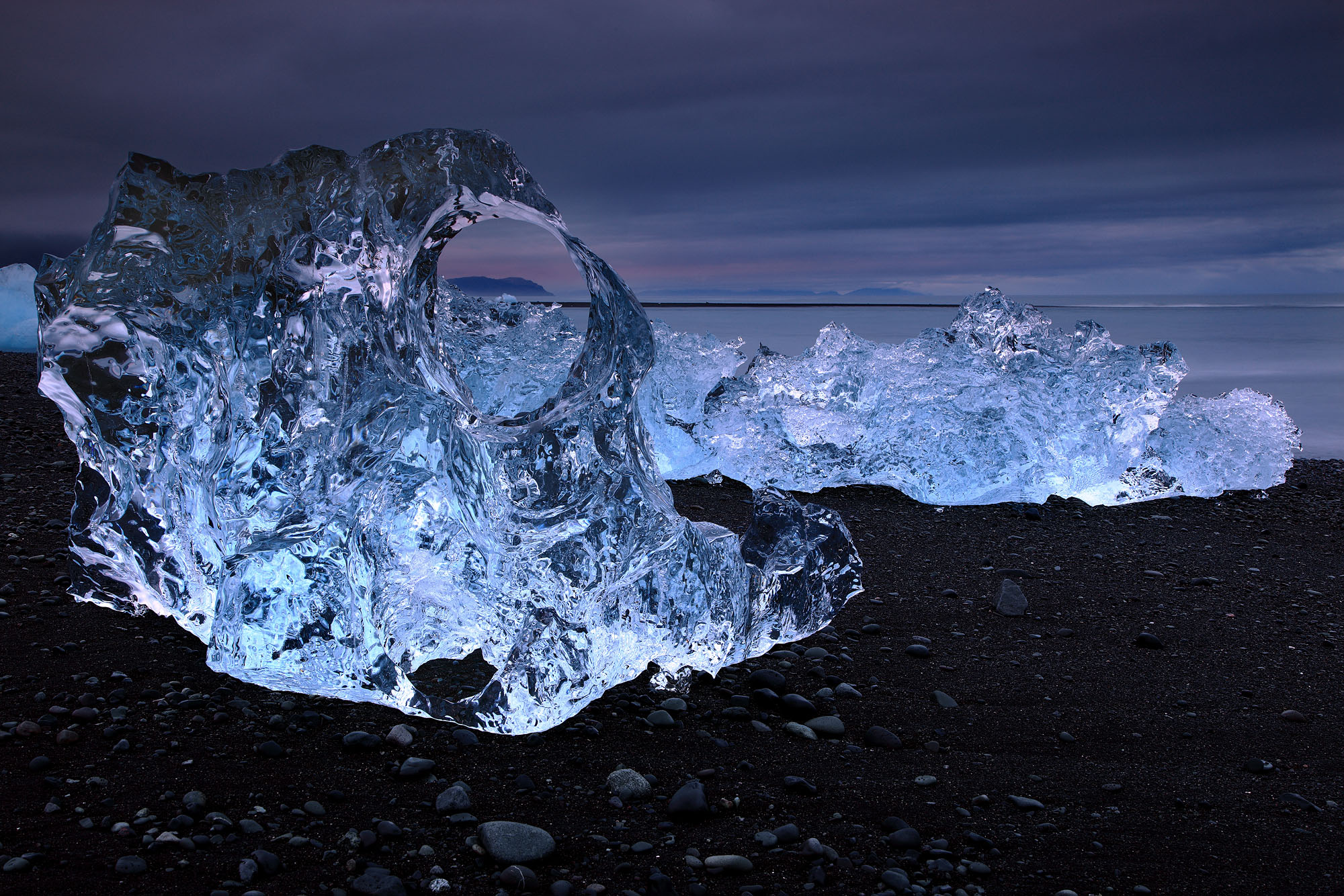
The beached icebergs at Jökulsárlón Strandur in Iceland are remnants of the Vatnajökull ice cap and its southern glacier lobe, Breiðamerkurjökull, which terminates in the proglacial lake of Jökulsárlón. The lagoon extends for approximately 20 kilometers (12.4 miles) beneath the eastern part of the glacier, where the ice partially floats. Icebergs continuously calve from the glacier front and fill the lagoon. Located at sea level, Jökulsárlón connects to the open waters of the North Atlantic through the 500-meter (1,600-foot) long Jökulsá river channel, which cuts through the terminal moraines that dam the lagoon.
The channel was formed by sporadic, deluge-like outbursts of meltwater known as jökulhlaups. These occur when volcanic eruptions beneath the Vatnajökull ice cap abruptly melt enormous amounts of ice. During high tide, salty seawater rushes through the channel and into the lagoon, significantly raising its water level.
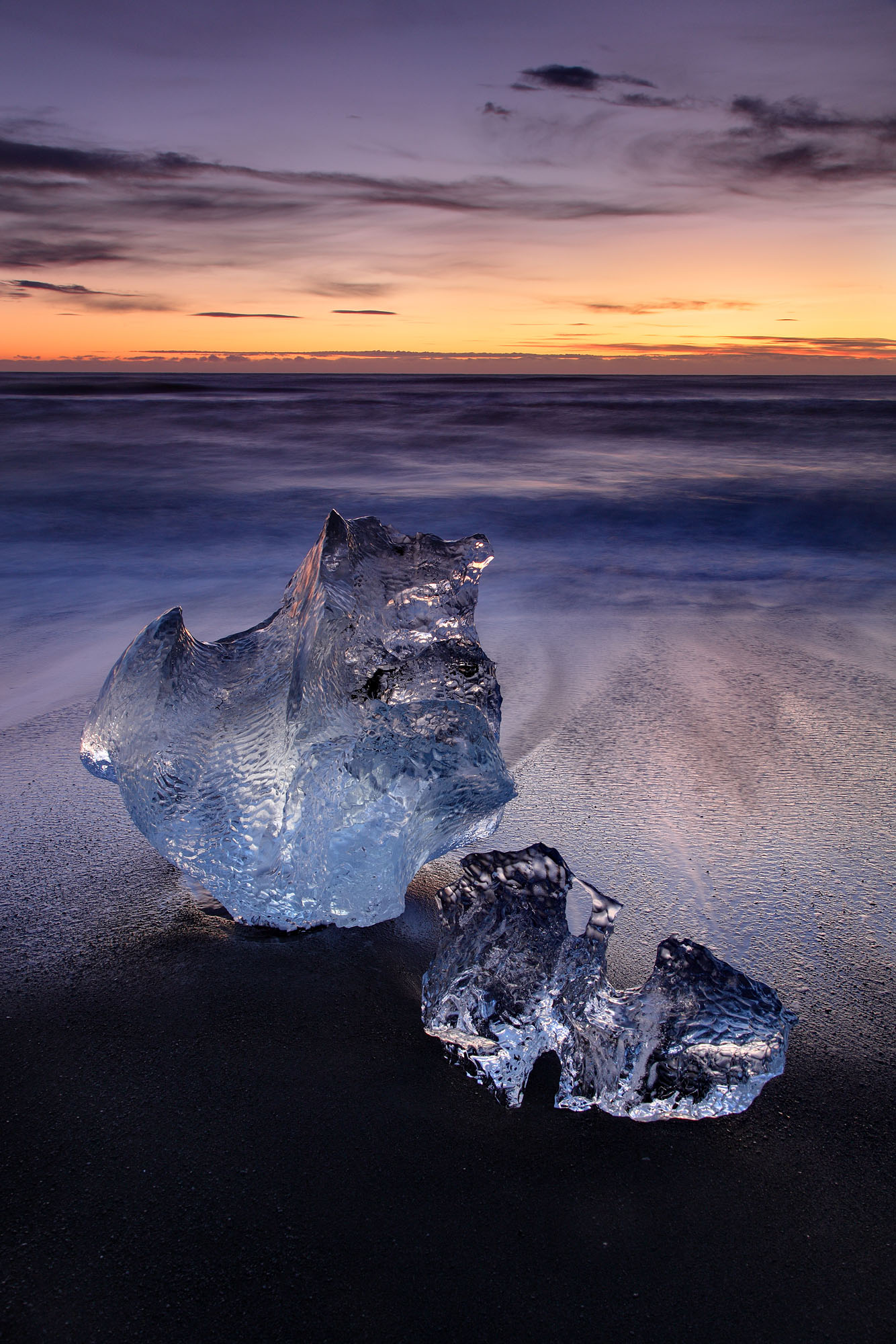
As the tide turns, the brackish lagoon water flows back toward the ocean, carrying icebergs up to 5 meters (16 feet) high out into the Atlantic. There, they are immediately exposed to the powerful surf. The waves shatter the icebergs into smaller pieces amid spectacular sounds. At low tide, the fragments are washed ashore on the black volcanic sand, creating a scene reminiscent of a bone yard scattered with shards of crystal.
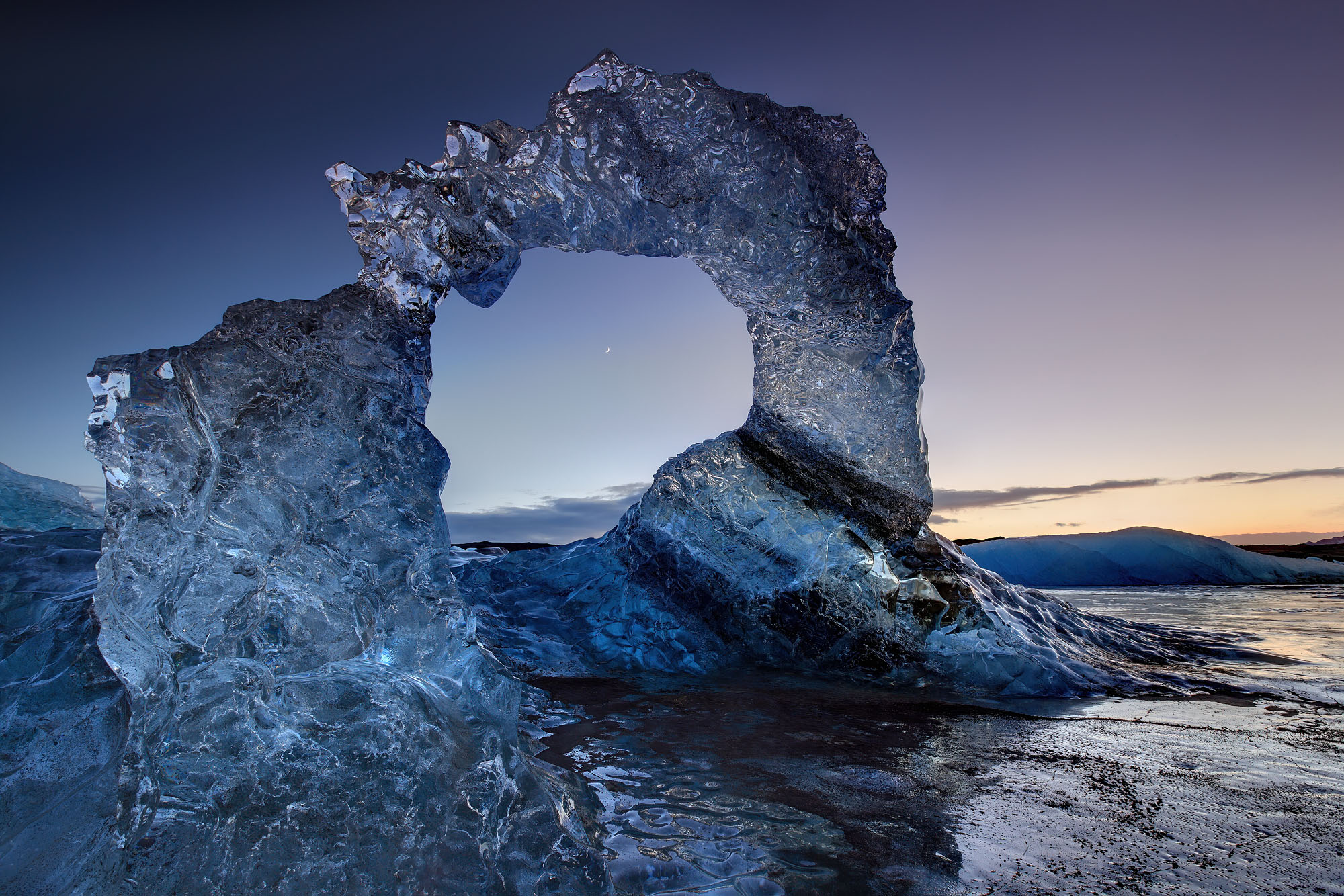
This particular iceberg was remarkable for the spectacular hole carved through its center, framing the distant volcanoes beyond. Measuring 1.5 meters (5 feet) in height, the beautiful piece of glacial ice rested on the beach for just a few hours in midsummer, around midnight at dusk, before it was forever destroyed by the relentless Atlantic surf.