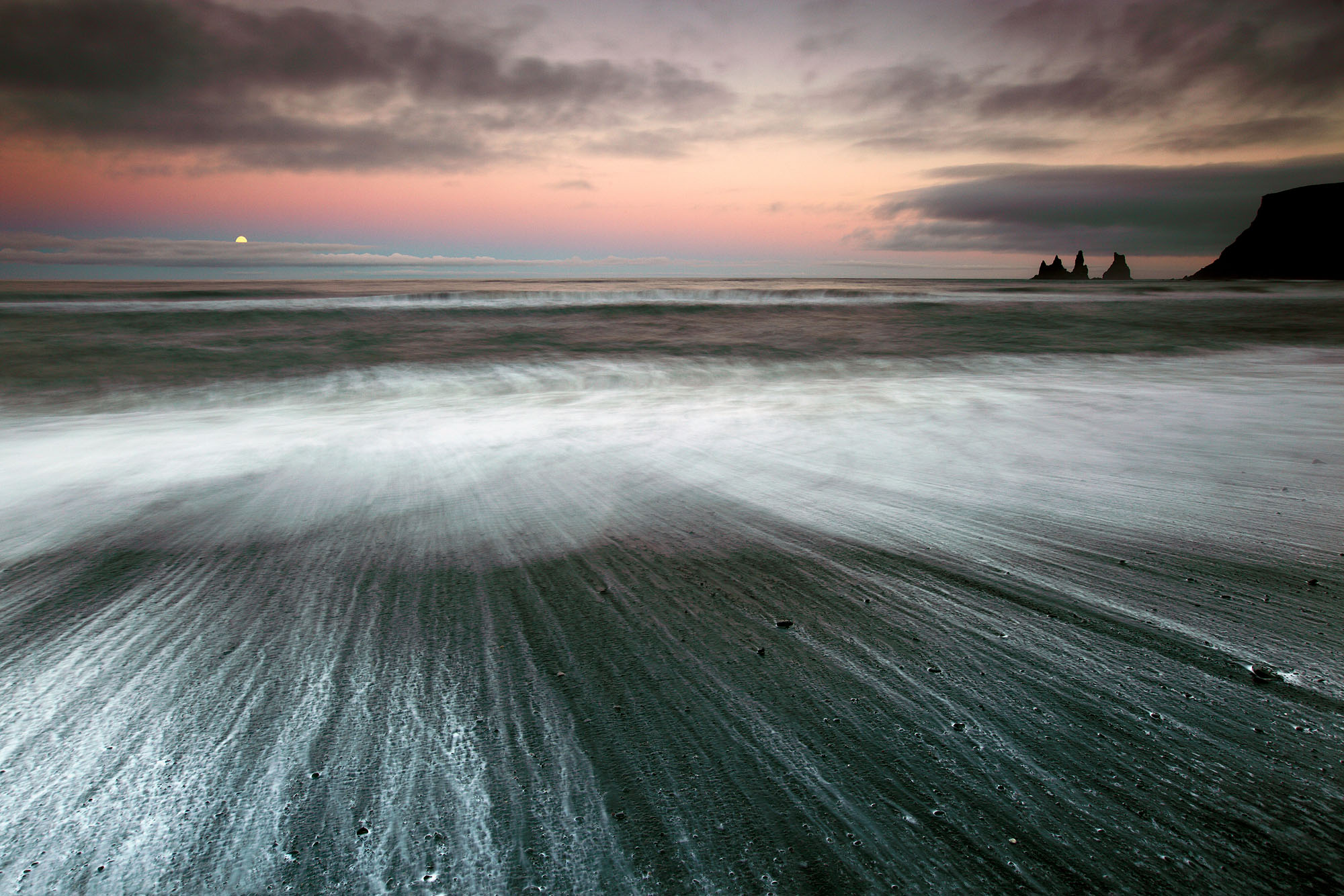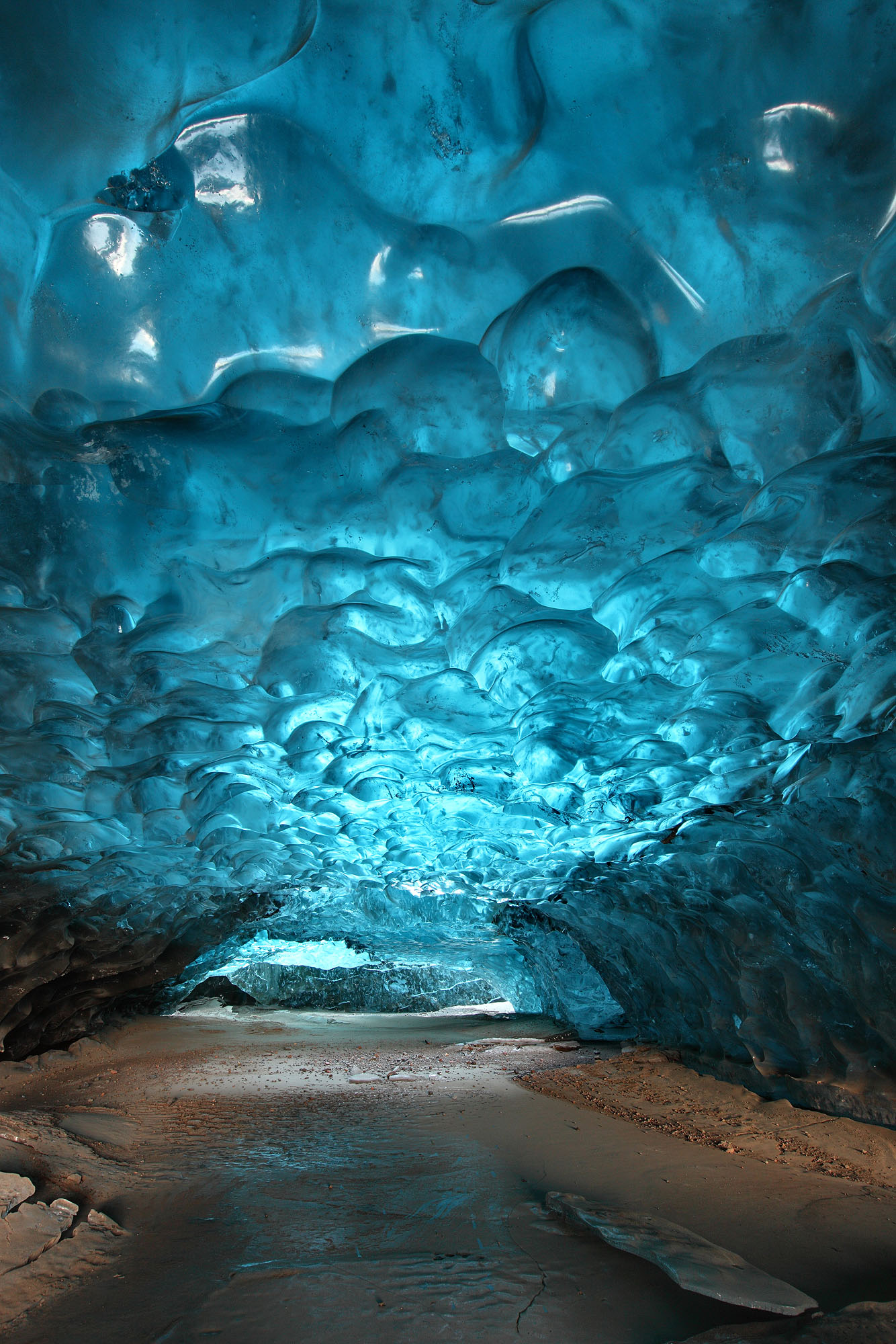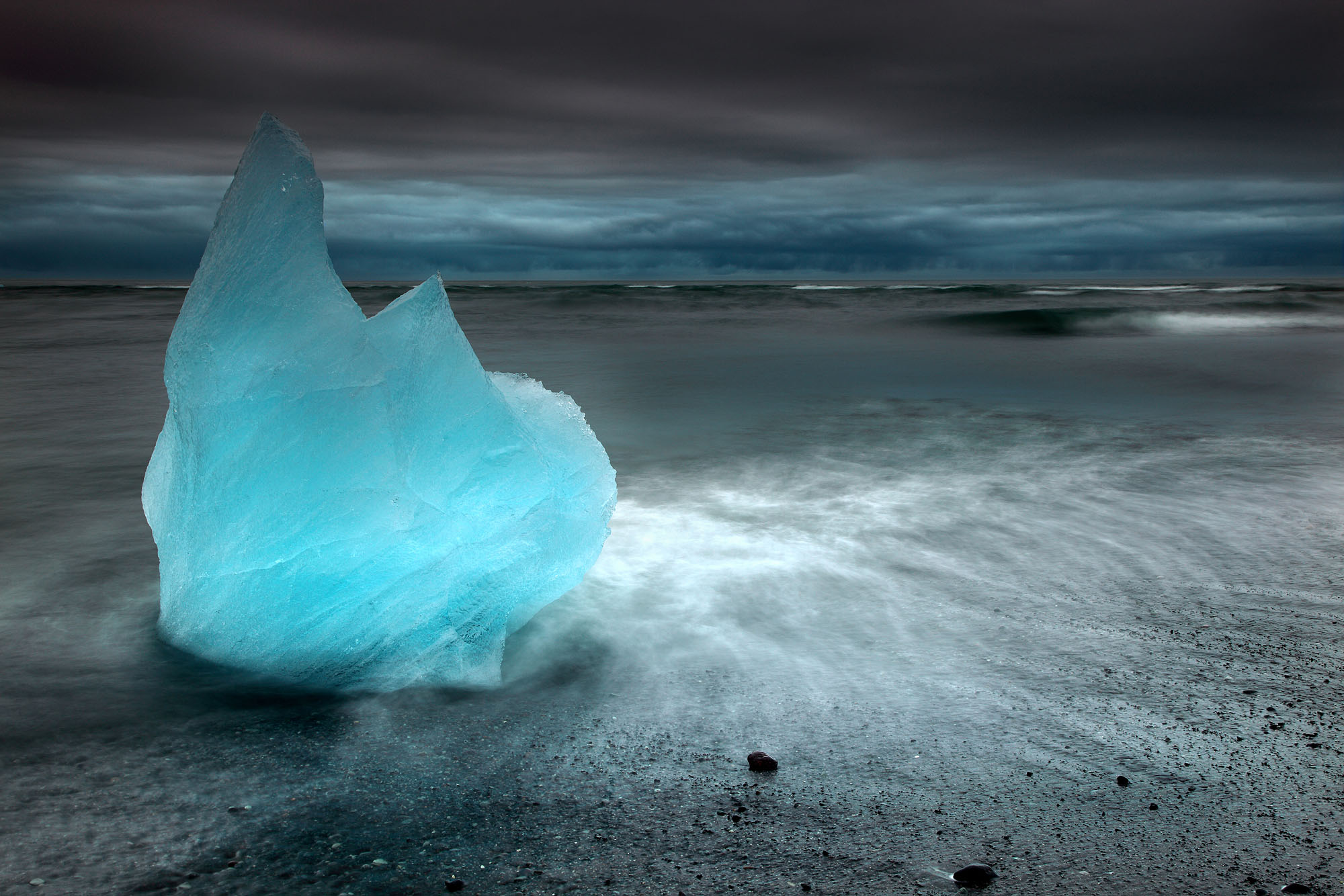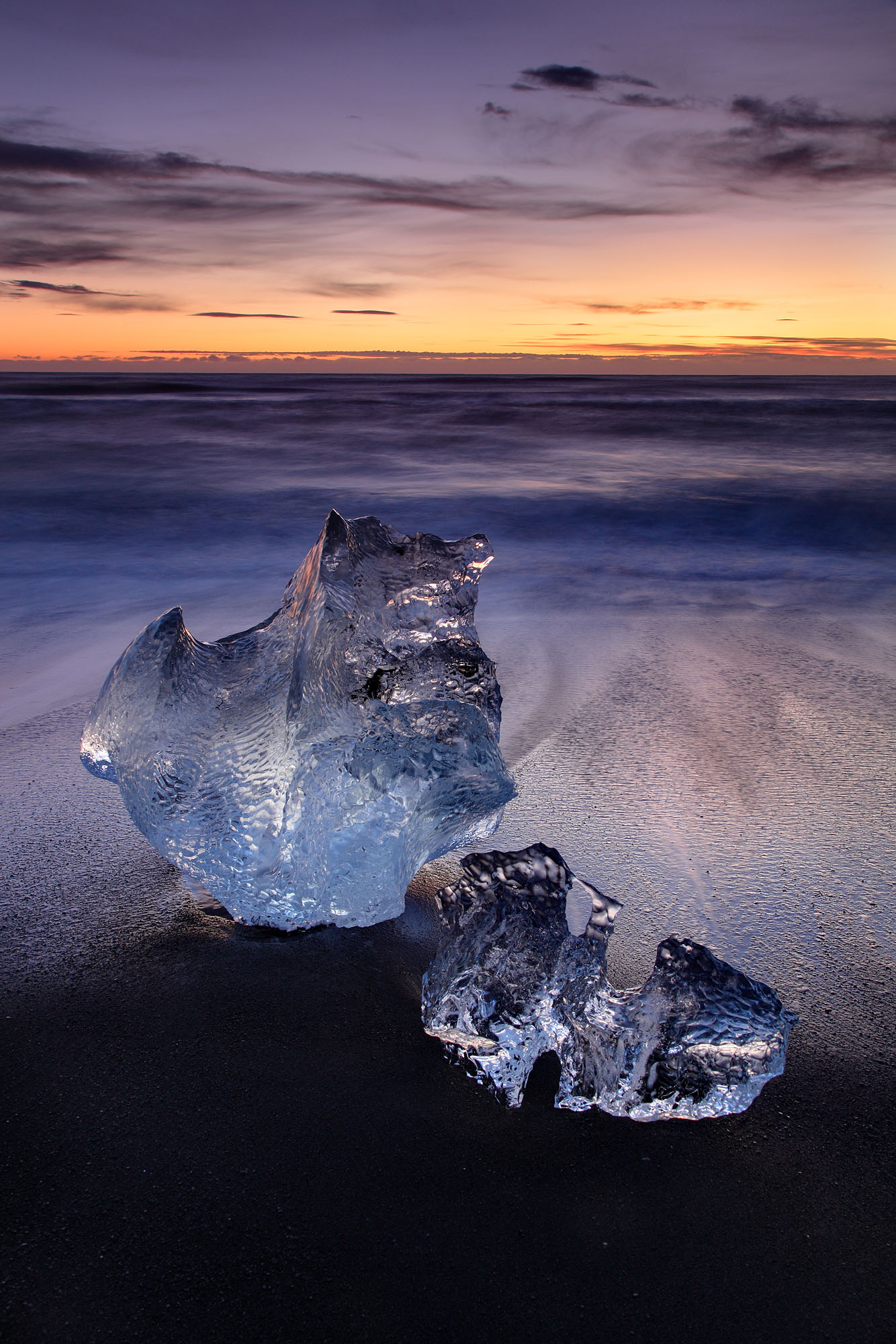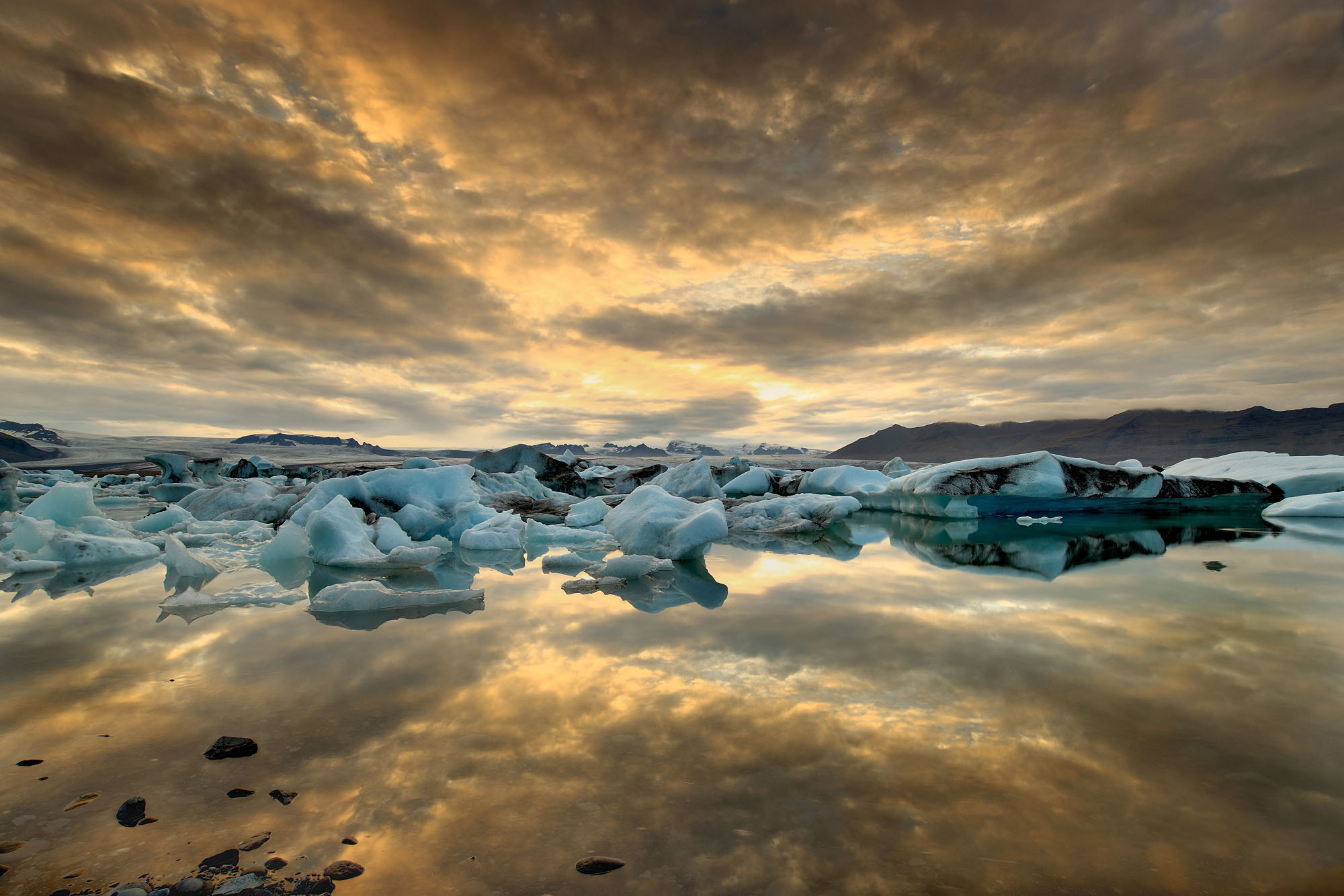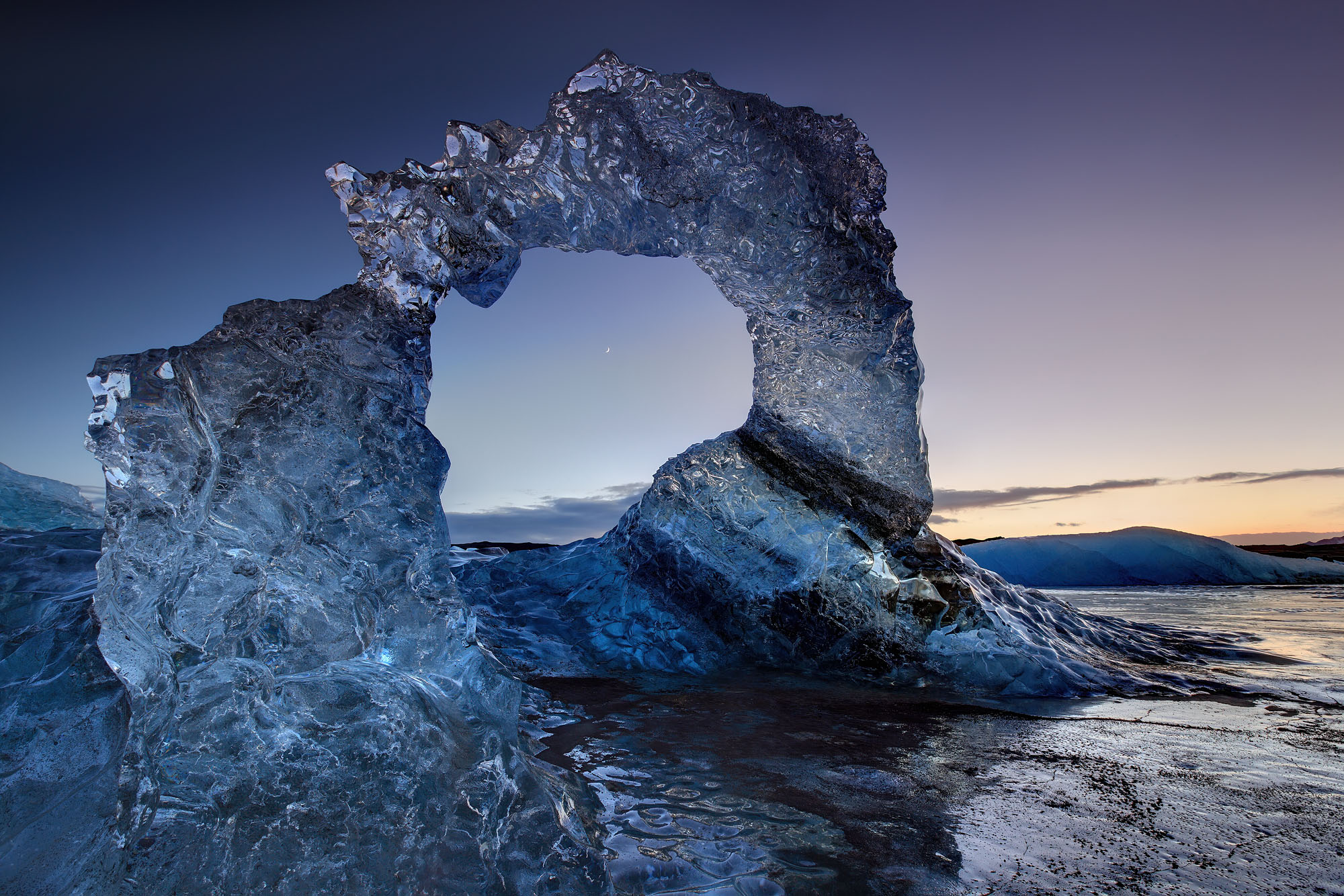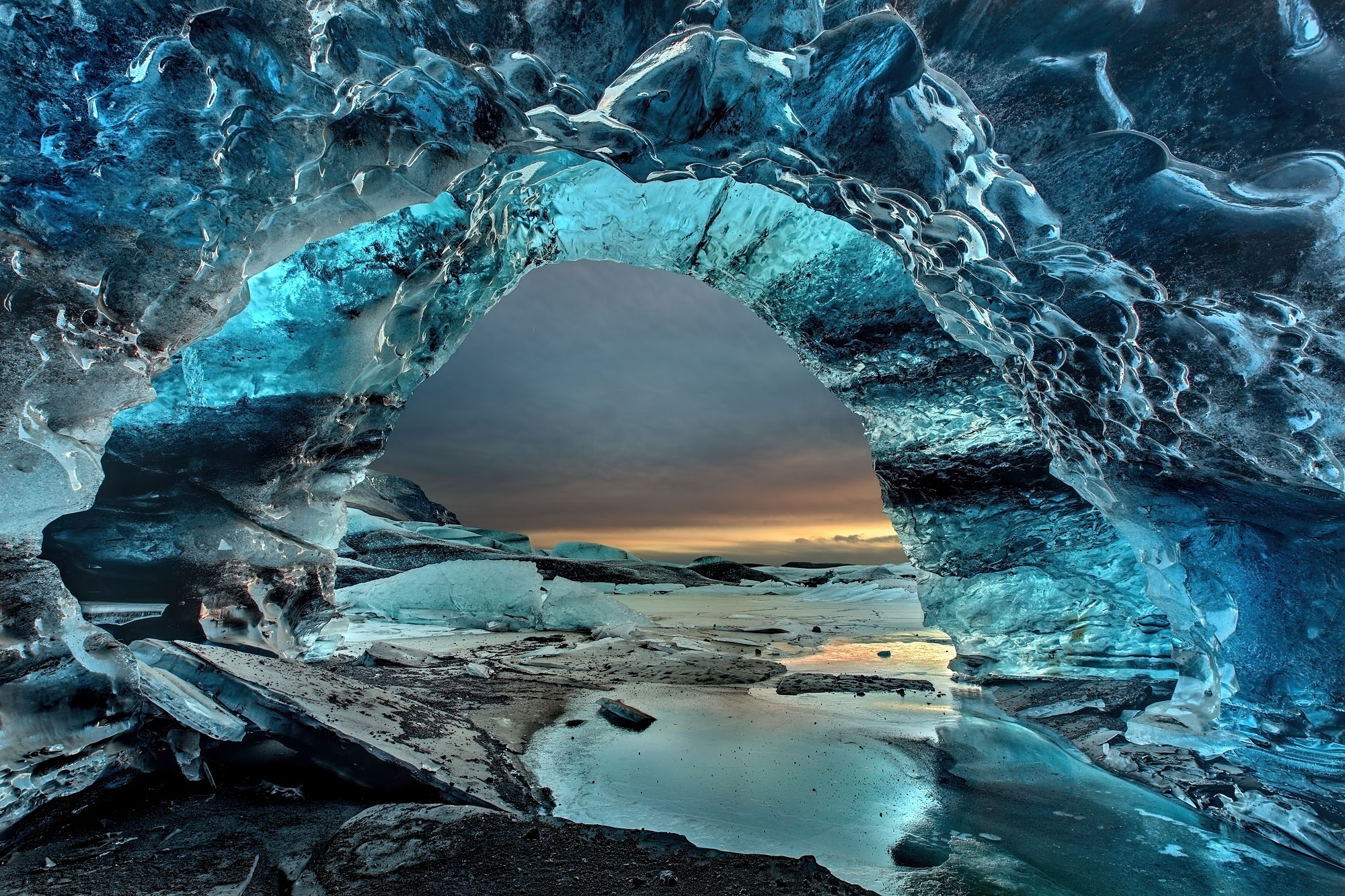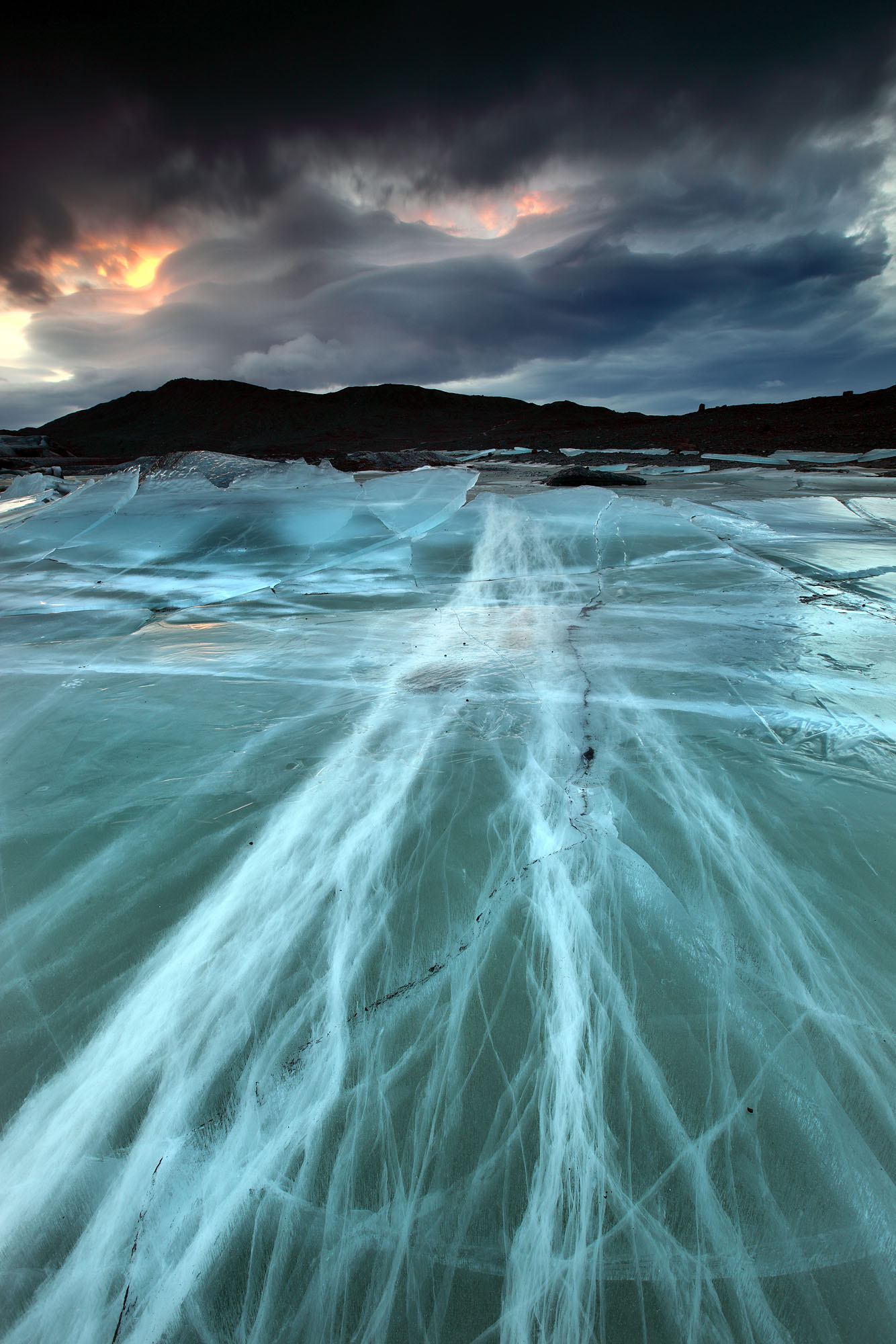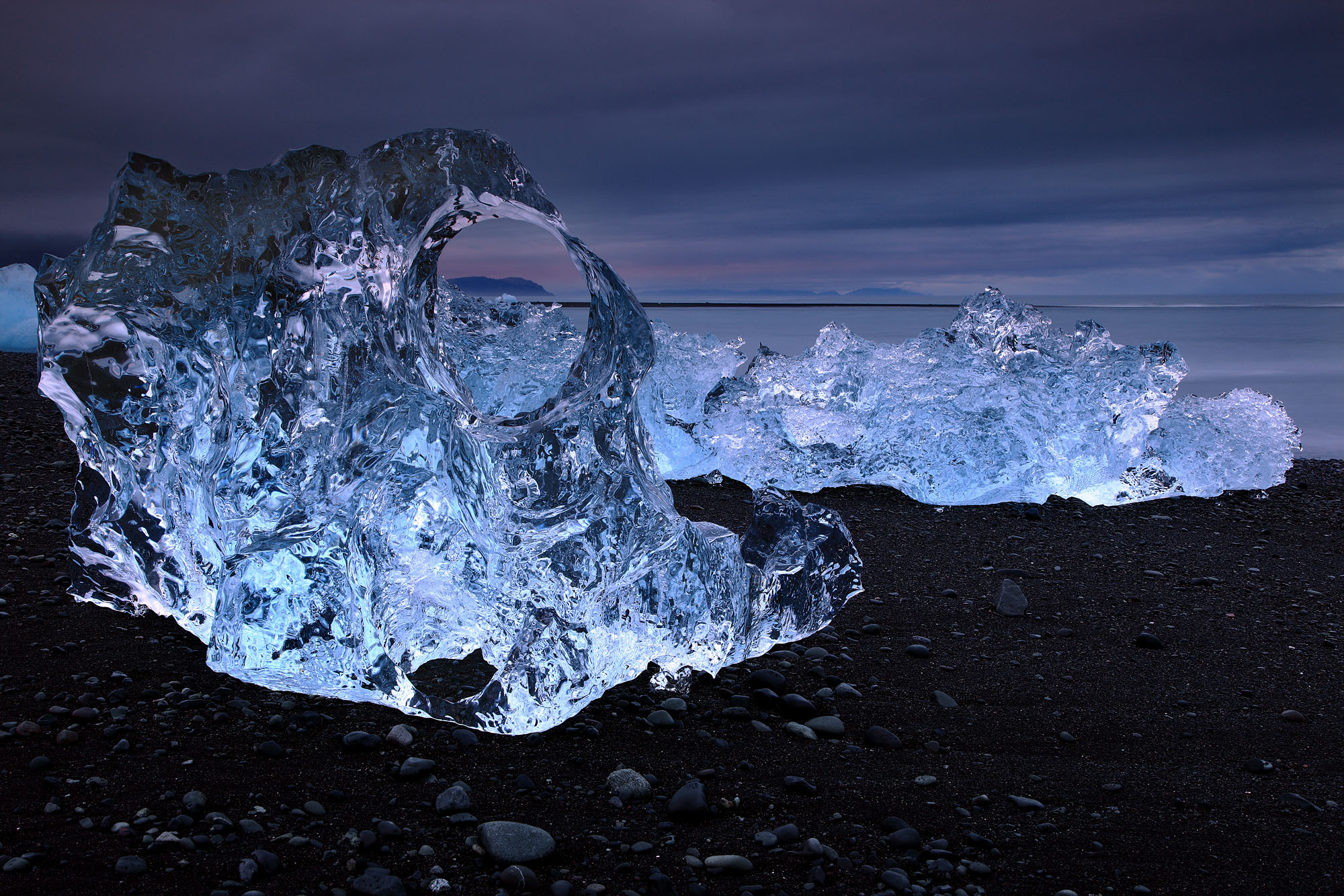

Tipped-over icebergs reveal their meltwater-carved forms, filled with volcanic ash, on the frozen glacier lagoon of Jökulsárlón during the Icelandic winter. Reaching these icebergs requires a rare convergence of several atmospheric and environmental conditions.
First, a sequence of low-pressure systems embedded in the midlatitude westerly flow over the North Atlantic brought vast amounts of rain to southern Iceland. The rain melted the snow covering the icebergs and washed their surfaces clean, revealing the deep blue of the glacial ice.
Second, the weather pattern shifted into a stationary blocking situation, with a persistent low-pressure system northeast of Iceland continuously drawing cold Arctic air toward the island. Third, this cold air encountered the 1,725-meter (5,659-foot) ice cap of Vatnajökull. Forced to rise and spill over the ice cap at high speed, the air produced heavy snowfall in northern Iceland. Southern Iceland, by contrast, experienced prolonged foehn conditions and clear skies.
Fourth, and contrary to what one might expect from the warming effect of foehn winds, these conditions produced persistent, gusty and bitterly cold katabatic winds along the edge of the glacier lagoon. Katabatic winds are driven purely by differences in air density. Cold, dense air flows downhill under gravity, accelerating as it descends. From the southern slopes of Vatnajökull, this heavy air pours relentlessly down toward and across Jökulsárlón. Gale-force winds of up to 200 kilometers per hour (127 miles per hour or 57 meters per second) and temperatures around −8°C (18°F) are not uncommon under such conditions.
Fifth, the temperature of the lagoon water falls below its normal freezing point because the lagoon contains brackish water due to its connection with the Atlantic Ocean. The floating icebergs further cool the water until the lagoon eventually freezes over, providing access to the stranded icebergs.
Sixth, the storm winds sweep black volcanic ash and sand across the Icelandic landscape, depositing them on the exposed surfaces of the overturned icebergs. The ash accentuates the intricate meltwater-carved forms, transforming them into natural works of art made of deep blue ice and black volcanic patterns. These fascinating structures are most vividly revealed at dusk, when Earth’s shadow rises across the landscape and the sky takes on a deep violet hue.
Wandering through this frozen landscape lies far outside any comfort zone. Spellbound by these fascinating vistas, it is a challenge simply to withstand the drifting sand, blowing volcanic ash, and penetrating cold. In storm winds at around −8°C (18°F), the perceived temperature can plunge to −35°C (−31°F).